Description
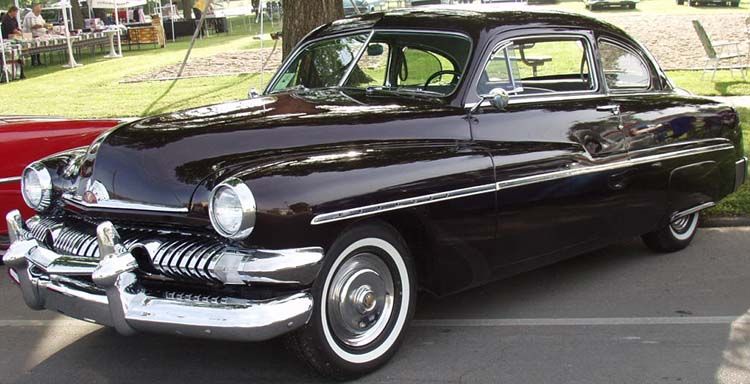
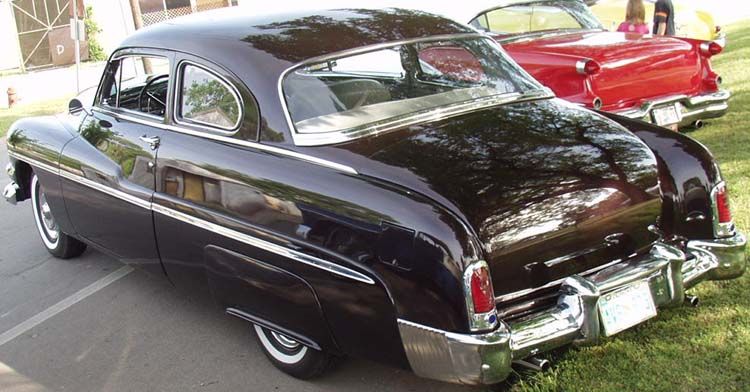
The Mercury V8 Tudor was one of the earliest body styles offered when Mercury was introduced in 1939, and it played a central role in establishing the brand’s identity. The term “Tudor” referred to a two-door sedan configuration, combining the practicality of a closed body with a slightly sportier and more personal appearance than the four-door sedan.
Positioned between Ford and Lincoln within the Ford Motor Company lineup, the Mercury V8 Tudor offered greater size and refinement than comparable Ford models while remaining more affordable than a Lincoln. It shared certain engineering fundamentals with Ford, but the longer wheelbase and broader proportions gave it a more substantial and dignified presence. Styling reflected late-1930s American trends, with flowing fenders, a tall chrome grille and smooth body lines that emphasised length and solidity.
Power came from a flathead V8 engine, typically displacing 239 cubic inches. This engine was known for its smooth torque delivery and dependable operation, qualities that made it well suited to everyday driving and long-distance travel. Performance was steady and confident rather than aggressive, reinforcing the car’s role as a refined family vehicle. A manual transmission was standard, providing simple and durable operation in line with the expectations of the period.
The chassis followed conventional body-on-frame construction, offering strength and longevity. Independent front suspension improved ride comfort compared with older solid-axle designs, while the rear used a solid axle supported by leaf springs. The overall tuning prioritised comfort and stability, giving the Tudor a composed driving character on the roads of the era.
Inside, the Mercury V8 Tudor offered more generous space and improved trim compared with Ford equivalents. Bench seating accommodated front and rear passengers comfortably, and upholstery materials were of higher quality. The dashboard featured chrome accents and clear instrumentation, creating a sense of refinement without excessive ornamentation. Although a two-door design, the Tudor retained full rear seating, accessed by folding the front seat forward.
The two-door configuration appealed to buyers seeking a slightly more stylish alternative to the four-door sedan, without sacrificing practicality. It provided the same V8 smoothness and structural solidity, but with a cleaner side profile and fewer door lines, contributing to a more streamlined look.
Production of early Mercury V8 Tudors was curtailed by the onset of World War II, making surviving pre-war examples particularly significant. As one of the foundational Mercury models, the Tudor helped establish the brand’s reputation for offering added presence and comfort over Ford while maintaining accessible pricing.
Today, the Mercury V8 Tudor is regarded as a classic representation of late-1930s American automotive design. Its combination of flathead V8 power, flowing bodywork and practical two-door configuration makes it appealing to collectors who value both historical significance and period character. As a historical vehicle, it stands as an early expression of Mercury’s identity, blending refinement, solidity and smooth V8 performance in a distinctive pre-war package.