Description
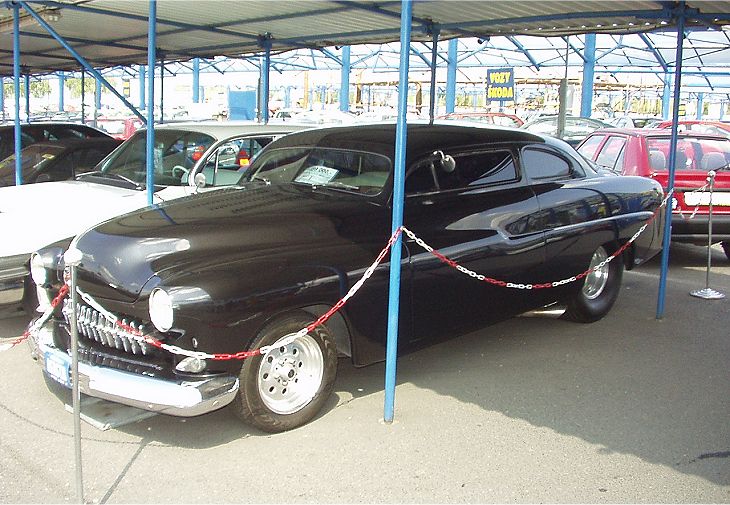
The Mercury V8 Hot Rod is not a factory model designation but a term that has become closely associated with modified Mercury V8 cars from the late 1930s and 1940s. These vehicles, most often based on Mercury coupes or sedans equipped with the flathead V8 engine, became iconic foundations within American hot rod and custom car culture.
Mercury V8 models were particularly attractive to early hot rodders because they combined strong flathead V8 torque with larger, heavier bodies than Ford equivalents. The 239 cubic inch flathead V8 provided smooth, reliable power in standard form, but it also responded well to traditional performance modifications. Enthusiasts commonly fitted high-compression cylinder heads, multi-carburettor intake manifolds, performance camshafts and upgraded ignition systems to increase output. Dual exhaust systems were also popular, giving the car a distinctive sound that became part of hot rod identity.
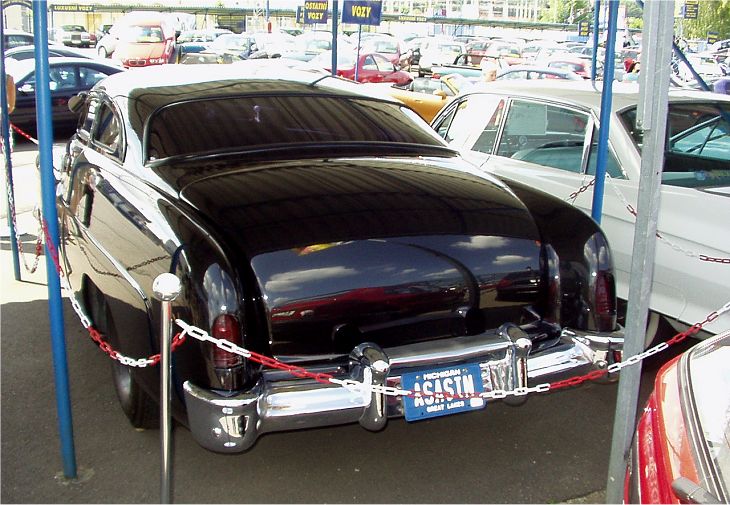
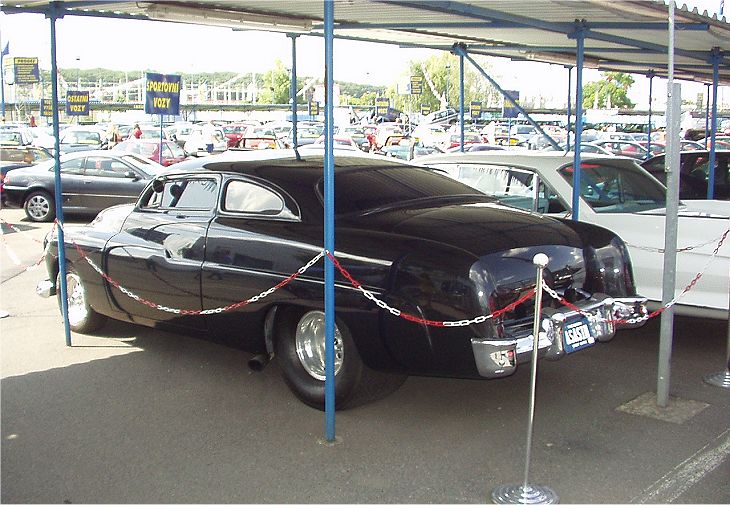
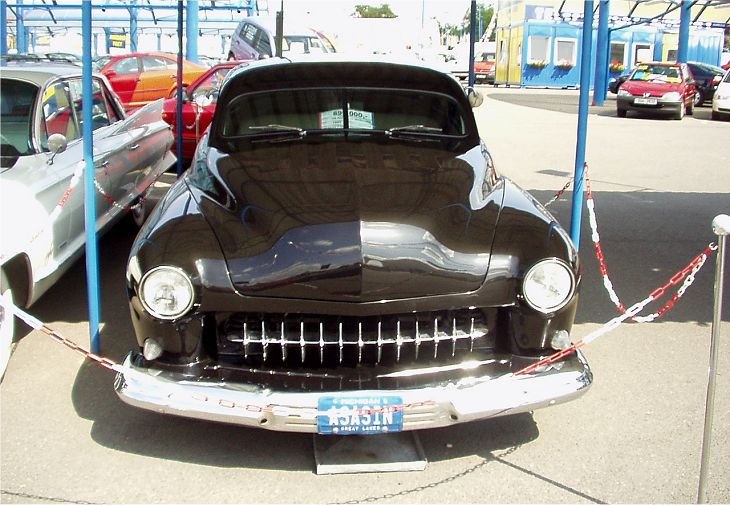
The Mercury’s longer wheelbase and more substantial body gave it a different character from a Ford hot rod. Builders often lowered the suspension, removed excess trim and chopped the roofline to create a sleeker profile. In the 1950s, many Mercury V8 Hot Rods evolved into what became known as “lead sleds,” where extensive bodywork modifications were carried out, including shaved door handles, smoothed panels and custom grilles. The heavy Mercury body lent itself particularly well to these dramatic styling changes.
Mechanically, early Mercury V8 Hot Rods typically retained body-on-frame construction with a solid rear axle. Suspension modifications were common, including lowering blocks or custom front suspension setups to achieve a lower stance. Braking and steering upgrades were often added to cope with increased performance and altered ride height.
The Mercury V8 became especially significant in the custom car movement after World War II. Its flowing pre-war lines provided an ideal canvas for customisers, and by the early 1950s, the Mercury coupe had become one of the most recognisable shapes in American car culture. The image of a chopped, lowered Mercury with a rumbling flathead V8 became a defining symbol of the era.
Inside, hot rod conversions ranged from basic and stripped interiors to fully customised cabins with upgraded upholstery and instrumentation. The level of modification depended on whether the car was built primarily for street performance, show display or personal expression.
Today, the Mercury V8 Hot Rod is regarded as an icon of American automotive culture rather than a specific production model. Surviving examples, particularly period-correct builds, are highly prized among enthusiasts. As a cultural symbol, the Mercury V8 Hot Rod represents post-war creativity, mechanical ingenuity and the spirit of individualism that defined the early hot rod movement. It stands as a reminder that some of the most influential automotive legends were shaped not in factories, but in home garages and custom workshops across America.