Description
The Mercury Monterey was one of the most important and enduring nameplates in Mercury’s history, serving as a full-size model that evolved alongside American automotive trends from the early 1950s through the mid-1970s. Positioned between Ford and Lincoln within the Ford Motor Company hierarchy, the Monterey offered greater refinement, distinctive styling and stronger performance than Ford equivalents, while remaining more accessible than Lincoln luxury models.
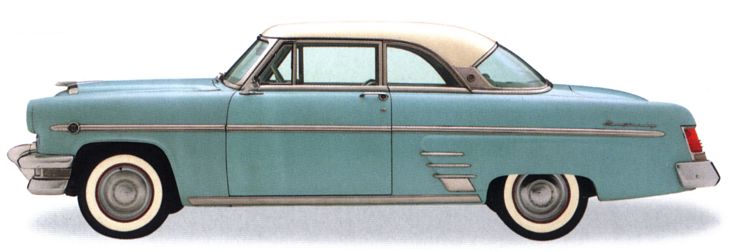
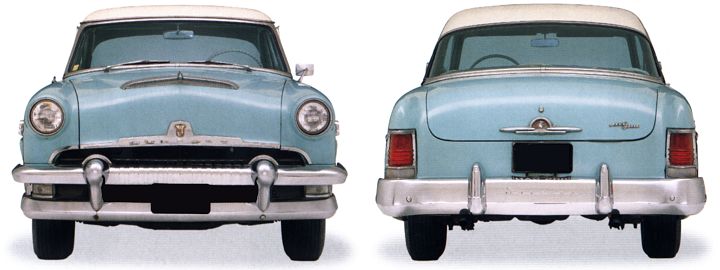
Introduced in 1952 as a higher-trim series within the Mercury lineup, the Monterey quickly became a core model. Early versions reflected post-war American styling themes, with rounded bodywork, generous chrome detailing and a confident road presence. By the mid-1950s, the Monterey adopted more dramatic design cues, including wraparound windshields, two-tone paint schemes and sculpted body sides that reflected the exuberant styling era of the time.
Powertrain options evolved significantly over its production life. Early Monterey models were equipped with flathead V8 engines, later replaced by overhead-valve V8 units that offered improved performance and efficiency. By the mid-1950s and into the 1960s, Mercury V8 engines grew in displacement and output, delivering strong torque and smooth cruising capability. Automatic transmissions became increasingly common, reinforcing the Monterey’s role as a comfortable long-distance cruiser.
The chassis followed traditional American body-on-frame construction, prioritising durability and ride comfort. Suspension tuning was focused on smoothness rather than sharp handling, providing a relaxed and composed driving experience well suited to highway travel. As the years progressed, improvements in steering, braking and ride quality reflected broader industry developments.
The Monterey was offered in a variety of body styles, including two-door and four-door sedans, hardtops and convertibles. These options allowed Mercury to appeal to a wide range of buyers, from families seeking practical transportation to customers looking for stylish personal cars. Interior trim was consistently positioned above Ford models, with upgraded upholstery, additional brightwork and more elaborate dashboards.
During the 1960s, the Monterey adopted cleaner, more restrained styling as American automotive design shifted away from excessive chrome and tailfins. The car grew larger and more powerful during this period, reflecting the industry-wide trend toward full-size comfort and performance. By the early 1970s, the Monterey embodied the classic American full-size sedan formula: substantial dimensions, V8 power and a focus on smooth highway cruising.
Throughout its life, the Mercury Monterey represented Mercury’s identity as a near-luxury brand. It provided additional refinement, distinctive styling and strong performance without entering the price territory of Lincoln. This positioning made it a popular choice for buyers who wanted comfort and presence with a touch of exclusivity.
Today, the Mercury Monterey is regarded as a classic representation of mid-century American motoring. Its long production span captures multiple eras of design and engineering, from post-war optimism to 1970s full-size comfort. As a historical model, the Monterey reflects Mercury’s evolving role in the American automotive landscape, consistently offering a balance of practicality, style and smooth V8 performance.