Description
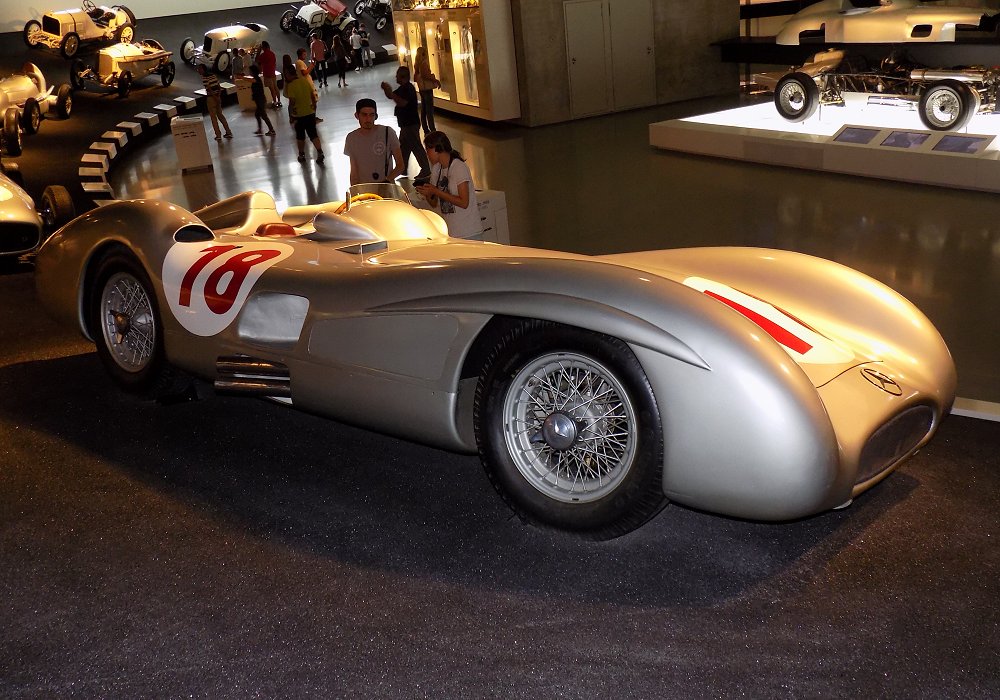
The Mercedes-Benz W196 R Stromlinien was one of the most advanced and iconic Grand Prix racing cars of the 1950s and represented the peak of Mercedes-Benz engineering in the early Formula One era. Developed for the newly formed Formula One World Championship regulations, the W196 R Stromlinien embodied a scientific, uncompromising approach to speed, efficiency and technical innovation.
Introduced in 1954, the W196 R was designed to compete under the 2.5-litre naturally aspirated Formula One regulations. Power came from a highly advanced straight-eight engine mounted at an angle to lower the car’s centre of gravity. The engine used direct fuel injection derived from Mercedes-Benz aircraft technology developed during the Second World War, a major advantage over carburetted rivals. Output was in the region of 250 horsepower, an exceptional figure for the time, and the engine delivered strong, smooth power across a wide rev range.
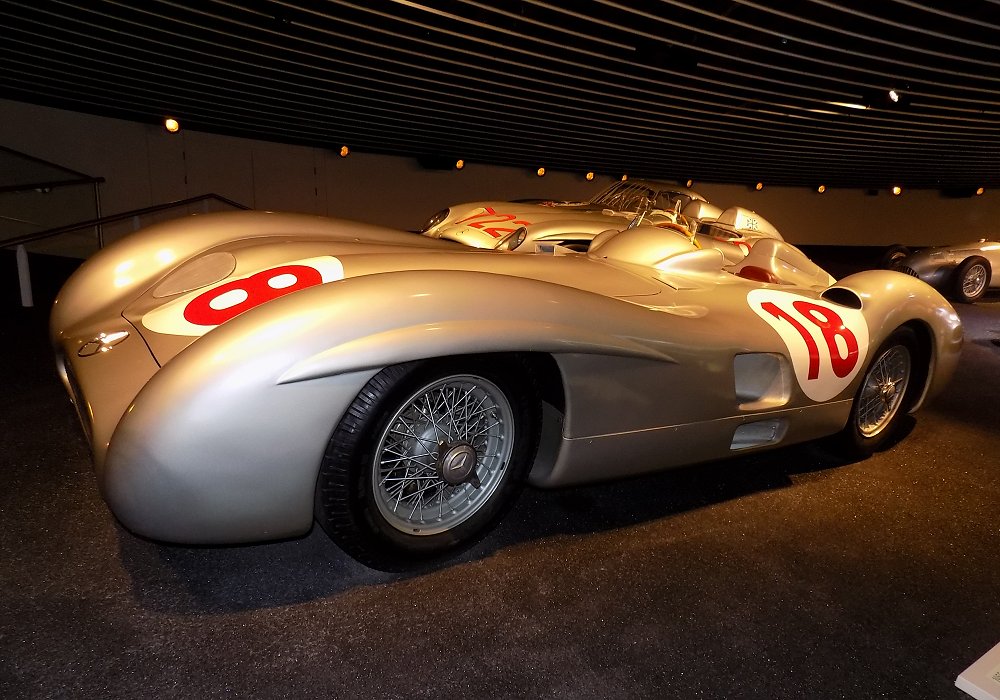
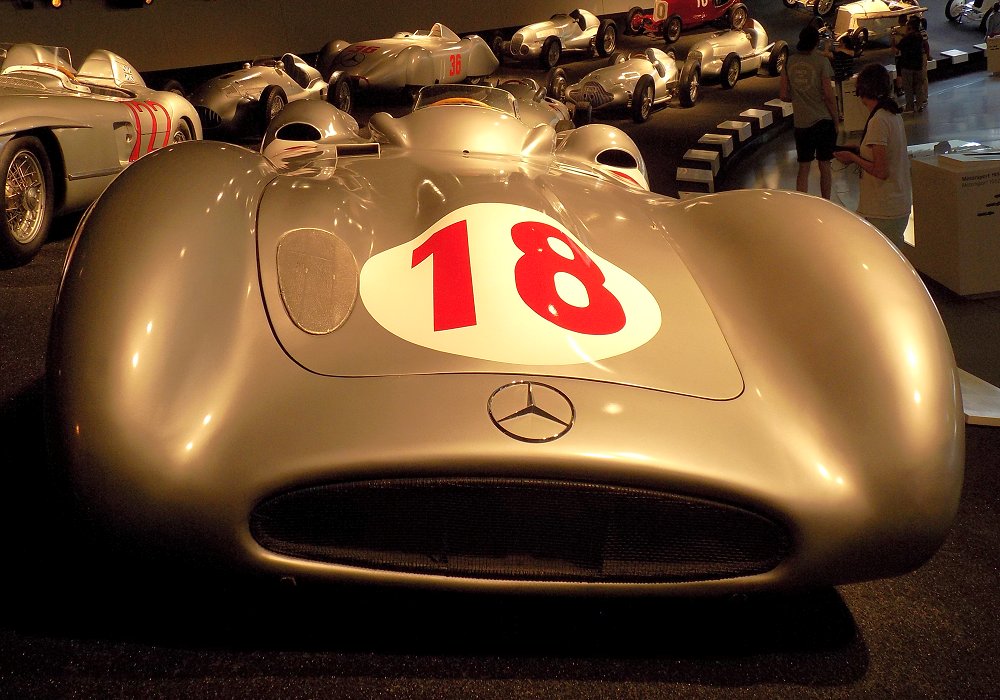
The Stromlinien version of the W196 R was specifically designed for high-speed circuits where reduced aerodynamic drag was critical. Unlike the open-wheel configuration commonly associated with Formula One cars, the Stromlinien featured fully enclosed bodywork that covered the wheels. This streamlined shape significantly reduced air resistance and allowed the car to achieve higher top speeds on fast circuits such as Reims, Monza and the high-speed sections of the Nürburgring.
The bodywork was constructed with lightweight materials and shaped with aerodynamic efficiency as the overriding priority. The long, smooth surfaces and enclosed wheels gave the Stromlinien a futuristic appearance that set it apart dramatically from contemporary competitors. While the design improved straight-line speed, it compromised visibility and wheel placement awareness for the driver, making it less suitable for tight, twisty circuits. As a result, Mercedes-Benz also developed an open-wheel version of the W196 R, selecting the body style according to circuit characteristics.
The chassis featured a tubular spaceframe designed for strength and rigidity while keeping weight low. Suspension was highly sophisticated for its era, using independent systems front and rear to improve stability and handling. To reduce unsprung weight and improve reliability, the rear brakes were mounted inboard rather than at the wheels, another advanced solution rarely seen at the time.
Driving the Mercedes-Benz W196 R Stromlinien required immense skill. The car’s high speed, narrow tyres and limited driver visibility made it demanding, especially on fast circuits lined with minimal safety measures. Despite these challenges, the car proved devastatingly effective in the hands of top drivers.
The W196 R Stromlinien is inseparably linked with legendary drivers such as Juan Manuel Fangio and Stirling Moss. Fangio used the W196 R to dominate the 1954 and 1955 Formula One seasons, securing world championships and cementing his status as one of the greatest drivers in motorsport history. The car’s combination of power, reliability and advanced engineering gave Mercedes-Benz a clear technical advantage over most rivals.
The Stromlinien body achieved notable success, including victories at the French Grand Prix at Reims and other high-speed venues where its aerodynamic efficiency could be fully exploited. However, its limitations on tighter circuits meant that it was used selectively rather than universally throughout the season.
Beyond its competitive achievements, the Mercedes-Benz W196 R Stromlinien left a lasting legacy in motorsport engineering. It demonstrated the importance of aerodynamics, fuel injection and systematic design thinking in Grand Prix racing, influencing future generations of racing cars long after its competition life ended.
Today, the Mercedes-Benz W196 R Stromlinien is regarded as one of the most significant racing cars ever built. Surviving examples are among the most valuable and revered competition cars in the world, representing a golden era of innovation and dominance in Formula One. As a historical machine, it stands as a symbol of Mercedes-Benz’s engineering philosophy at its most ambitious, combining science, precision and performance to redefine what was possible on the world’s fastest race circuits.