Description
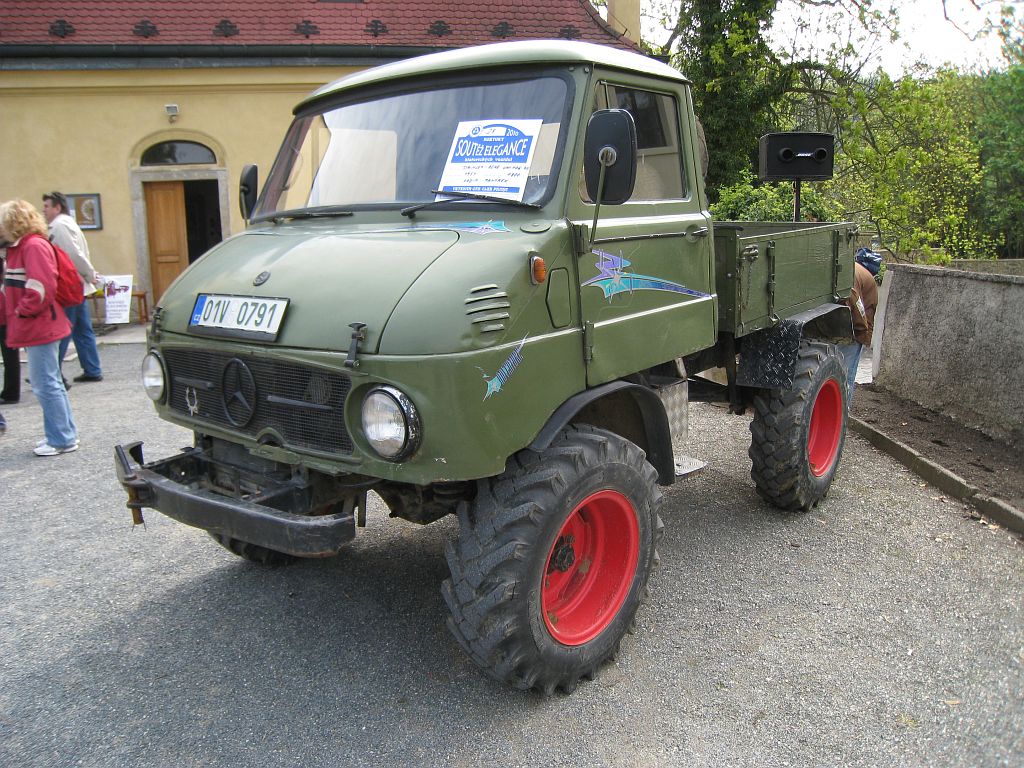
The Mercedes-Benz Unimog 411 was a compact and highly versatile version of the Unimog family and played a key role in expanding the model’s appeal beyond heavy agricultural and military use into lighter municipal, industrial and private applications. Produced from the mid-1950s through to the early 1970s, the Unimog 411 became one of the most widely used and adaptable Unimog variants, valued for its compact size, mechanical robustness and exceptional all-terrain capability.
The Unimog 411 was built around the same core philosophy that defined all Unimog models: a multifunctional motorised implement carrier capable of operating where conventional vehicles could not. Its relatively small dimensions made it especially suitable for narrow roads, forest tracks, farms and urban environments, while still retaining the off-road ability for which the Unimog was famous.
Power came from a range of four-cylinder diesel engines, most commonly the 1.7-litre and later 1.8-litre units, producing modest outputs but strong low-speed torque. These engines were designed for durability, fuel efficiency and sustained operation under load rather than speed. Paired with a manual gearbox featuring multiple forward and reverse ratios, the Unimog 411 offered exceptional flexibility, including very low working speeds essential for agricultural and industrial tasks.
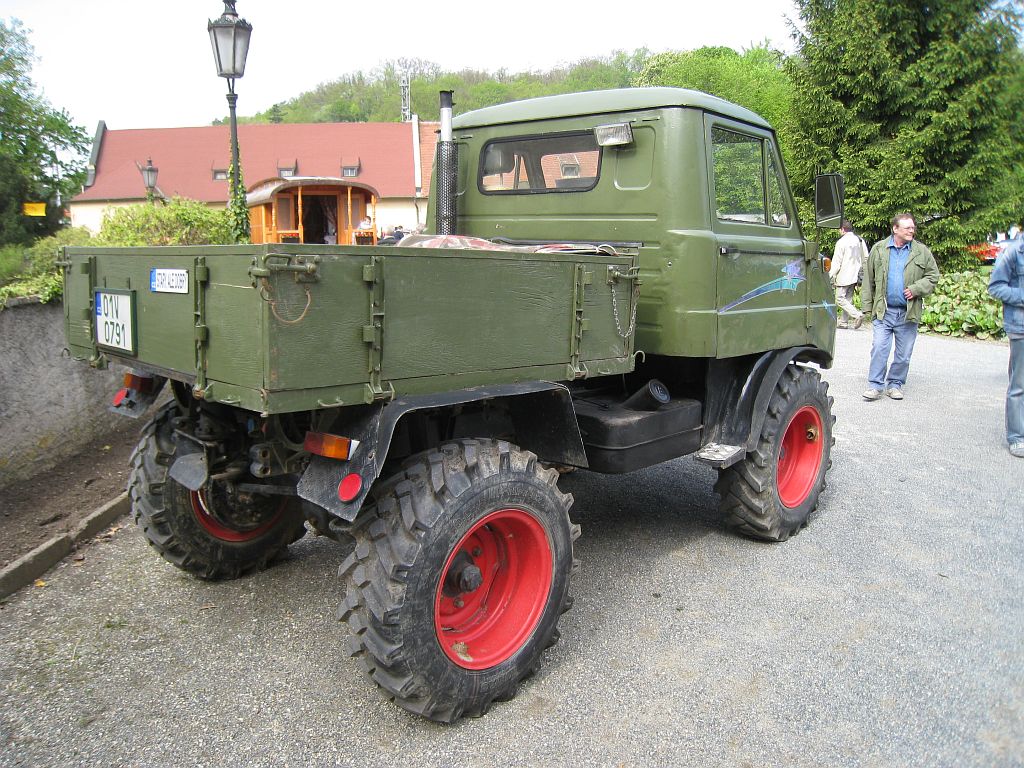
The defining feature of the Unimog 411 was its drivetrain. Portal axles provided high ground clearance without raising the centre of gravity, while permanent or selectable four-wheel drive ensured traction in mud, snow, sand and steep terrain. Locking differentials further enhanced off-road capability, allowing the vehicle to continue moving even when traction was severely limited. The ladder-frame chassis was extremely strong yet flexible, allowing the vehicle to twist over uneven ground without compromising structural integrity.
Suspension consisted of coil springs rather than traditional leaf springs, giving the Unimog 411 impressive axle articulation and a surprisingly compliant ride for a working vehicle. This design allowed all four wheels to maintain contact with the ground in challenging conditions, contributing significantly to its legendary off-road performance.
One of the greatest strengths of the Unimog 411 was its adaptability. It could be fitted with a wide range of implements and attachments, including ploughs, mowers, snow blowers, loaders, winches and hydraulic tools. Power take-offs were available at the front, rear and sometimes mid-mounted, making the vehicle a true all-purpose machine. As a result, the Unimog 411 was used extensively in agriculture, forestry, road maintenance, emergency services and by utility companies.
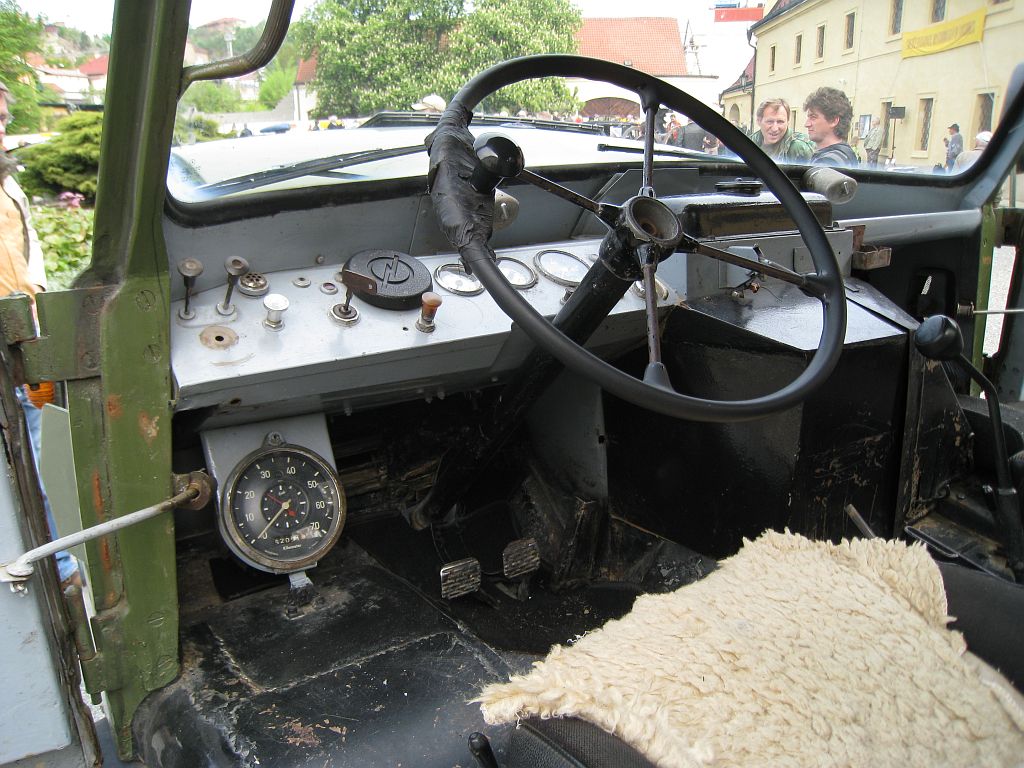
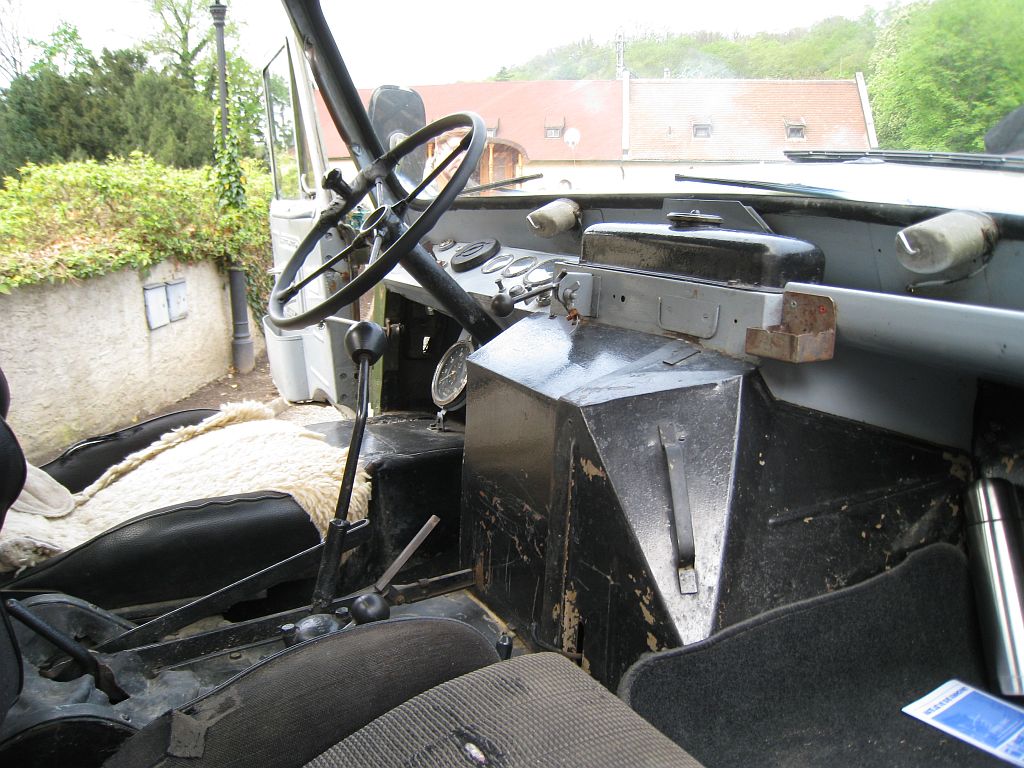
Cab configurations varied over its long production life. Early versions featured open or canvas-covered cabs, while later models offered enclosed metal cabs with improved weather protection and comfort. The driving position was upright and functional, with excellent visibility and simple, durable controls. Comfort was secondary to usability, but for its time the Unimog 411 offered a surprisingly practical working environment.
On the road, the Unimog 411 was slow by passenger vehicle standards, but stable and predictable. Its strength lay in its ability to transition seamlessly from road travel to fieldwork or off-road operation without modification. This versatility made it particularly attractive to operators who needed one vehicle to perform many roles.
The Unimog 411 earned a reputation for exceptional longevity. Many examples remained in service for decades, often with multiple owners and roles over their lifetime. Its simple, over-engineered mechanical design made it easy to maintain and repair, even in remote areas.
Today, the Mercedes-Benz Unimog 411 is regarded as one of the most charming and usable classic Unimog models. Valued for its compact size, mechanical honesty and incredible versatility, it remains popular with collectors, enthusiasts and working users alike. As a classic, the Unimog 411 perfectly represents the original Unimog concept: a vehicle defined not by speed or luxury, but by capability, adaptability and enduring engineering quality.