Description
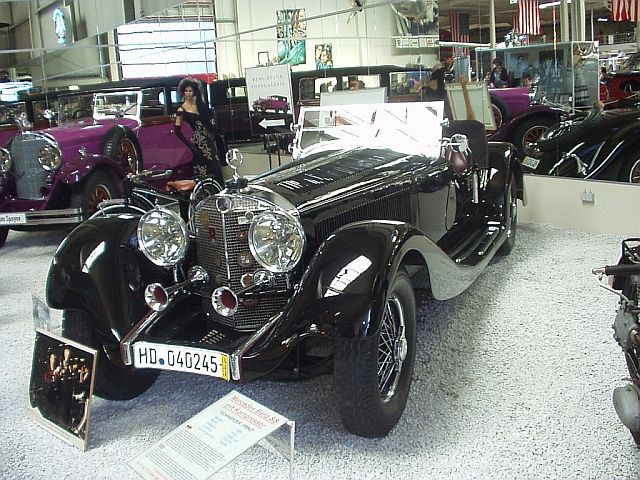
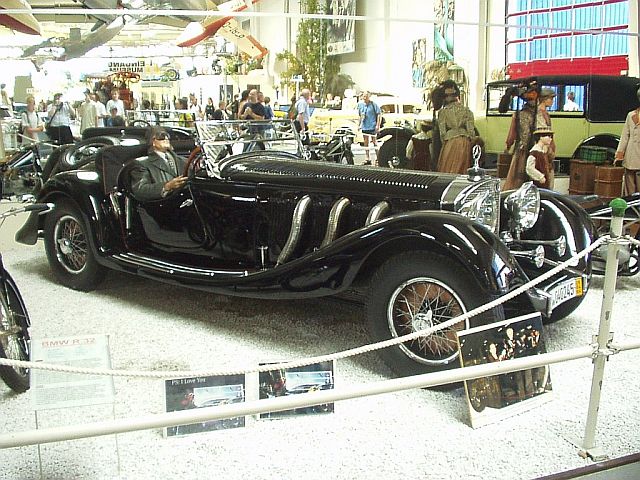
The Mercedes-Benz SS was one of the most important high-performance cars of the late 1920s and early 1930s, marking the second stage of the legendary S-Series that began with the Mercedes S in 1927. Introduced in 1928, the SS (short for Super Sport) was more powerful, faster and more imposing than its predecessor, designed for both elite road use and competitive motorsport. It stood at the very top of luxury performance motoring of its era and laid the groundwork for the even more extreme SSK and SSKL variants that followed.
The SS was powered by a 7.1-litre inline-six engine equipped with Mercedes’ mechanically driven Roots-type supercharger. In normal, un-supercharged running the engine produced around 170 horsepower, already substantial for the period. When the Kompressor engaged—activated by pressing the accelerator to its limit—the power output rose to approximately 225 horsepower. This immense increase in performance made the SS one of the most powerful and exhilarating road cars of its day. The engagement of the supercharger produced a distinctive whine and a surge of torque that transformed the car’s personality from dignified tourer to explosive sports machine.
The chassis was a refined evolution of the one used in the Mercedes S, retaining the ladder-frame construction but strengthened, lowered and adapted to accommodate the larger engine and higher power output. The wheelbase remained long enough for spacious bodies yet short enough to deliver improved agility compared with earlier 630-series models. The suspension relied on semi-elliptic leaf springs front and rear, tuned for a balance of comfort and sporting stability. Four-wheel mechanical drum brakes, large for the era, provided stopping performance capable of controlling the car’s formidable speed.
Bodywork for the SS varied considerably because Mercedes supplied the chassis to numerous respected European coachbuilders. Some examples received light, open two- or four-seat sports tourer bodies intended for competition or Alpine motoring. Others were fitted with luxurious cabriolets or elegant touring bodies featuring high-quality trim, polished wood and refined interiors. Regardless of configuration, most SS models shared visual hallmarks such as the long bonnet, upright radiator, external exhaust pipes and large wire-spoke wheels. The overall impression was one of presence, power and confident sporting style.
Inside, the SS offered a blend of sporting purpose and luxury. Competition-oriented versions used simple, functional layouts with leather bucket seats and clear mechanical instrumentation. More luxurious examples had finely upholstered seating, rich wood trim and elegant cabin details, making the SS equally suited to spirited driving and long-distance touring. The driving position gave a commanding view over the long bonnet, and the large steering wheel and tall gear lever provided a sense of mechanical engagement.
On the road, the Mercedes-Benz SS delivered performance that few cars of its age could approach. Without the supercharger engaged, the car was smooth, torquey and refined, ideal for comfortable touring. But with the Kompressor activated, the SS became a dramatically faster machine, capable of high sustained speeds and rapid acceleration. The strengthened chassis and firm suspension gave it confidence through bends, while the strong brakes provided reliable control even on challenging roads. Its combination of speed, endurance and stability made it an exceptional long-distance tourer.
In motorsport, the SS quickly established itself as a dominant force. It excelled in hillclimbs, endurance races and tough multi-stage events such as the Alpine Trials. Its power, durability and strong chassis allowed it to tackle steep gradients and high-speed sections with equal authority. The success of the SS in competition directly influenced the development of the SSK and the renowned SSKL, both shorter, lighter and even more powerful derivatives that became icons of early motor racing.
Today, the Mercedes-Benz SS is regarded as one of the defining supercharged sports cars of the pre-war era. Its blend of engineering sophistication, performance capability and dramatic coachbuilt styling makes surviving examples some of the most coveted historic automobiles in the world. The SS stands as a critical milestone in Mercedes’ evolution, marking the moment the company firmly established itself as the leading builder of powerful, refined and technically advanced sports cars on the world stage.