Description
The Mercedes-Benz LE 1100 was a light commercial vehicle developed during the late 1920s as part of Mercedes-Benz’s expanding programme of purpose-built trucks and utility vehicles. At a time when motorised transport was rapidly replacing horse-drawn wagons for local delivery and municipal work, the LE 1100 was designed to provide reliability, durability and economy for businesses that required a compact yet capable load carrier. It occupied an important position at the lower end of the Mercedes-Benz commercial range, offering professional-grade engineering in a manageable and versatile form.
The LE 1100 was rated for a payload of approximately 1.1 tonnes, which placed it firmly in the light-truck category. Power was supplied by a four-cylinder petrol engine derived from Mercedes-Benz passenger-car designs, typically displacing around 2.6 litres. The engine was tuned for torque and durability rather than speed, allowing the truck to pull loads steadily and reliably in urban and rural environments. Power delivery was smooth and predictable, and the engine’s conservative design made it well suited to prolonged use under load. A manual gearbox transmitted power to the rear wheels, with ratios chosen to balance pulling ability and reasonable road speed.
The chassis was a robust ladder-frame construction designed specifically for commercial use. Its strength allowed the LE 1100 to be configured with a wide range of bodies, including flatbeds, box vans, tippers and specialist municipal or utility equipment. Suspension used semi-elliptic leaf springs at both front and rear, providing the load-bearing capacity required for commercial service while maintaining acceptable ride quality when unladen. Braking was typically mechanical, using drum brakes on all four wheels, and while stopping distances reflected the technology of the era, the system was dependable and well matched to the vehicle’s intended operating speeds.
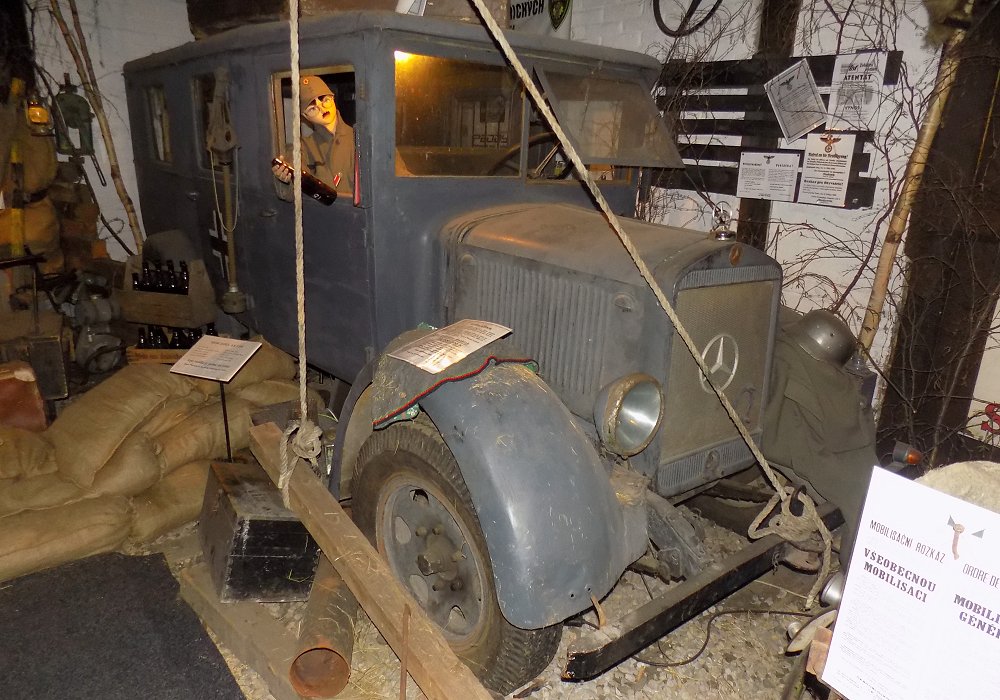
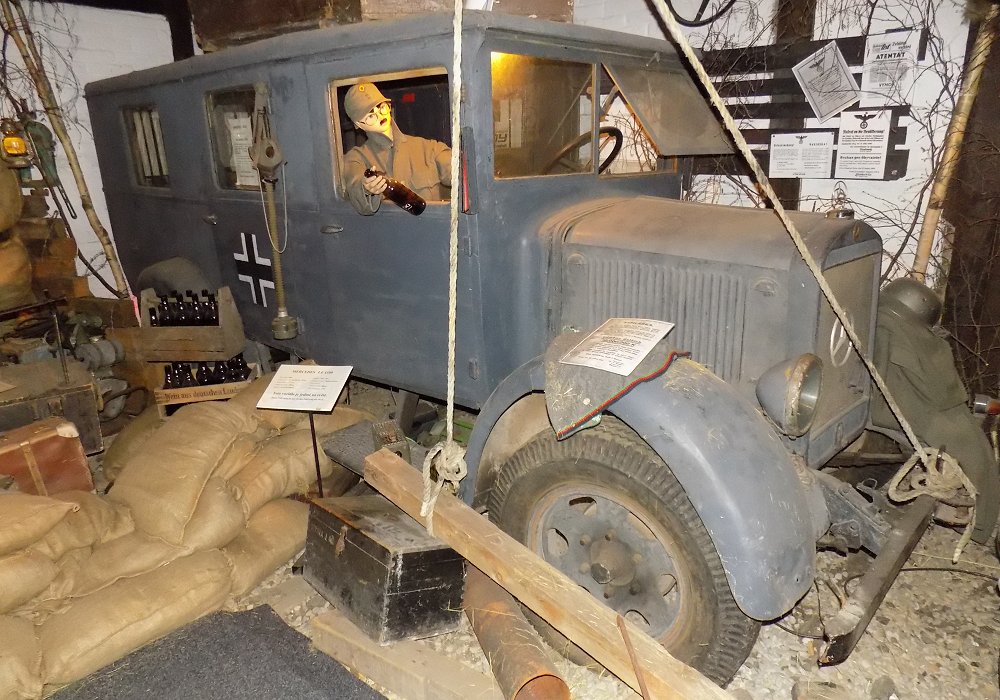
Styling of the LE 1100 was functional and straightforward, prioritising practicality over aesthetics. The front featured a simple upright radiator grille bearing the Mercedes-Benz emblem, flanked by exposed headlamps. The cab was compact, with a tall seating position that gave the driver good visibility in traffic and confined delivery spaces. Most examples featured an enclosed cab, offering protection from the elements and making the vehicle suitable for year-round use. The overall appearance conveyed sturdiness and purpose, qualities that were highly valued by commercial operators.
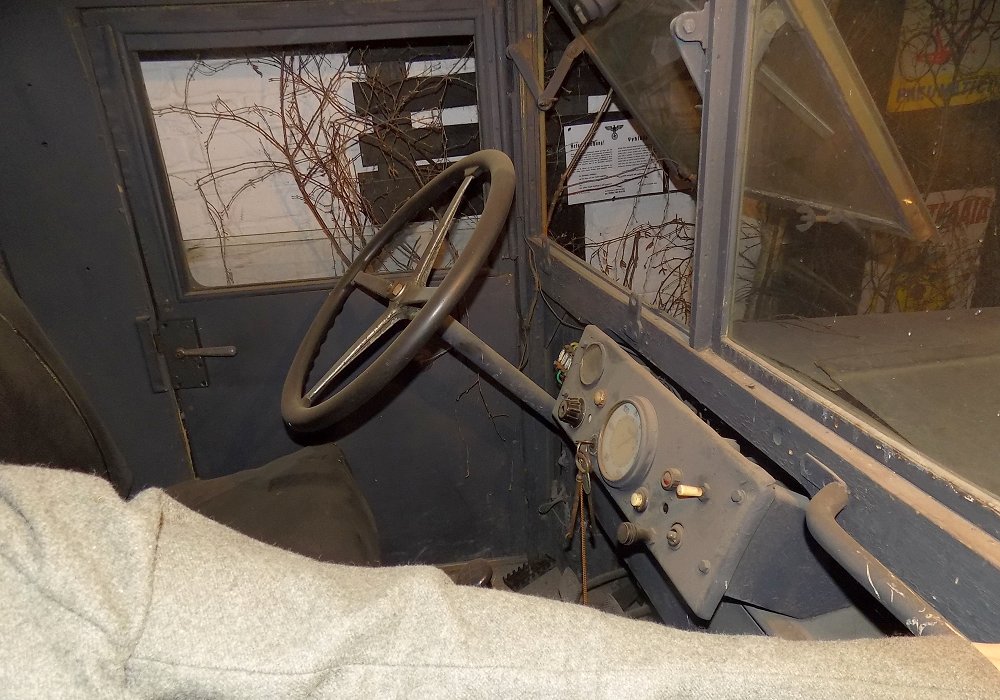
Inside, the cab of the Mercedes-Benz LE 1100 was utilitarian but well built. Seating was simple and durable, designed to withstand frequent entry and exit. Controls were clearly laid out and easy to operate, reflecting the needs of professional drivers rather than private owners. Instrumentation was minimal, typically limited to essential gauges for speed, fuel and engine condition. Despite its simplicity, the cab benefited from Mercedes-Benz’s emphasis on solid construction and reliability, ensuring that it could endure hard daily use.
In operation, the LE 1100 proved to be a dependable and economical workhorse. Its modest size made it easy to manoeuvre in narrow streets and crowded urban environments, while its payload capacity was sufficient for a wide range of delivery and service tasks. The engine’s flexibility and the sturdy chassis allowed it to cope with poor road surfaces and uneven loading conditions, which were common in the interwar period. Businesses valued its reliability and the reputation of the Mercedes-Benz name, which was already well established in both passenger and commercial vehicle markets.
The Mercedes-Benz LE 1100 played a role in the broader motorisation of commerce across Europe during the late 1920s and early 1930s. It was used by tradespeople, delivery companies, municipalities and small industrial operators who required a dependable light truck backed by a major manufacturer. While it lacked the prestige of Mercedes-Benz passenger cars or the sheer capacity of heavier trucks, it offered a practical and professional solution for everyday transport needs.
Today, the Mercedes-Benz LE 1100 is a rare sight, as most examples were worked hard and scrapped after long service lives. Surviving vehicles are valued primarily for their historical significance rather than performance or luxury. They provide insight into the early development of Mercedes-Benz commercial vehicles and illustrate how the company applied its engineering principles to the practical demands of business and industry. As such, the LE 1100 stands as an important chapter in the history of Mercedes-Benz utility and transport engineering during the interwar years.