Description
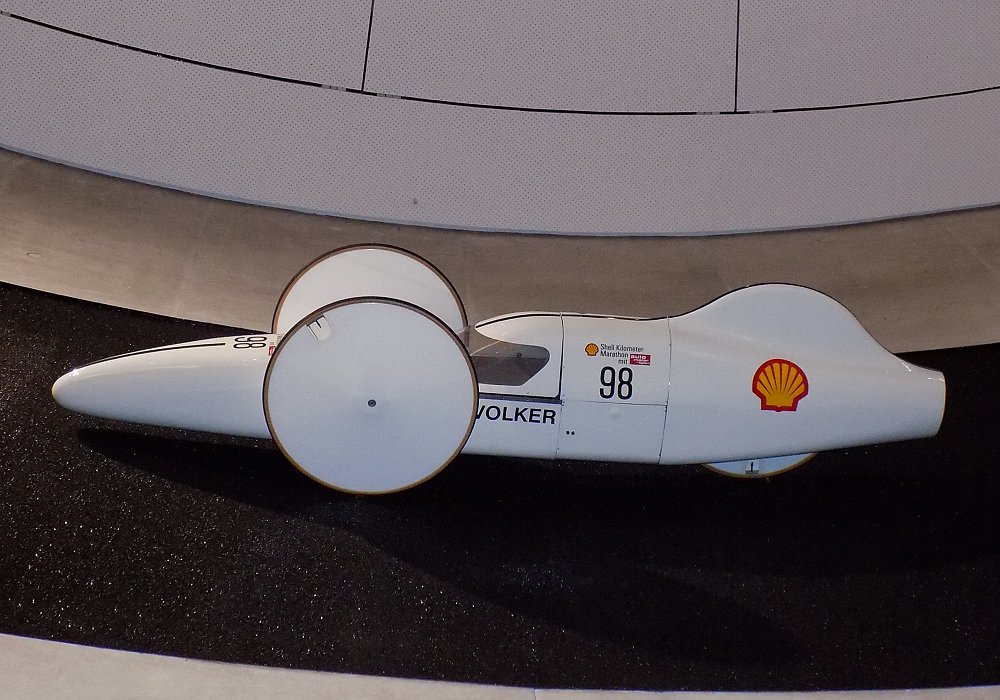
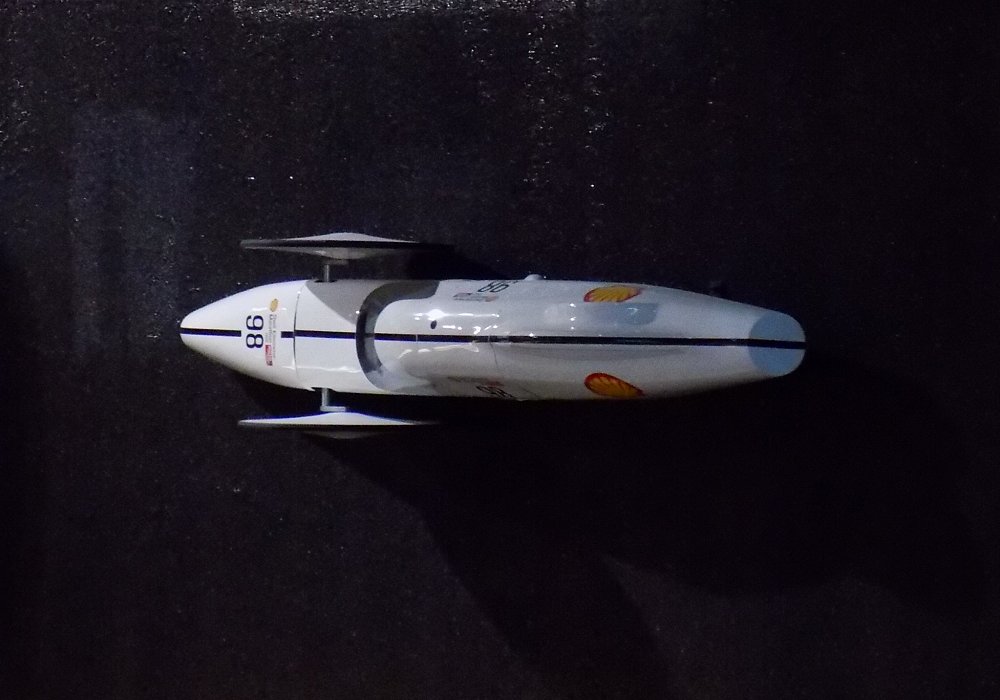
The Mercedes-Benz Kraftstoff Sparmobil was an experimental research vehicle developed during the 1980s as part of Mercedes-Benz’s long-term investigation into extreme fuel efficiency. Its name translates literally as “fuel-saving car,” and that purpose defined every aspect of its design. Rather than being a styling concept or performance demonstrator, the Kraftstoff Sparmobil was a rolling laboratory intended to explore how far fuel consumption could be reduced using realistic, transferable engineering solutions.
The project was closely linked to the ideas explored in the Auto 2000 programme and reflected the growing pressure on manufacturers to address fuel consumption and emissions following the energy crises of the 1970s. Mercedes-Benz approached the challenge systematically, focusing on aerodynamics, weight reduction, drivetrain efficiency and rolling resistance rather than relying on a single radical technology.
Aerodynamics played a central role in the Kraftstoff Sparmobil’s design. The body was shaped to minimise drag, with smooth surfaces, carefully controlled airflow around the wheels and a long, tapered rear section designed to reduce turbulence. The overall silhouette was unconventional but not extreme, demonstrating Mercedes-Benz’s belief that meaningful aerodynamic gains could be achieved without resorting to impractical shapes. Extensive wind tunnel testing resulted in a drag coefficient far lower than that of contemporary production saloons.
Weight reduction was another key priority. The Kraftstoff Sparmobil used lightweight materials wherever possible, including aluminium and plastics, while still maintaining structural integrity. Every component was evaluated for mass savings, reinforcing the idea that incremental improvements across the entire vehicle could deliver significant efficiency gains when combined.
Power came from a highly efficient diesel engine, chosen for its superior thermal efficiency and suitability for low fuel consumption. The engine was tuned for economy rather than performance, operating at low engine speeds and optimised load points. Gear ratios were selected to keep the engine running in its most efficient range during steady driving, particularly at cruising speeds. This approach aligned with Mercedes-Benz’s broader commitment to diesel development during the period.
Rolling resistance was also carefully addressed. Narrow, low-resistance tyres were used to reduce energy losses, and suspension tuning prioritised efficiency over dynamic handling. These choices reflected the vehicle’s role as a research platform rather than a conventional passenger car.
The interior of the Kraftstoff Sparmobil was functional and minimal. Comfort and luxury were secondary to weight reduction and efficiency, but the layout demonstrated that a usable cabin could still be achieved within strict efficiency targets. The focus remained on proving technical feasibility rather than creating a market-ready product.
In testing, the Mercedes-Benz Kraftstoff Sparmobil achieved fuel consumption figures that were exceptionally low for a full-sized vehicle of its era. These results confirmed Mercedes-Benz’s belief that dramatic improvements in efficiency were possible using existing engine concepts combined with intelligent vehicle design. Importantly, the project showed that such gains did not require abandoning conventional vehicle layouts or drivetrains.
Although the Kraftstoff Sparmobil was never intended for production, its influence was significant. The data and experience gained from the project fed directly into Mercedes-Benz’s production development, particularly in aerodynamics, diesel engine optimisation and lightweight construction. Many of the principles explored in the Sparmobil would later become standard practice across the industry.
Today, the Mercedes-Benz Kraftstoff Sparmobil is regarded as a quietly important experimental vehicle. It lacks the visual drama of some concept cars, but its contribution to real-world efficiency engineering is substantial. As a historical project, it represents Mercedes-Benz’s methodical, long-term approach to innovation, proving that meaningful progress often comes from careful optimisation rather than dramatic technological leaps.