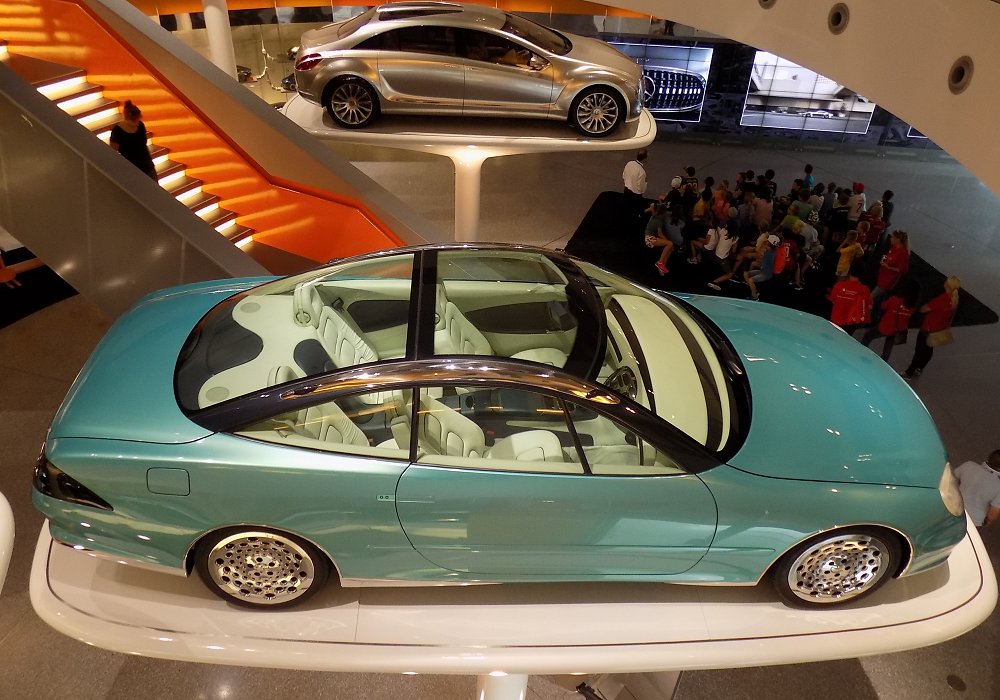
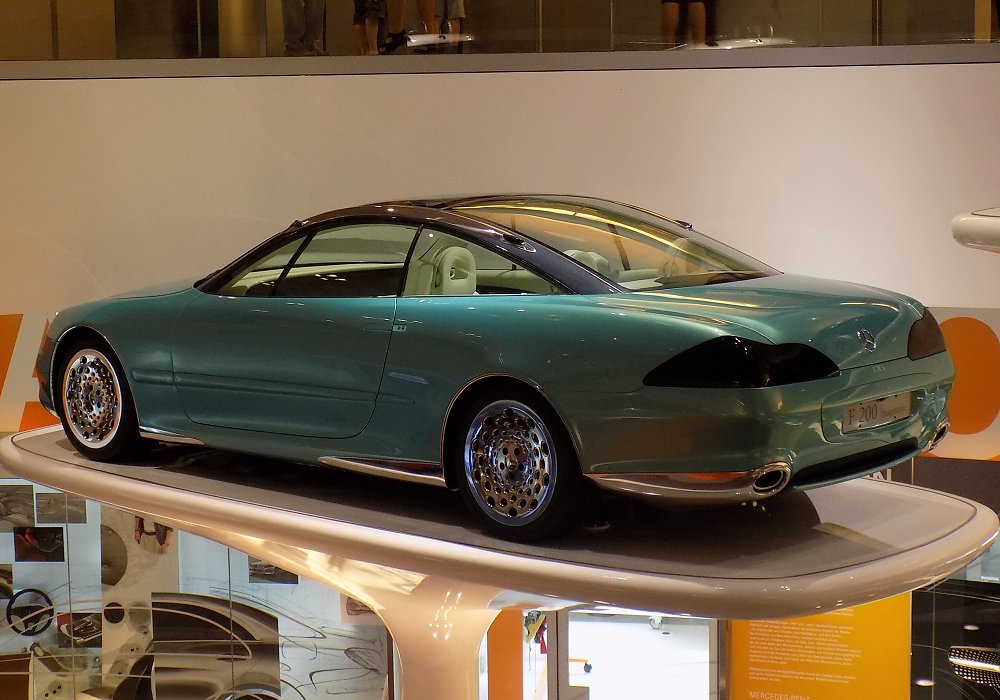
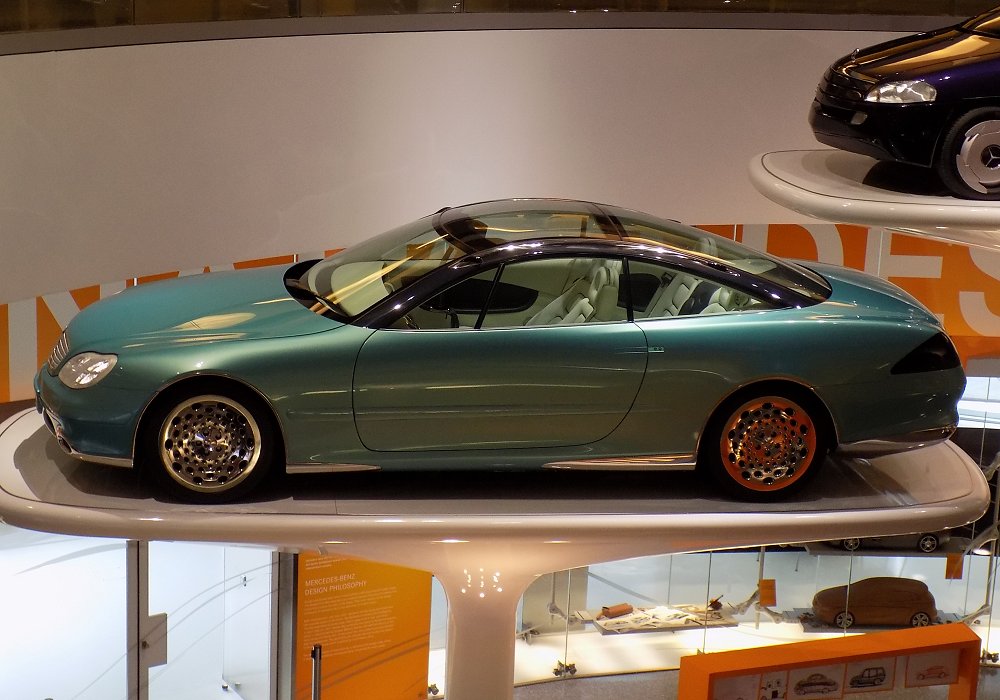
Description
The Mercedes-Benz F 200 Imagination was a radical experimental vehicle unveiled in 1996 and represented one of Mercedes-Benz’s most daring explorations of future vehicle control, interior design and human–machine interaction. Rather than focusing on styling spectacle or outright performance, the F 200 challenged the very fundamentals of how a car is driven and how occupants interact with it.
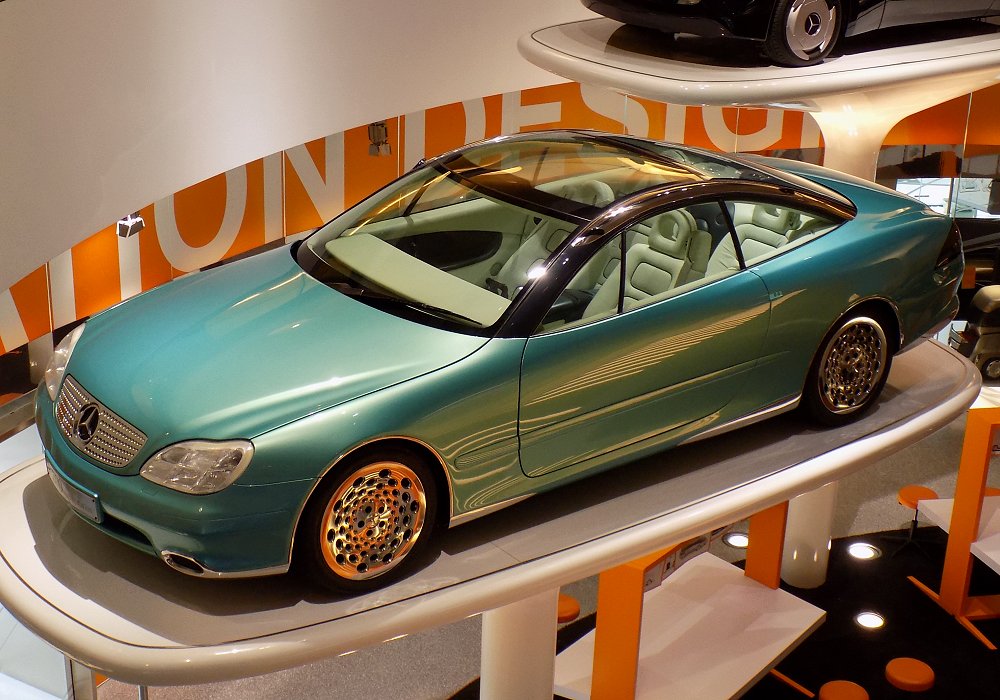
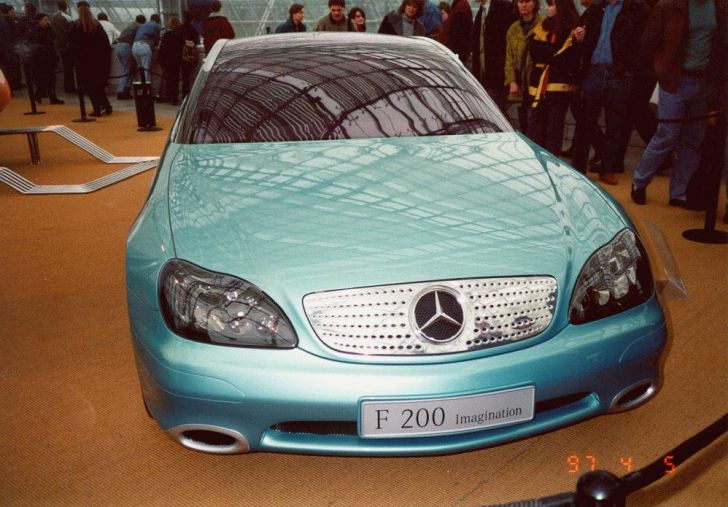
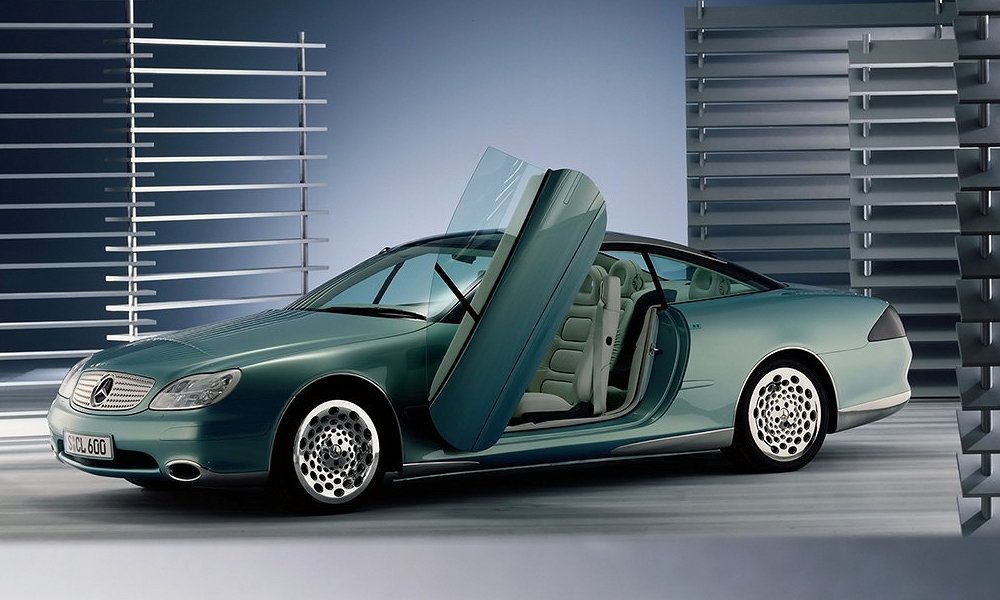
At first glance, the F 200 Imagination appeared sleek and futuristic, with smooth, flowing bodywork and a compact, aerodynamic profile. Its exterior design was deliberately clean and uncluttered, reflecting the idea that future vehicles would be shaped as much by function and efficiency as by traditional automotive styling. The form was secondary, however, to what lay inside.
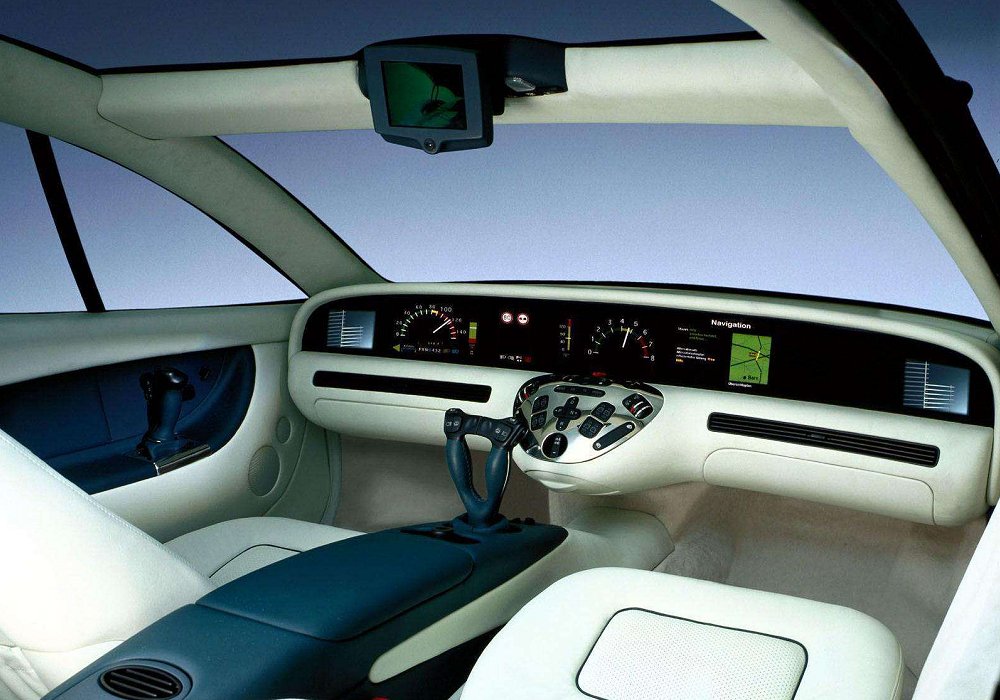
The defining feature of the F 200 was its abandonment of the conventional steering wheel and pedals. In their place, Mercedes-Benz introduced a sidestick-style control system, inspired by aircraft technology. Steering, acceleration and braking were all controlled electronically through hand-operated controllers positioned on the centre console and armrests. This drive-by-wire concept removed mechanical linkages entirely, relying instead on electronic signals and redundant safety systems. The goal was to explore whether driving could become more intuitive, flexible and adaptable to different driver preferences.
This new control philosophy allowed unprecedented freedom in interior design. Without a steering column or pedal box, the cabin could be reconfigured more freely, improving ergonomics, visibility and comfort. The driver’s seating position was more relaxed, and the overall layout suggested a future where cars could be tailored to individual users rather than built around fixed mechanical constraints.
The interior of the F 200 Imagination was dominated by digital displays and electronic interfaces. Traditional analogue instruments were replaced by screens that could change layout depending on driving conditions and driver needs. Information was prioritised and presented selectively, anticipating later developments in configurable digital dashboards and context-sensitive displays. Voice control and multifunction inputs were also explored, reinforcing the idea that future vehicles would rely less on physical switches.
Underlying the radical interface was a strong emphasis on safety. Mercedes-Benz understood that removing mechanical connections demanded absolute reliability, so the F 200 was built around redundant electronic systems designed to maintain control even in the event of component failure. This research fed directly into the brand’s later work on brake-by-wire, steer-by-wire and advanced electronic stability systems.
While the F 200 Imagination used a conventional internal combustion engine as its propulsion source, powertrain technology was not the focus of the project. Mercedes-Benz deliberately chose proven mechanical components so engineers could concentrate on control systems, electronics and user interaction without introducing unnecessary variables.
The F 200 was never intended for production, and Mercedes-Benz made no claim that its sidestick controls would reach showrooms in the same form. Instead, the project’s value lay in exploring possibilities and understanding how drivers might adapt to new ways of controlling a vehicle. Many of the ideas tested in the F 200 informed later developments in electronic throttles, brake assist systems, adaptive controls and interior interface design.
In hindsight, the Mercedes-Benz F 200 Imagination can be seen as remarkably forward-thinking. While steering wheels and pedals remain standard today, the shift toward electronic mediation between driver and vehicle has become universal. Drive-by-wire throttles, advanced driver assistance systems and highly configurable digital interiors all reflect principles first explored in projects like the F 200.
Today, the Mercedes-Benz F 200 Imagination is regarded as a landmark experimental vehicle that questioned assumptions rather than offering easy answers. It stands as an example of Mercedes-Benz’s willingness to rethink the fundamentals of the automobile, applying aerospace-inspired thinking and human-centred design to explore how cars might evolve. As a historical concept, the F 200 represents a moment when imagination, engineering discipline and long-term vision came together to redefine what driving itself could mean in the future.