Description
The Mercedes-Benz CW 311 was a dramatic and unconventional supercar concept that appeared in the late 1970s and stood as a fascinating blend of experimental aerodynamics, independent engineering and Mercedes-Benz mechanical heritage. Although often associated with Mercedes-Benz due to its styling and powertrain, the CW 311 was not an official factory project. Instead, it was developed by engineer and former Mercedes-Benz designer Eberhard Schulz as a personal vision of what a high-speed Mercedes-Benz supercar could be.
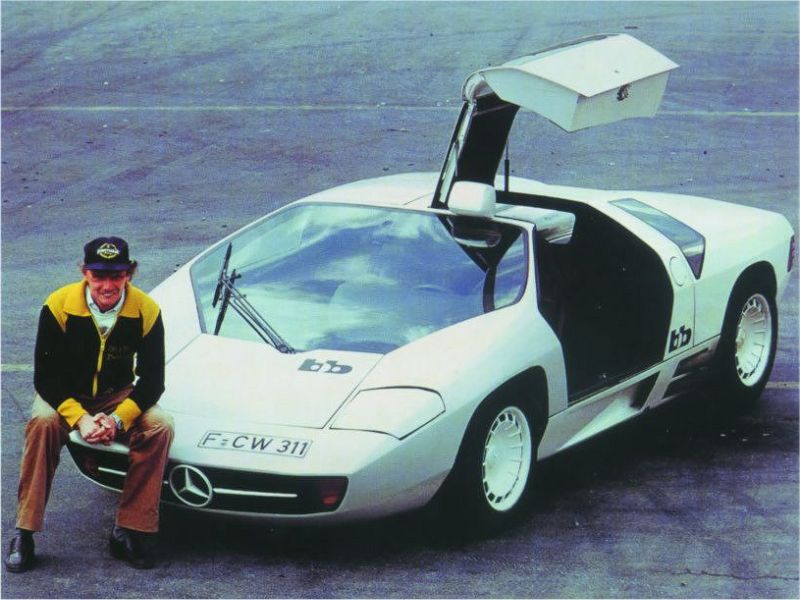
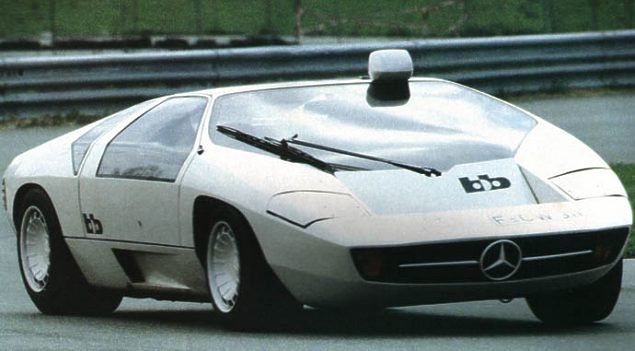
Unveiled in 1978, the CW 311 immediately drew attention for its futuristic wedge-shaped body and extreme low profile. The designation “CW” referred to the German term for aerodynamic drag coefficient, highlighting the car’s core objective of minimising air resistance. The sleek body featured smooth surfaces, a sharply pointed nose, integrated lighting and a long, tapering rear section, all designed to achieve high-speed stability and efficiency. Gullwing doors echoed classic Mercedes-Benz icons and reinforced the visual connection to the brand, even though the project itself was privately developed.
Power came from a 6.3-litre V8 engine sourced from the Mercedes-Benz 450 SEL 6.9. This engine was chosen for its strength, torque and proven reliability rather than outright racing character. Producing around 250 horsepower in standard form, it gave the CW 311 strong performance and a theoretical top speed in excess of 300 km/h, depending on gearing and aerodynamic assumptions. The engine was mounted mid-rear, a layout rarely used by Mercedes-Benz at the time, allowing better weight distribution and contributing to the car’s supercar credentials.
The chassis was purpose-built and designed to support high-speed stability rather than track-focused agility. Suspension geometry was tuned for composure at speed, reflecting the car’s role as a high-speed experimental vehicle rather than a racing prototype. Braking and cooling systems were engineered to cope with sustained fast running, aligning with the project’s emphasis on real-world high-speed capability.
Despite widespread public belief, Mercedes-Benz did not officially endorse or produce the CW 311. However, the company did allow the use of its engine and permitted the car to be displayed at events, which added to the confusion surrounding its status. The high build quality, use of genuine Mercedes-Benz components and the involvement of former Mercedes-Benz personnel gave the CW 311 a level of credibility that set it apart from typical independent concept cars.
Inside, the CW 311 featured a cockpit focused on the driver, with a low seating position and a dashboard dominated by instrumentation. While more refined than a pure racing prototype, the interior was functional and purposeful rather than luxurious, reinforcing the idea that the car was a serious engineering exercise rather than a showpiece.
The CW 311 never entered production, but its impact was significant. It demonstrated that independent engineers could create vehicles that challenged the performance and technological boundaries of established manufacturers. The project also served as a precursor to Eberhard Schulz’s later work, most notably the founding of Isdera, a company dedicated to producing exclusive high-performance cars inspired by similar principles.
Today, the Mercedes-Benz CW 311 is regarded as one of the most intriguing “what-if” supercars of its era. Valued for its striking design, aerodynamic ambition and close association with Mercedes-Benz engineering, it occupies a unique place in automotive history. As a historical vehicle, the CW 311 represents a moment when individual vision, technical skill and experimental thinking combined to create a machine that captured the imagination of enthusiasts and challenged conventional ideas of what a Mercedes-Benz supercar might look like.