Description
The Mercedes-Benz C 111 was one of the most ambitious and influential experimental vehicles ever created by Mercedes-Benz and stood as a rolling testbed for advanced technology during the late 1960s and 1970s. Conceived not as a production car but as a research platform, the C 111 allowed Mercedes-Benz to explore new engine concepts, materials and aerodynamics at a time when the future direction of the automobile was far from certain.
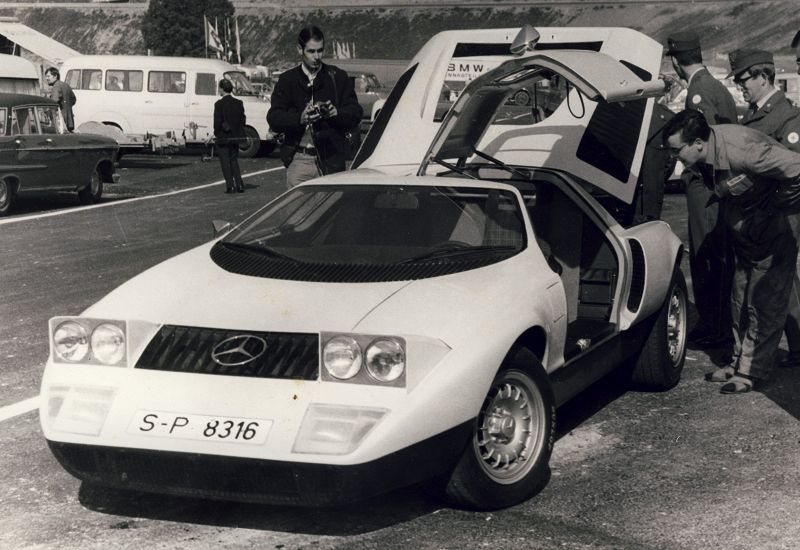
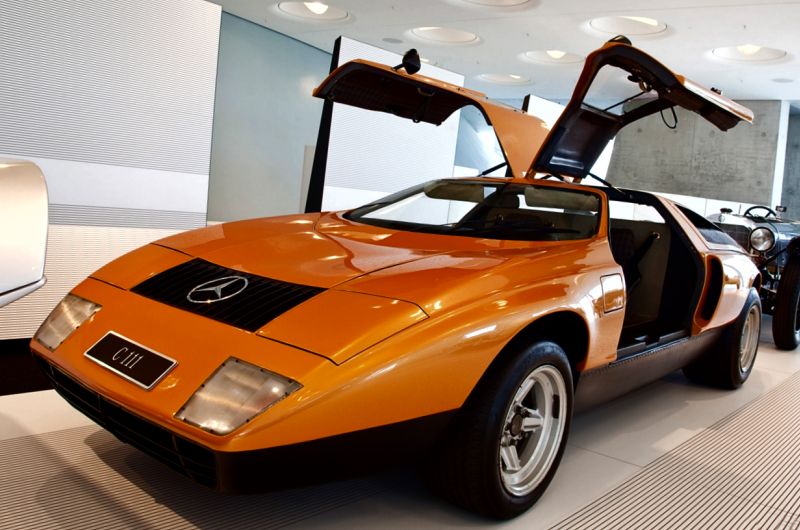
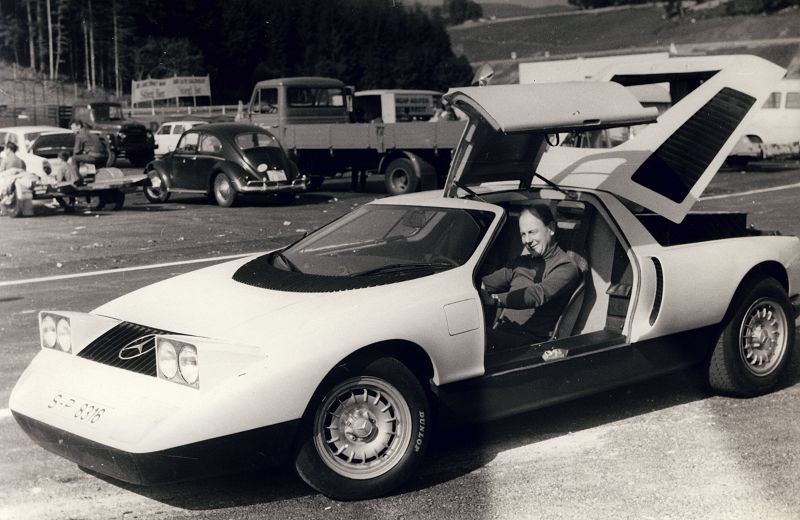
First unveiled in 1969, the C 111 immediately captured public attention with its dramatic wedge-shaped body and distinctive gullwing doors. The design was futuristic and uncompromising, prioritising aerodynamic efficiency and technical packaging over practicality. The low, wide stance and smooth body surfaces reflected Mercedes-Benz’s growing interest in high-speed stability and reduced drag, themes that would later influence both road cars and experimental record vehicles.
At the heart of the C 111 programme was engine development. Early versions were powered by a three-rotor Wankel rotary engine, later expanded to a four-rotor configuration producing very high power outputs for the time. Mercedes-Benz saw the rotary engine as a potential alternative to conventional piston engines, offering smoothness, compact dimensions and high revving capability. However, despite impressive performance, challenges with fuel consumption, emissions and durability ultimately prevented the rotary engine from reaching production use at Mercedes-Benz.
As the programme evolved, the C 111 became a key development vehicle for diesel technology. Later versions were fitted with experimental turbocharged diesel engines, transforming the C 111 from a rotary-powered supercar concept into a high-speed efficiency demonstrator. These diesel-powered variants went on to set multiple speed and endurance records, proving that diesel engines could deliver both performance and reliability. This work directly influenced Mercedes-Benz’s later dominance in diesel passenger car technology.
The chassis of the C 111 made extensive use of lightweight materials, including fiberglass-reinforced plastic for the bodywork. This allowed engineers to experiment with weight reduction techniques while maintaining structural strength. Suspension and braking systems were designed to cope with high speeds and long-duration testing, reflecting the car’s role as a serious engineering tool rather than a styling exercise.
Inside, the C 111 was functional and experimental rather than luxurious. The cockpit was focused on instrumentation and driver control, providing engineers with detailed feedback during testing. While the gullwing doors echoed earlier Mercedes-Benz icons, the interior made it clear that the car was never intended for series production or everyday use.
Although public interest in a production version of the C 111 was immense, Mercedes-Benz consistently maintained that the car was purely experimental. Concerns over safety regulations, emissions standards and long-term durability meant that the technologies explored in the C 111 were better suited to gradual introduction across the wider model range rather than in a single high-performance road car.
The C 111 programme ultimately achieved its goal by shaping the future of Mercedes-Benz engineering. Advances in aerodynamics, turbocharging and diesel engine performance developed through the C 111 fed directly into production vehicles in the decades that followed. Its influence can be seen in later high-speed saloons, endurance record cars and the brand’s reputation for technical leadership.
Today, the Mercedes-Benz C 111 is regarded as one of the most important concept cars in automotive history. Valued not for production numbers or sales success, but for its role in advancing automotive technology, it represents a moment when Mercedes-Benz used bold experimentation to explore the limits of performance and efficiency. As a historical vehicle, the C 111 stands as a symbol of engineering curiosity, innovation and the willingness to challenge convention in pursuit of progress.