
Description
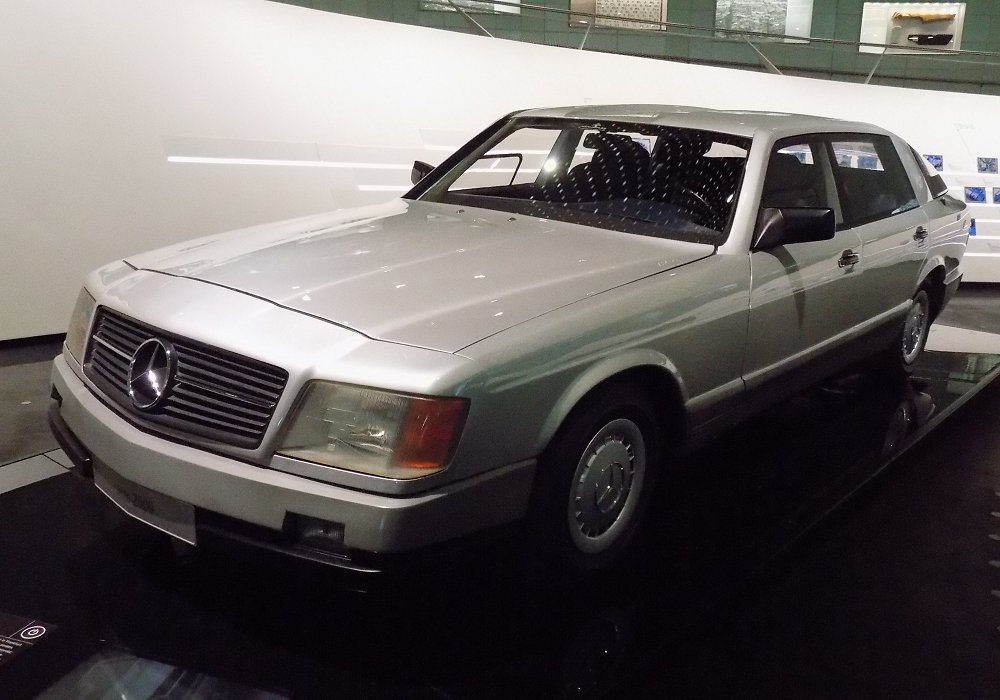
The Mercedes-Benz Auto 2000 was an ambitious experimental vehicle programme developed during the late 1970s and early 1980s and represented Mercedes-Benz’s forward-looking vision of what the family car of the year 2000 could be. Rather than a single concept car, Auto 2000 was a complete research project that explored aerodynamics, alternative powertrains, lightweight construction and energy efficiency at a time when fuel economy and emissions were becoming critical global concerns.
The Auto 2000 programme was initiated in response to the oil crises of the 1970s and increasing environmental awareness. Mercedes-Benz set out to rethink the conventional large saloon by reducing drag, weight and fuel consumption while maintaining safety, comfort and long-distance usability. The goal was not to create a showpiece, but to develop practical solutions that could realistically influence future production vehicles.
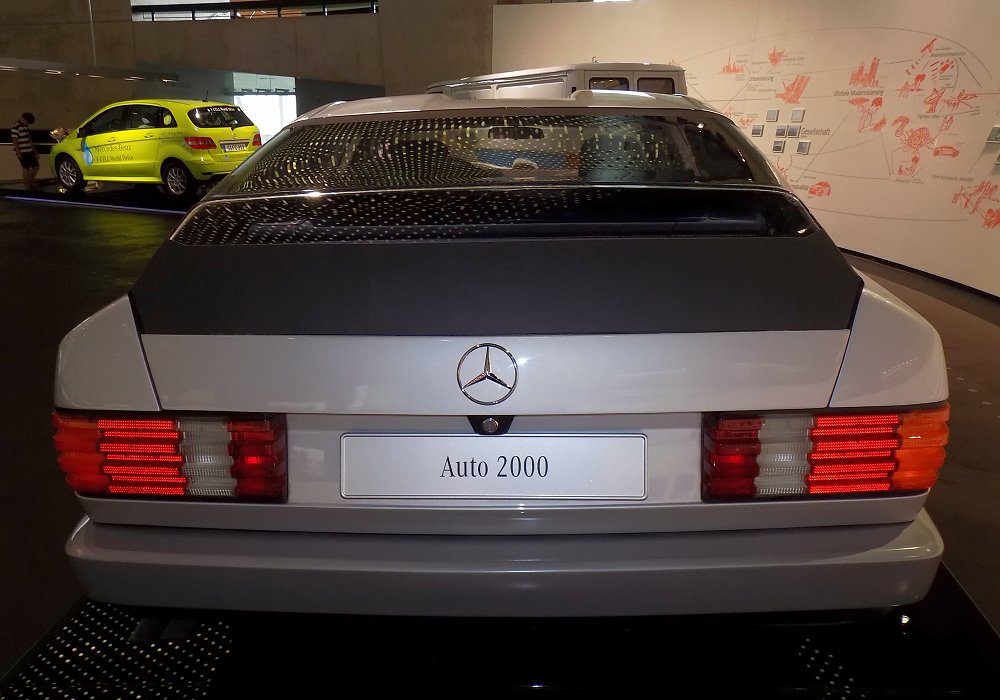
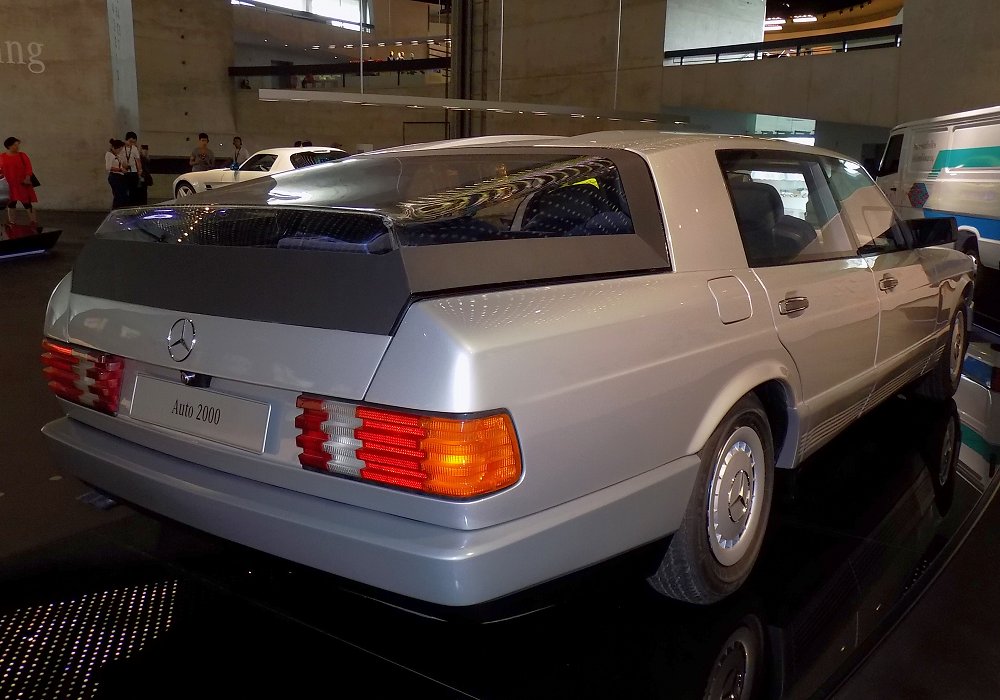
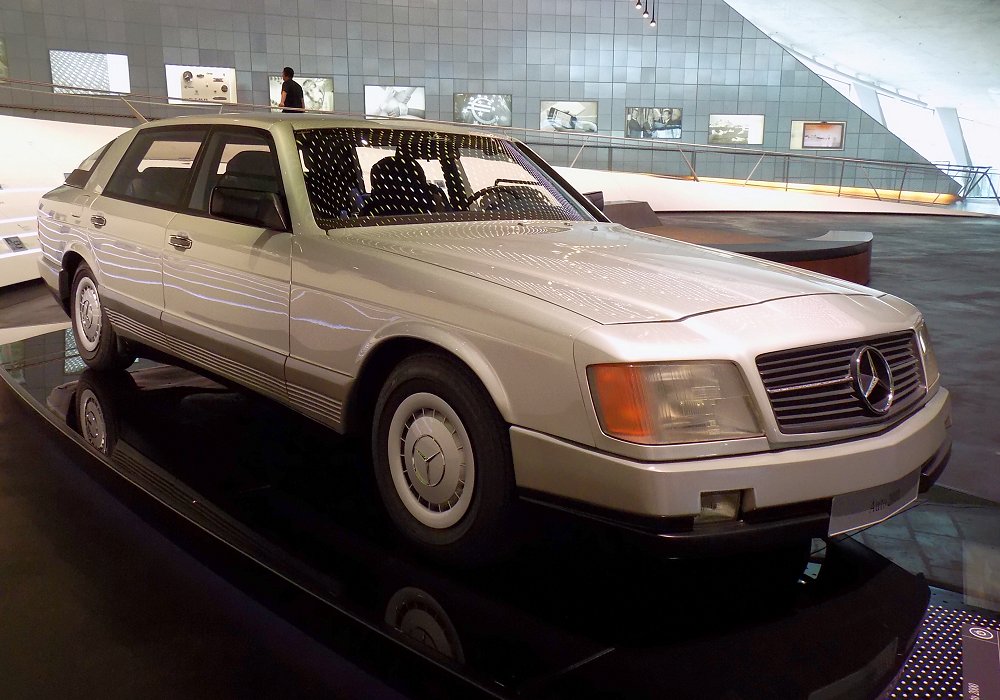
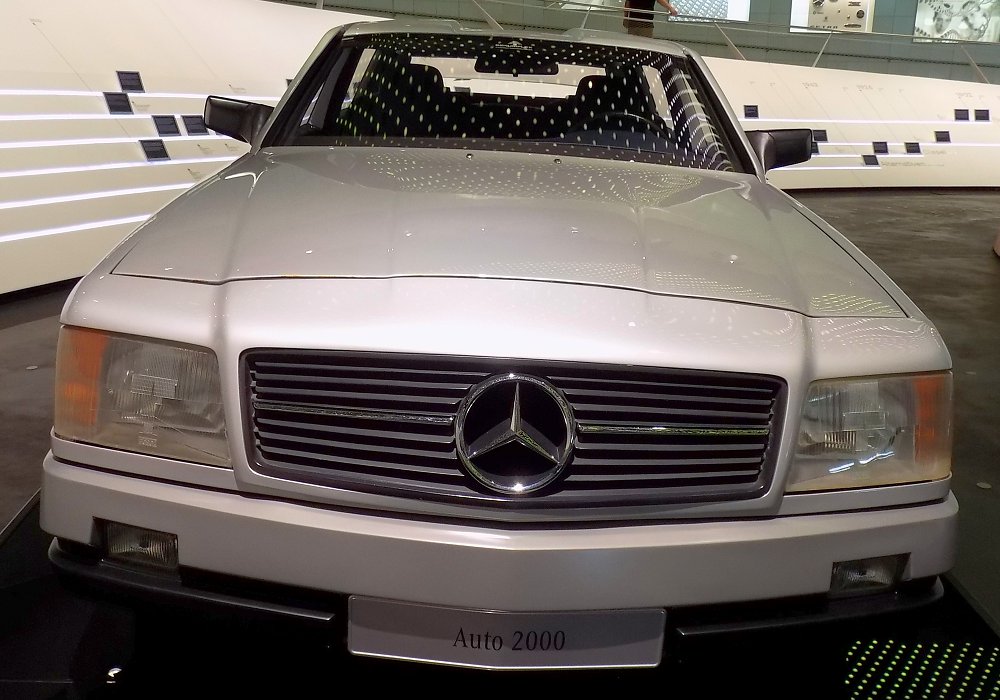
Aerodynamics were a central focus. The Auto 2000 featured a long, smooth body with a gently sloping nose, carefully managed airflow around the wheels and a tapered rear section designed to minimise turbulence. Extensive wind tunnel testing resulted in a very low drag coefficient for a four-door saloon of its size, demonstrating that aerodynamic efficiency could be achieved without radical or impractical styling.
The platform was used to test multiple engine concepts. Mercedes-Benz experimented with advanced petrol engines, turbocharged diesel units and even gas turbine power. One of the most significant aspects of the programme was its work on compact, high-efficiency engines combined with improved aerodynamics, showing that strong performance and low fuel consumption did not have to be mutually exclusive. Diesel technology, in particular, benefited from the research, reinforcing Mercedes-Benz’s growing confidence in diesel as a future passenger car powertrain.
Lightweight construction was another key theme. The Auto 2000 made use of aluminium and high-strength materials to reduce overall mass without compromising structural integrity. This work complemented Mercedes-Benz’s ongoing research into passive safety, ensuring that weight reduction did not come at the expense of occupant protection.
Despite its experimental nature, the Auto 2000 retained the proportions and layout of a conventional four-door saloon. This was deliberate, as Mercedes-Benz wanted to prove that advanced efficiency and technology could be integrated into familiar vehicle formats. The interior was designed to accommodate four or five occupants comfortably, with a focus on ergonomics, visibility and practicality rather than futuristic gimmicks.
Although the Auto 2000 never entered production as a complete vehicle, its influence on later Mercedes-Benz models was substantial. Lessons learned from its aerodynamic development fed directly into production cars during the 1980s and 1990s, contributing to improved fuel efficiency and reduced wind noise. Advances in diesel engine performance, turbocharging and lightweight construction also found their way into series models.
The Auto 2000 programme demonstrated Mercedes-Benz’s long-term approach to engineering. Rather than reacting to short-term trends, the company invested in deep technical research with the aim of shaping future generations of vehicles. Many ideas explored under Auto 2000 took years to mature, but ultimately helped define the brand’s reputation for efficiency combined with safety and comfort.
Today, the Mercedes-Benz Auto 2000 is regarded as one of the most important experimental projects in the company’s history. It represents a moment when Mercedes-Benz looked decades ahead and began laying the groundwork for modern aerodynamic saloons and efficient powertrains. As a historical concept, Auto 2000 stands as a reminder that meaningful innovation often begins quietly, through careful research and practical experimentation, long before it reaches the showroom.