Description
The Mercedes-Benz 500 SLC Rallye was the ultimate competition development of the fixed-roof SLC platform and represented the peak of Mercedes-Benz’s factory-backed endurance rally programme at the turn of the 1980s. Building on the success of the 450 SLC 5.0 Rallye, the 500 SLC Rallye refined the concept further, combining increased engine capacity, reduced weight and exceptional durability to compete in some of the world’s most demanding long-distance rally events.
Power came from a 5.0-litre V8 petrol engine developed specifically for sustained high-load operation rather than outright peak output. Power was in the region of 240 horsepower, with an emphasis on torque, smooth delivery and mechanical reliability. The engine was designed to run for thousands of kilometres under extreme conditions, often in high heat, dust and rough terrain. An automatic transmission was retained, chosen for its strength, torque-handling capability and ability to reduce driver fatigue during marathon rally stages.
Weight reduction remained a central feature of the 500 SLC Rallye. Aluminium body panels were used for the bonnet, boot lid and doors, significantly reducing mass compared with standard production SLC models. Interior trim and comfort equipment were stripped back to essentials, while maintaining sufficient structure and protection for competition use. The fixed-roof SLC body provided superior rigidity over the open SL, making it ideal for rallying where structural strength and durability were critical.
The chassis was extensively reinforced and adapted for endurance rally competition. Suspension retained the basic double wishbone front and semi-trailing arm rear layout but was heavily uprated with strengthened components, increased travel and revised geometry to cope with rough surfaces, jumps and long high-speed stages. Ride height was increased for ground clearance, and the setup prioritised stability, reliability and predictable handling rather than outright agility.
Braking systems were uprated with large disc brakes and improved cooling to withstand sustained heavy use. Underbody protection was added to shield vital mechanical components, and rally-specific wheels and tyres were fitted to cope with a wide variety of surfaces including tarmac, gravel, dirt and broken roads. Additional fuel capacity and cooling modifications were also incorporated to meet the demands of long-distance events.
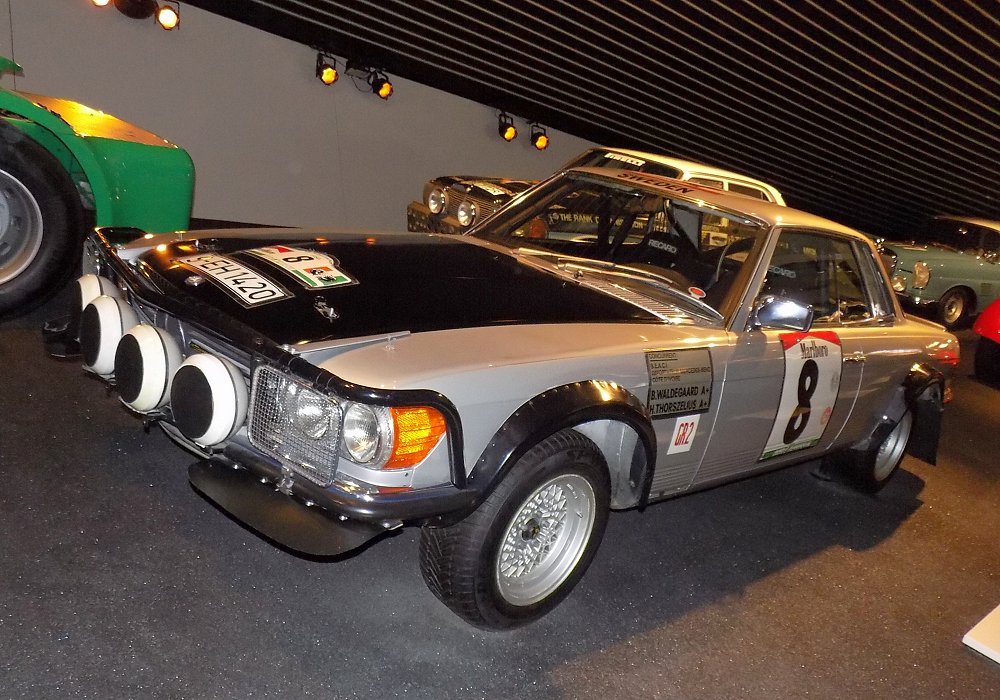
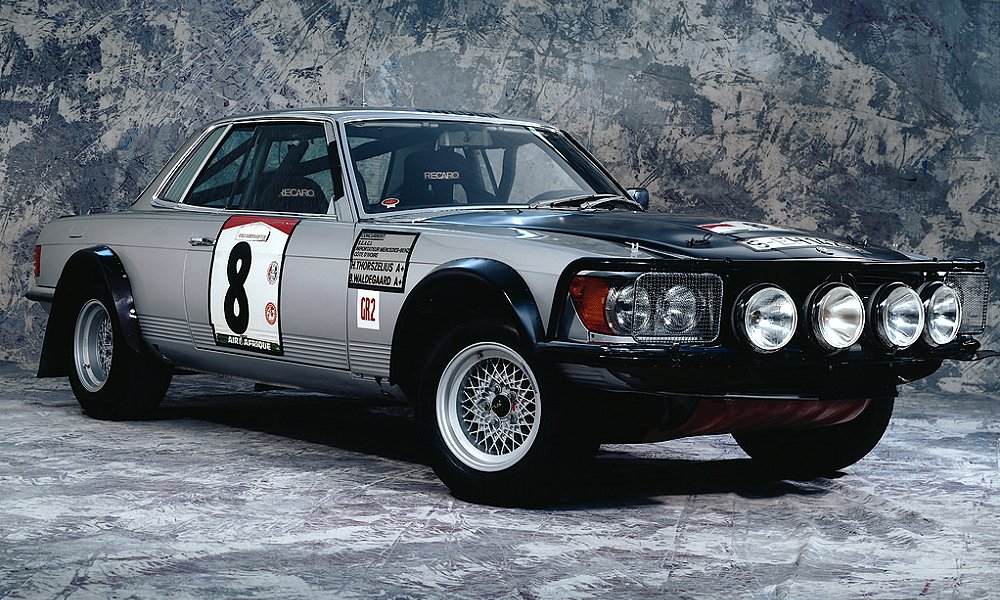
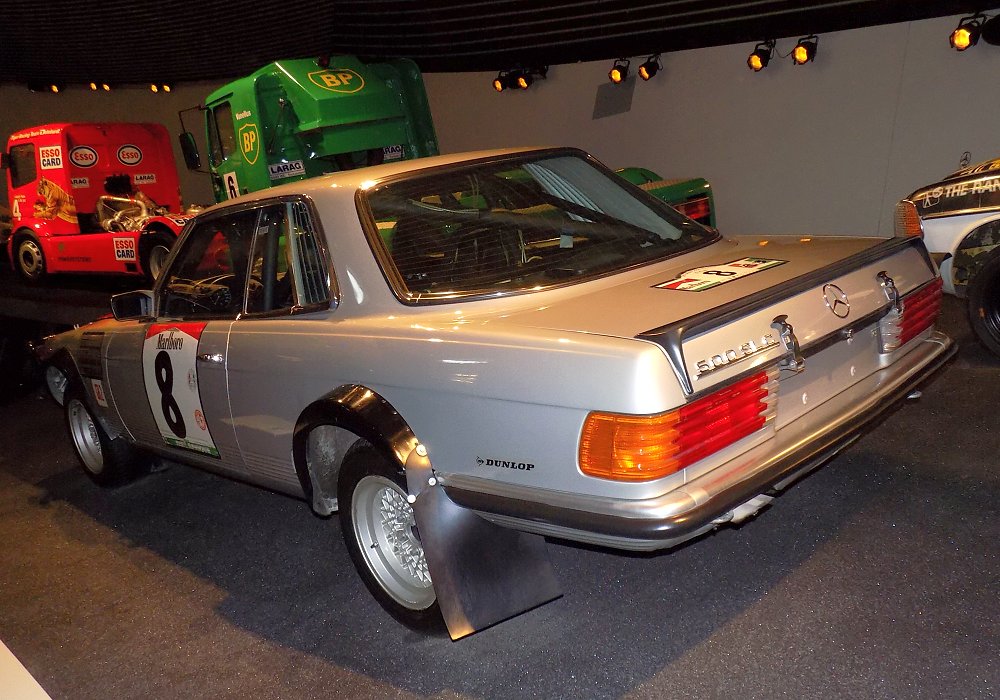
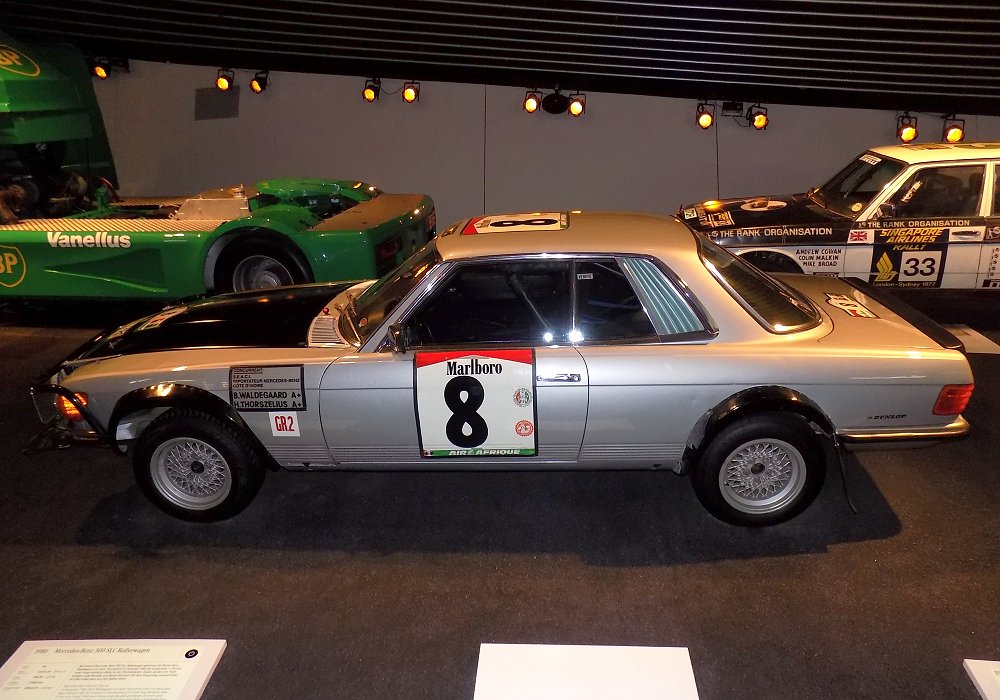
Visually, the Mercedes-Benz 500 SLC Rallye retained the recognisable SLC silhouette but featured clear competition cues. These included additional lighting arrays, reinforced bumpers, wider wheels and factory rally liveries. Despite its competition role, the car maintained a restrained and purposeful appearance, consistent with Mercedes-Benz’s understated design philosophy.
Inside, the cabin was transformed into a functional rally cockpit. Luxury trim was removed and replaced with lightweight racing seats, multi-point harnesses, roll-over protection and additional instrumentation. Navigation equipment and co-driver aids were installed, reflecting the demands of endurance rallying. The layout emphasised clarity, durability and ease of use over comfort.
The 500 SLC Rallye proved itself in international rally competition, particularly in gruelling endurance events where reliability and strength mattered more than outright speed. Its combination of V8 power, reduced weight and exceptional robustness allowed it to outperform more agile but less durable rivals, reinforcing Mercedes-Benz’s reputation for engineering cars capable of surviving the harshest environments.
Today, the Mercedes-Benz 500 SLC Rallye is regarded as one of the most important and fascinating competition cars in the brand’s history. Extremely rare and closely tied to factory motorsport success, it represents the ultimate evolution of the SLC concept. As a historic rally car, it stands as a symbol of Mercedes-Benz’s ability to adapt luxury engineering into a formidable endurance competition machine, combining understated design with extraordinary toughness and performance.