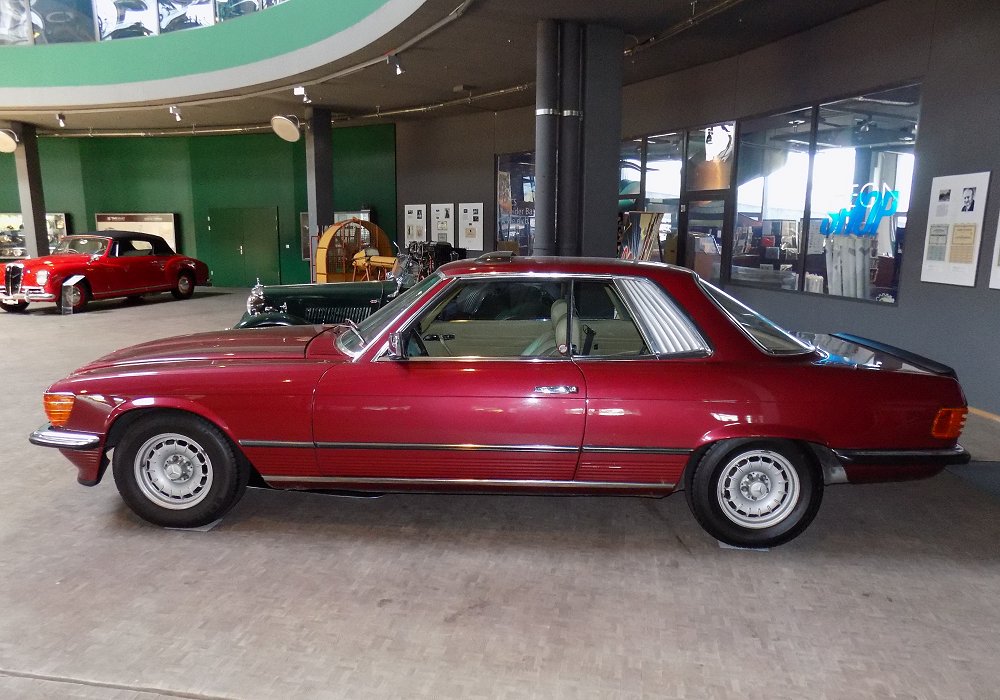
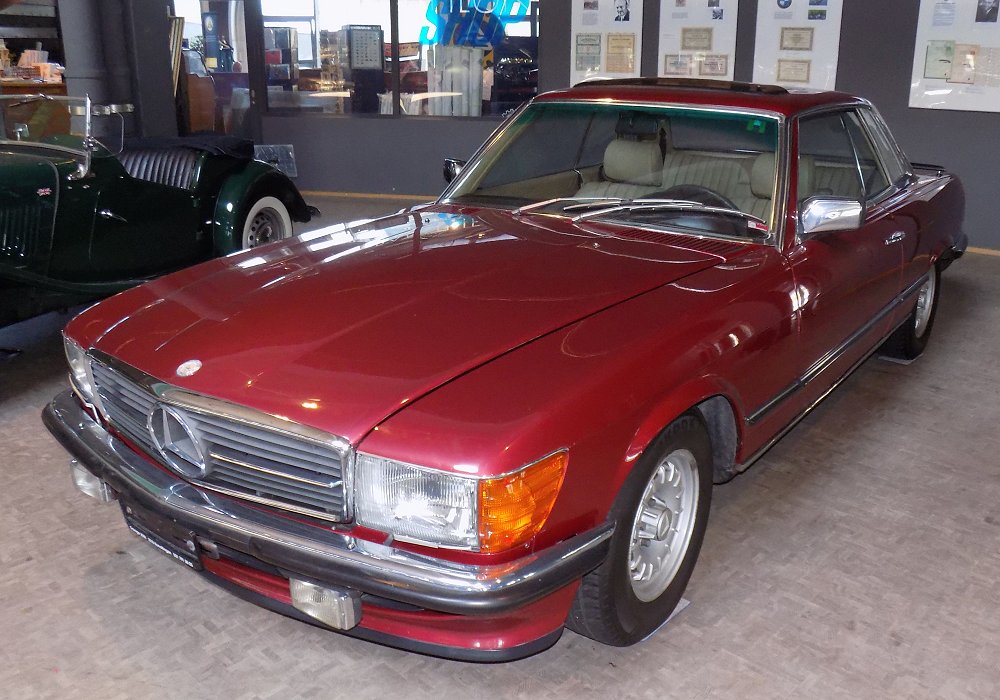
Description
The Mercedes-Benz 500 SLC was the final and most powerful production evolution of the fixed-roof SLC coupé and represented the closing chapter of Mercedes-Benz’s large V8 luxury coupés based on the R107 platform. Introduced near the end of SLC production, the 500 SLC combined increased engine capacity with the established strengths of the model: comfort, durability and long-distance refinement rather than outright sportiness.
Power came from a 5.0-litre V8 petrol engine, producing around 240 horsepower in European specification. This engine delivered noticeably stronger performance than the earlier 350 and 450 SLC models, with improved acceleration and effortless high-speed cruising. Torque was abundant and available low in the rev range, making the car particularly well suited to relaxed, high-speed touring. Power was transmitted through an automatic transmission, chosen for its smoothness and ability to handle the V8’s output with minimal mechanical stress.
The 500 SLC was built on the extended R107 chassis, featuring a longer wheelbase and a fixed roof. This configuration provided greater structural rigidity than the open SL roadster and allowed for occasional rear seating, giving the SLC a level of practicality not found in the two-seat SL. Safety remained a core focus, with a rigid passenger cell, front and rear crumple zones and strong body construction reflecting Mercedes-Benz’s emphasis on occupant protection.
Suspension followed the established SLC layout, with double wishbones at the front and a semi-trailing arm independent rear suspension. The setup prioritised stability, comfort and predictable behaviour at speed rather than sharp handling response. Disc brakes were fitted on all four wheels, offering reliable stopping power suitable for the car’s size, weight and performance.
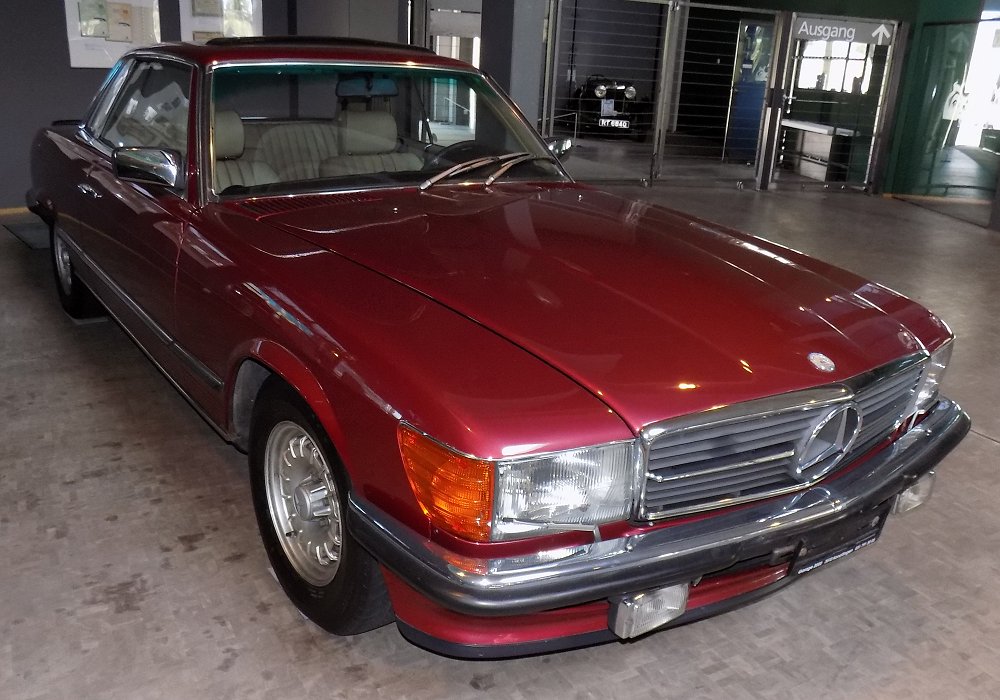
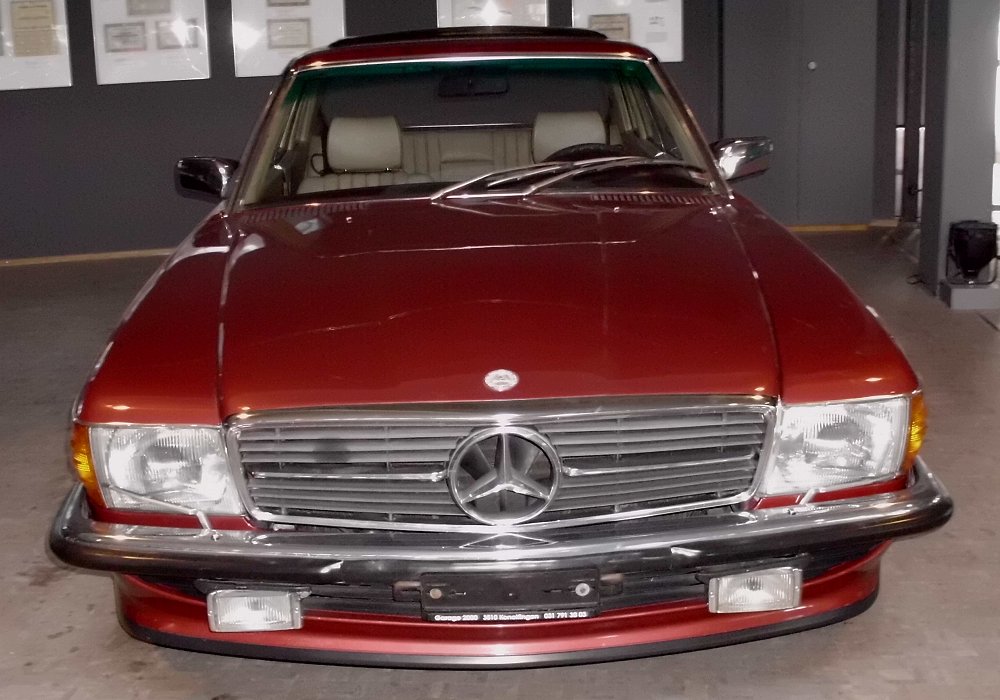
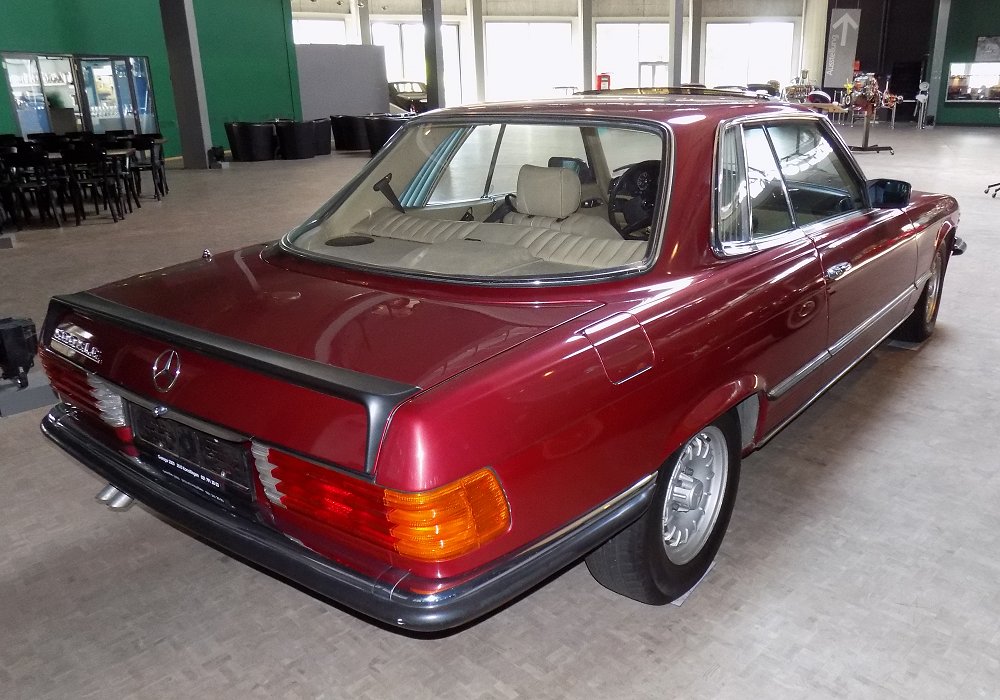
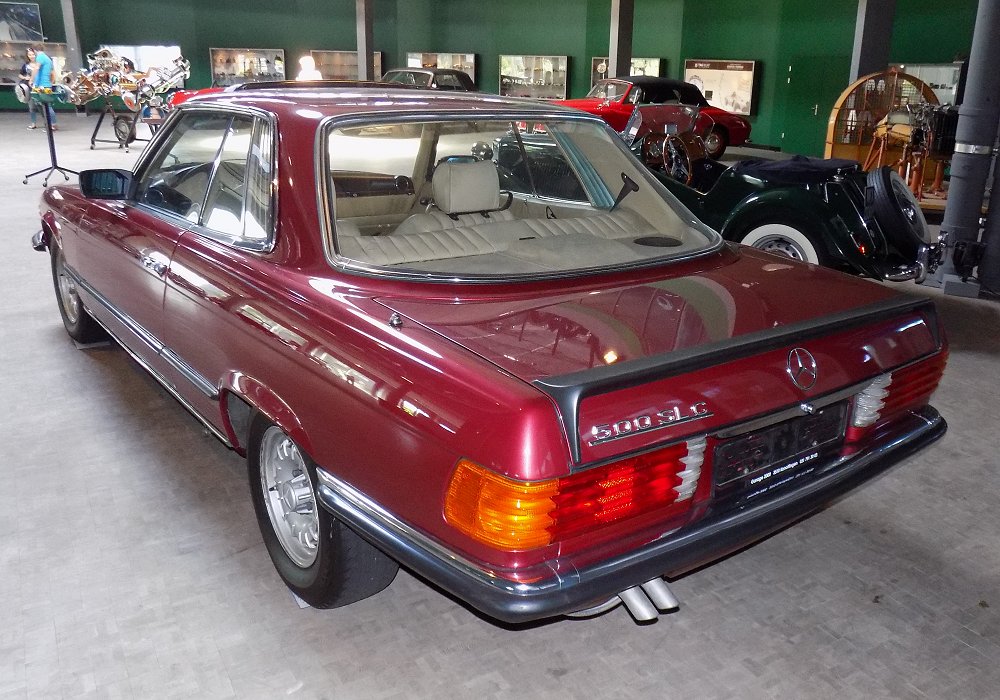
Styling of the Mercedes-Benz 500 SLC was elegant and restrained, closely following the clean lines of earlier SLC models. The longer roofline, frameless doors and distinctive rear quarter windows gave the car a balanced and dignified coupé profile. Compared with the SL roadster, the SLC appeared more formal and substantial, reinforcing its role as a luxury grand tourer designed for year-round use rather than open-top motoring.
Inside, the cabin reflected Mercedes-Benz’s focus on comfort, safety and long-term durability. Front seats were wide and supportive, designed for extended journeys, while the rear seats offered occasional accommodation rather than full four-seat practicality. The dashboard featured impact-absorbing materials, clear instrumentation and logically arranged controls. Interior materials were chosen for robustness and quality, contributing to a calm and reassuring driving environment.
On the road, the Mercedes-Benz 500 SLC delivered a smooth, confident and unhurried driving experience. The V8 engine was quiet and refined at cruising speeds, the automatic transmission shifted seamlessly, and the suspension absorbed poor road surfaces with ease. Steering was light and deliberate, encouraging relaxed progress rather than aggressive driving. The car excelled on long motorway journeys, where its stability, comfort and effortless power could be fully appreciated.
The 500 SLC appealed to buyers who wanted the prestige and performance of a large-capacity V8 Mercedes-Benz but preferred a fixed-roof coupé with added practicality over an open roadster. Produced in relatively limited numbers, it remained a niche model within the broader SL and SLC range.
Today, the Mercedes-Benz 500 SLC is regarded as a rare and distinctive classic. Valued for its powerful V8 engine, elegant coupé styling and robust engineering, it represents the ultimate road-going evolution of the SLC concept. As a classic grand tourer, it stands as a symbol of Mercedes-Benz’s late-1970s philosophy of understated luxury, durability and effortless long-distance performance.