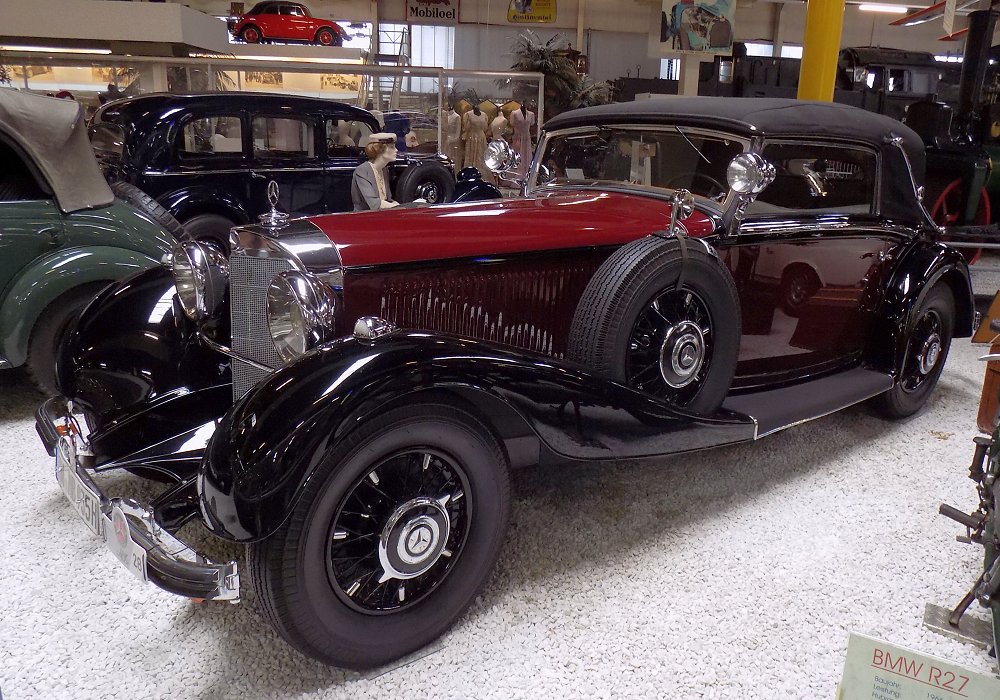
Description
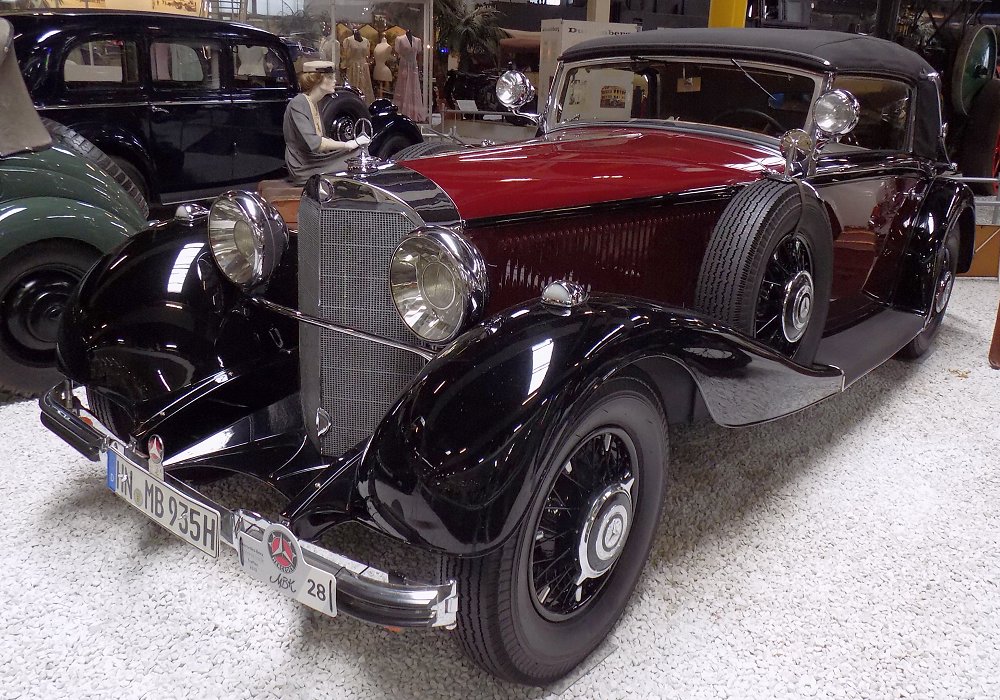
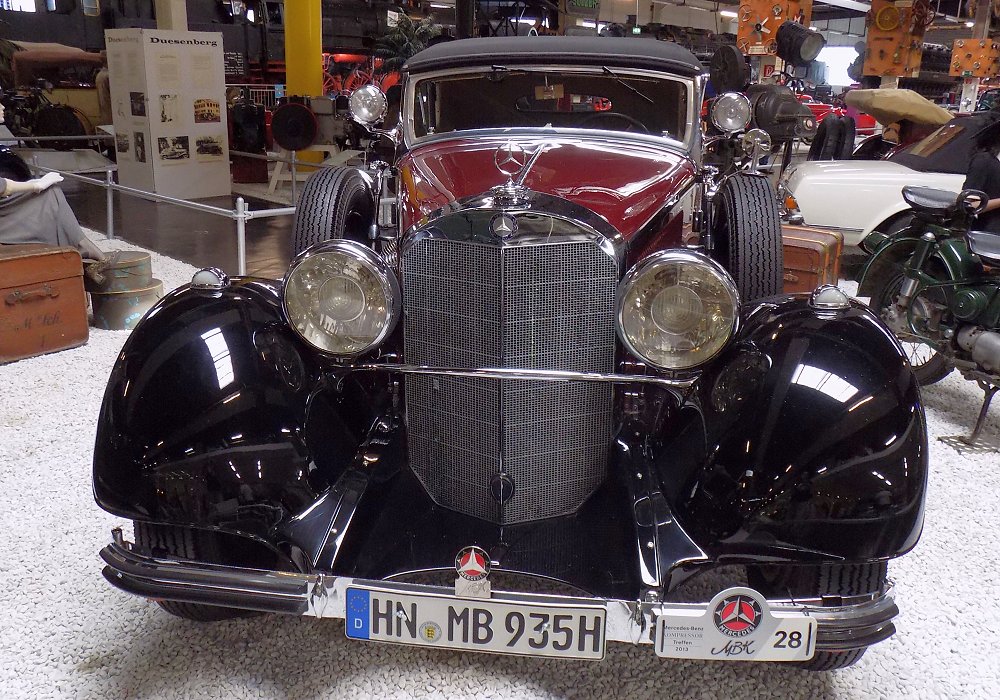
The Mercedes-Benz 500 K Cabriolet was one of the most iconic and glamorous luxury automobiles of the 1930s, introduced in 1934 as the successor to the 380 Kompressor. The letter “K,” standing for Kompressor, signified the car’s supercharged performance, while the cabriolet body highlighted its role as a prestigious open touring car for the world’s elite. Combining dramatic styling, advanced engineering and immense presence, the 500 K Cabriolet became a defining symbol of pre-war Mercedes-Benz luxury and power.
At the heart of the 500 K was a 5.0-litre inline-eight engine equipped with a Roots-type supercharger. Under normal driving conditions the engine operated without boost, delivering smooth and refined power. When the accelerator was fully depressed, the supercharger engaged, increasing output to approximately 160 horsepower. This arrangement gave the 500 K a dual personality: calm and dignified during relaxed touring, yet immensely powerful when required. The surge of supercharged torque allowed the large cabriolet to accelerate with remarkable authority for its time. Power was transmitted through a four-speed manual gearbox, and the engine’s flexibility made the car well suited to both city driving and high-speed autobahn travel.
The 500 K was built on a low-slung ladder-frame chassis that positioned the body deep between the axles, a key factor in both its dramatic appearance and improved handling. This low-frame design lowered the centre of gravity and gave the car far greater stability than earlier upright luxury models. Suspension consisted of semi-elliptic leaf springs at both front and rear, carefully tuned to provide a balance between ride comfort and control. Hydraulic brakes on all four wheels delivered strong and dependable stopping power, essential given the car’s performance potential and substantial mass.
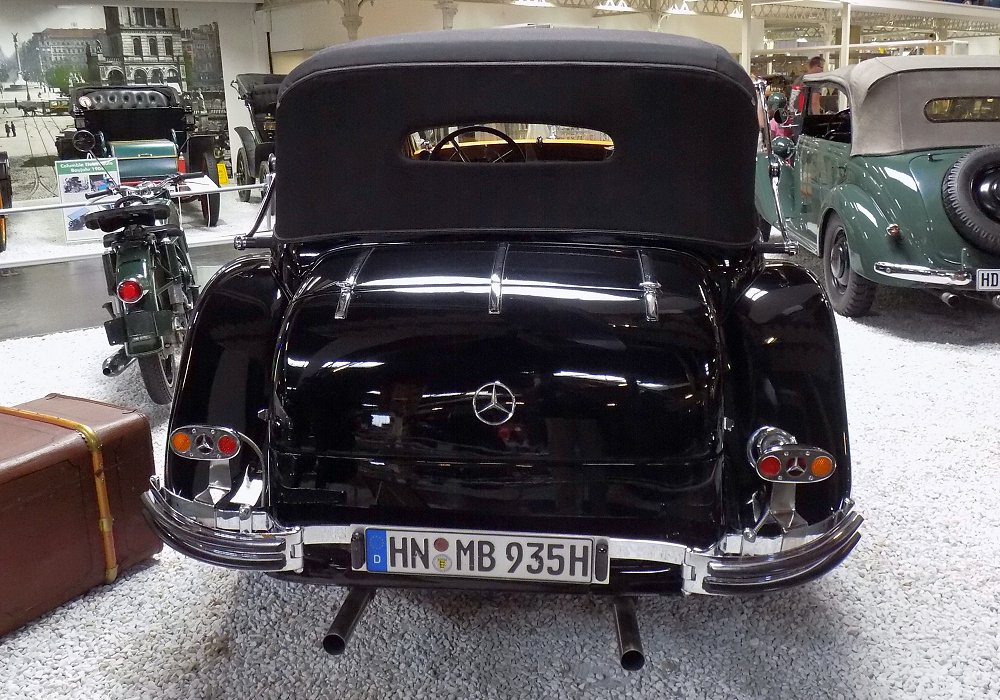
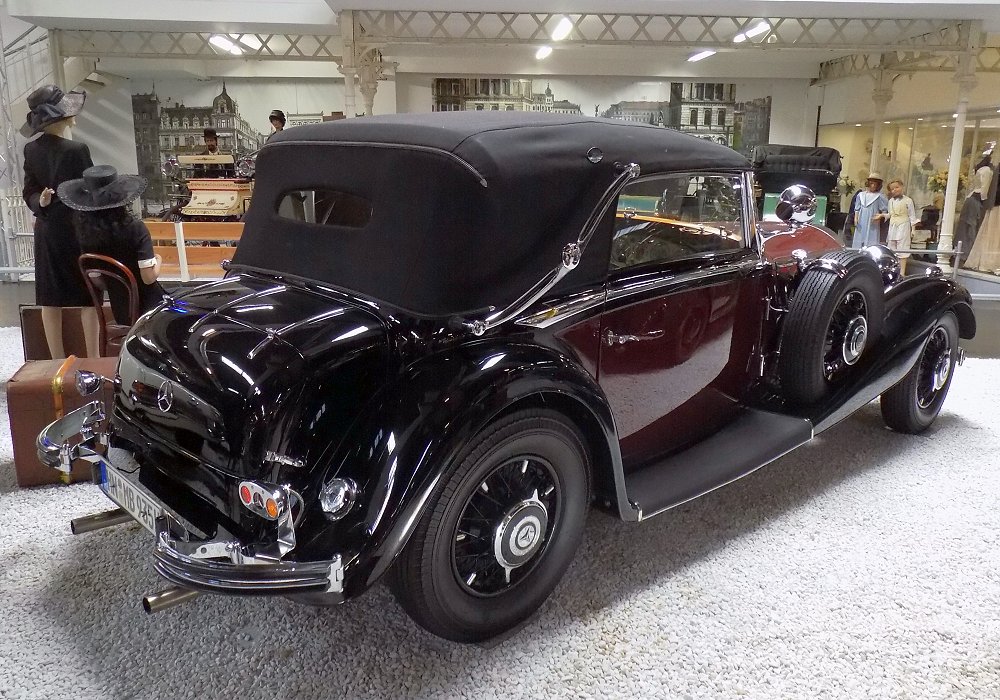
The cabriolet bodywork, crafted by the Sindelfingen coachworks, was among the most striking automotive designs of the decade. The 500 K was offered in several cabriolet configurations, including Cabriolet A, B and C, differing mainly in seating capacity and door arrangement. All shared the same dramatic proportions: an exceptionally long bonnet, sweeping front wings, side-mounted spare wheels and a low, elegant passenger compartment. The folding fabric roof was engineered to sit low and compact when lowered, preserving the car’s flowing lines. With the roof raised, the 500 K Cabriolet retained a formal, commanding presence; with it lowered, the car became a breathtaking open tourer of immense visual impact.
Inside, the 500 K Cabriolet offered a level of luxury befitting its status. The cabin was appointed with fine leather upholstery, polished wood veneers and high-quality metal fittings. The dashboard featured clear, elegantly arranged instruments, while switches and controls were engineered with precision and durability in mind. Seating was generous and deeply cushioned, designed for comfort during long-distance travel. Despite the car’s performance credentials, the interior environment remained refined and quiet, reinforcing its role as a luxury grand tourer rather than a sporting machine.
On the road, the Mercedes-Benz 500 K Cabriolet delivered an experience unlike almost any other car of its era. In gentle driving, it behaved as a smooth, dignified luxury automobile, absorbing road imperfections with ease. When the supercharger engaged, the transformation was dramatic, providing powerful acceleration and a sense of effortless speed that few contemporaries could rival. The low chassis gave the car surprising stability at higher speeds, though its size and weight still demanded respect from the driver. The overall character was one of commanding performance wrapped in opulent refinement.
The 500 K Cabriolet was produced in relatively small numbers between 1934 and 1936, as it was extremely expensive and hand-built to order. Many examples were custom-finished to individual client specifications, further enhancing their exclusivity. Although its production run was short, the model laid the groundwork for the even more famous 540 K, which refined and extended the concept.
Today, the Mercedes-Benz 500 K Cabriolet is regarded as one of the greatest luxury cars of the pre-war era. It embodies the height of 1930s automotive glamour, engineering ambition and craftsmanship. Surviving examples are among the most valuable and sought-after classic cars in the world, celebrated for their dramatic styling, supercharged performance and their role in establishing Mercedes-Benz as the unrivalled master of pre-war luxury and prestige.