Description
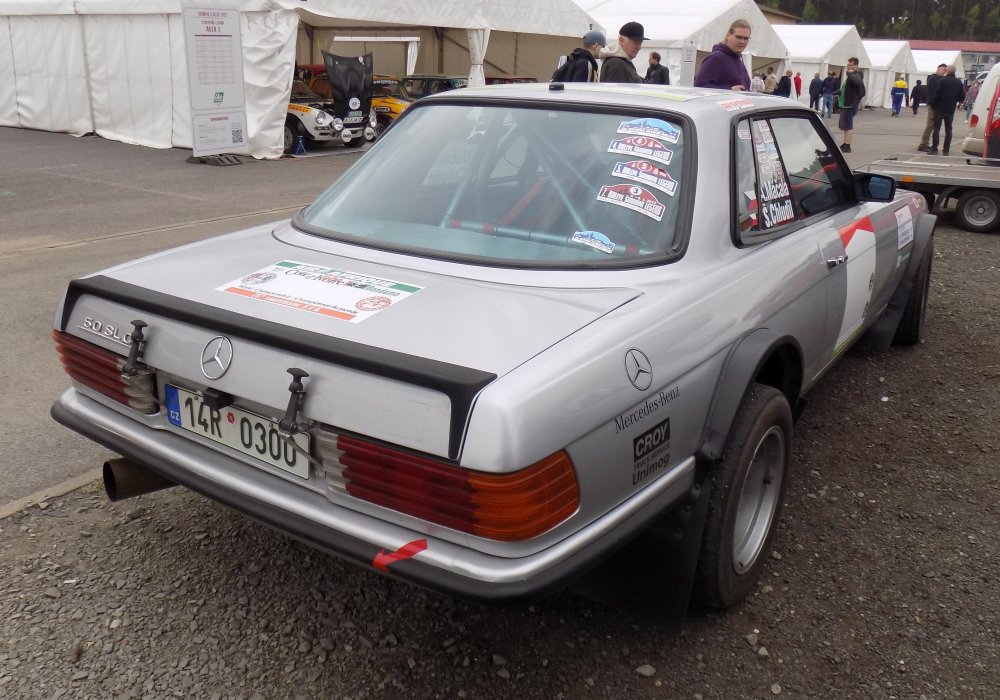
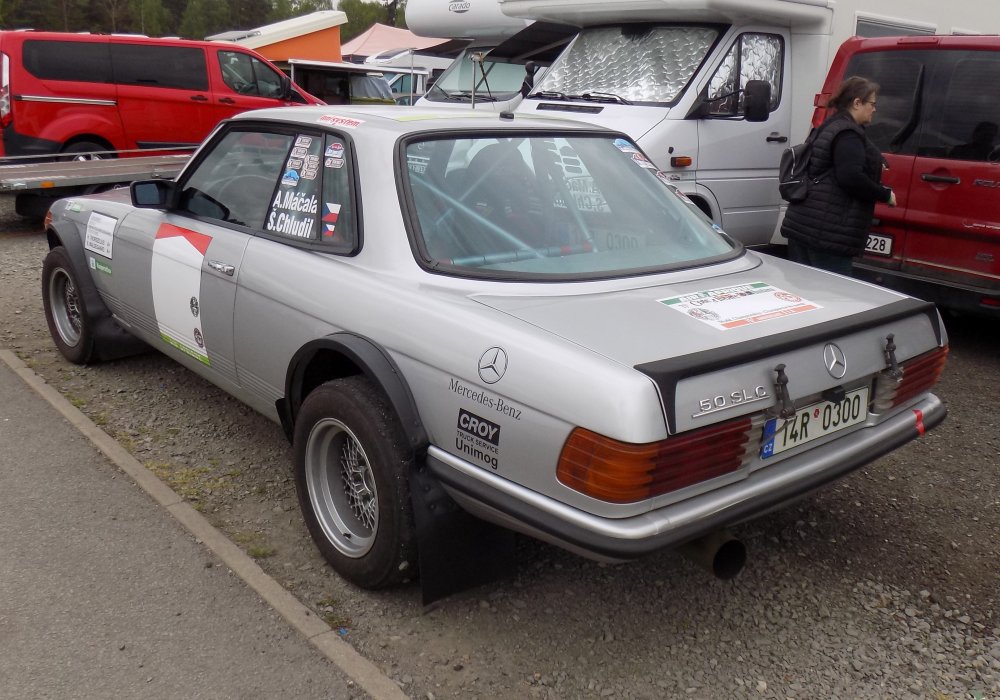
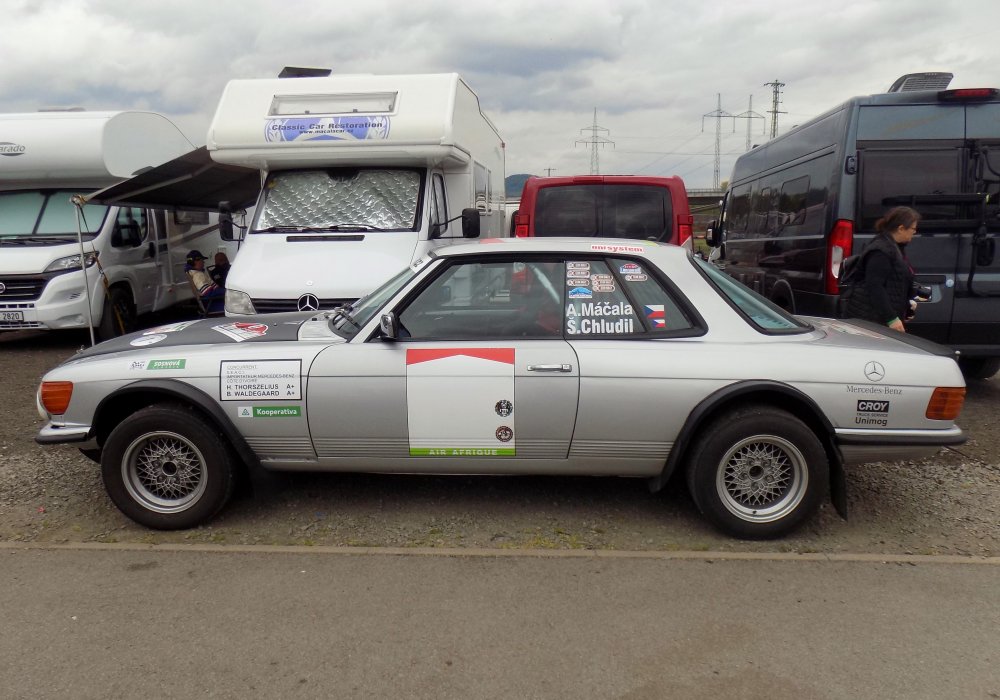
The Mercedes-Benz 450 SLC 5.0 Rallye was the full competition expression of the rare 450 SLC 5.0 and represented Mercedes-Benz’s most serious factory involvement in international rallying during the late 1970s. Developed specifically for long-distance endurance rallies, the Rallye version transformed the luxury SLC coupé into a formidable competition machine capable of surviving and winning some of the toughest events in the world.
At its heart was a 5.0-litre V8 petrol engine derived from Mercedes-Benz’s large-capacity road engines but tuned for durability and sustained high-speed operation rather than peak output. Power was in the region of 240 horsepower, with a strong emphasis on torque and reliability. The engine was designed to run for long periods under extreme conditions, often in high temperatures and over rough terrain. An automatic transmission was retained, chosen for its robustness and ability to handle the V8’s torque while reducing driver fatigue during marathon events.
Weight reduction was a key element of the 450 SLC 5.0 Rallye. Aluminium body panels were used for the bonnet, boot lid and doors, significantly lowering overall mass compared with standard steel-bodied SLCs. Additional weight savings came from the removal of unnecessary trim and luxury equipment, while still retaining enough structure and protection for endurance rally use. The fixed-roof SLC body provided superior rigidity compared with the open SL, making it better suited to competition.
The chassis was heavily reinforced and adapted for rally conditions. Suspension retained the basic layout of double wishbones at the front and a semi-trailing arm independent rear suspension but was extensively reworked with strengthened components, increased travel and firmer settings to cope with rough surfaces, jumps and prolonged high-speed sections. Ride height was increased for ground clearance, and the suspension was tuned for stability and durability rather than comfort.
Braking systems were uprated to withstand sustained heavy use, with large disc brakes and improved cooling. Wheels and tyres were selected specifically for endurance rallying, capable of handling a wide range of surfaces including tarmac, gravel and dirt. Underbody protection was added to shield vital mechanical components from damage during off-road sections.
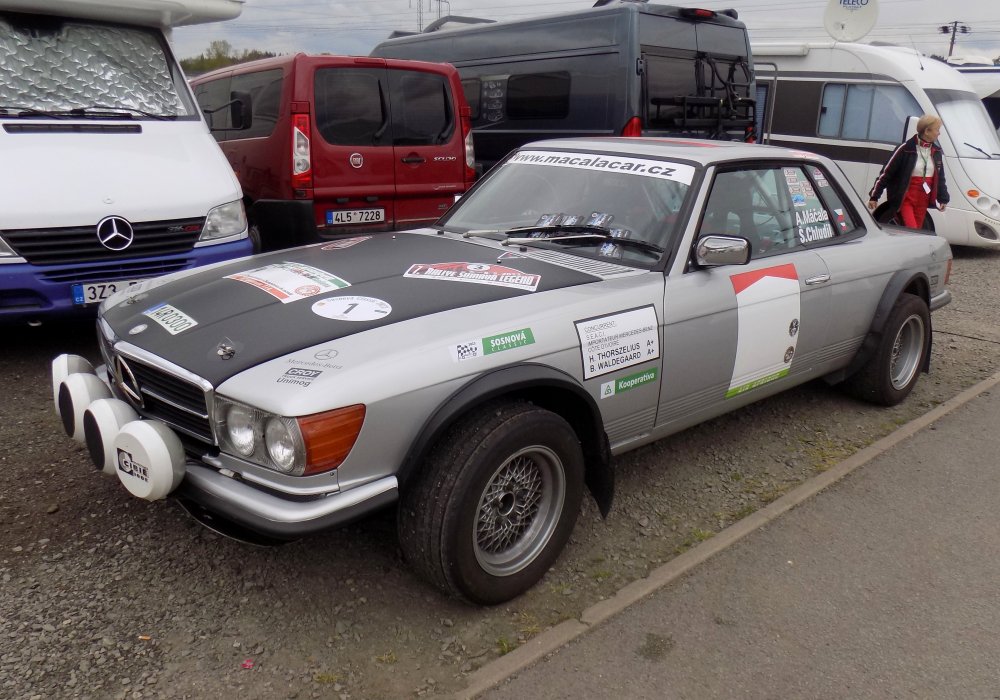
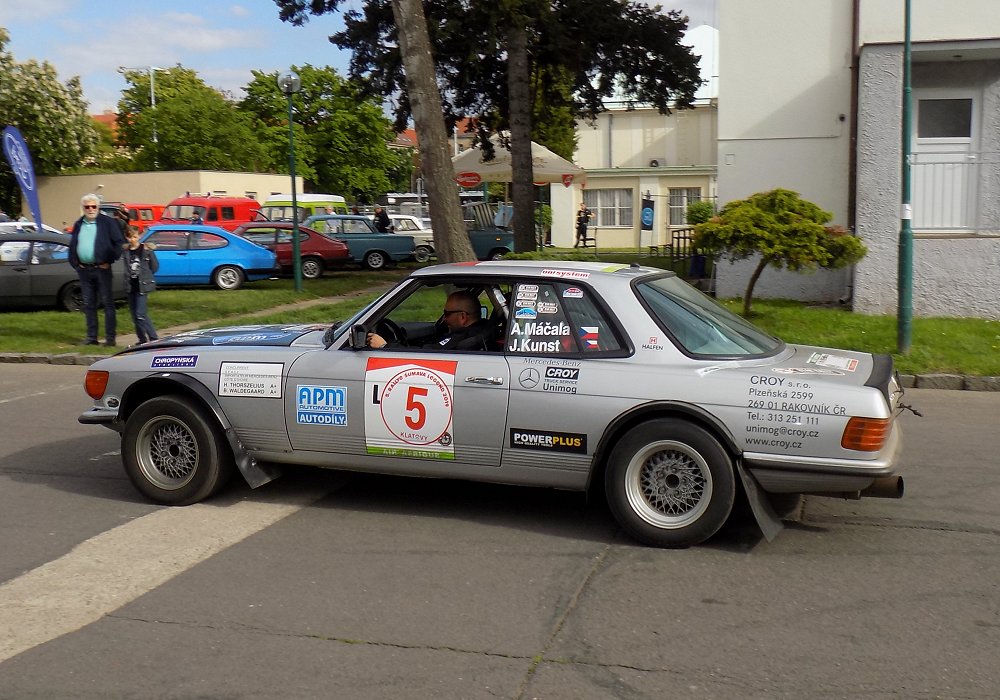
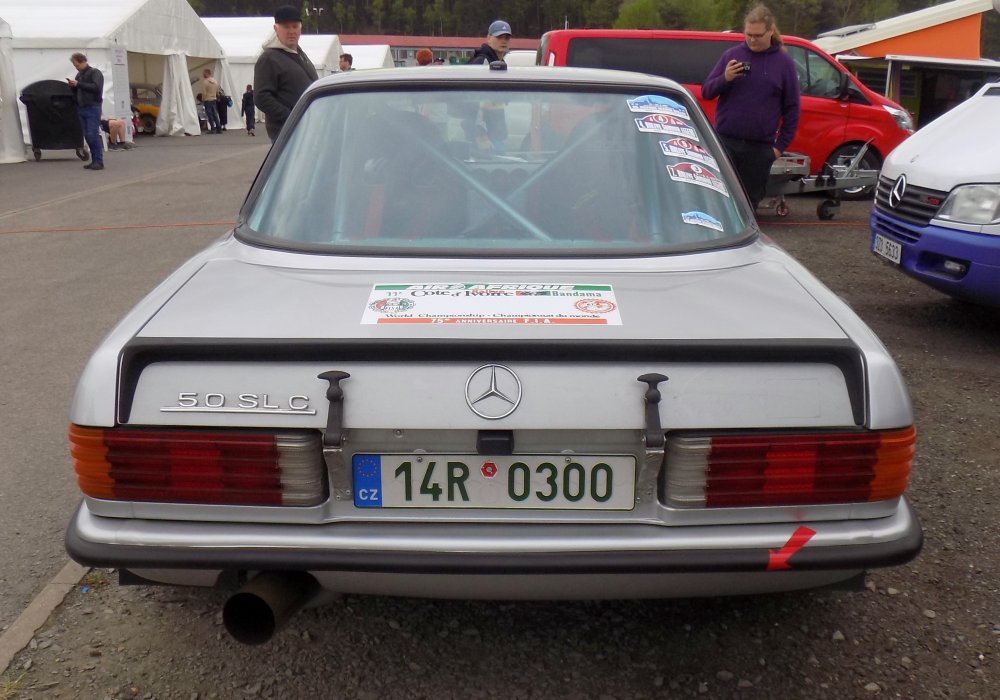
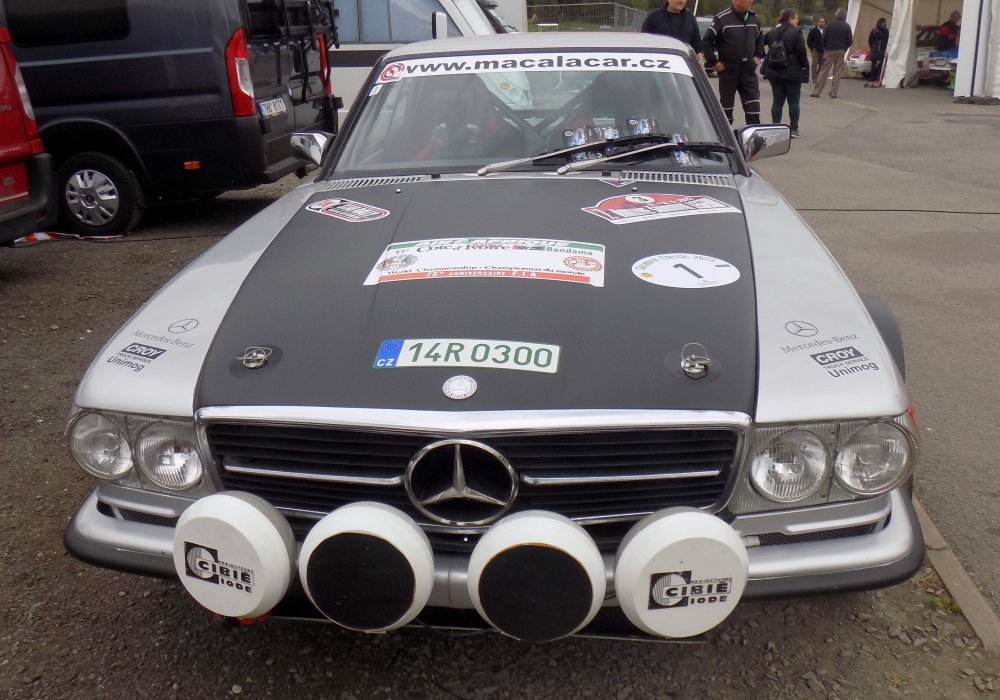
Visually, the Mercedes-Benz 450 SLC 5.0 Rallye was purposeful rather than flamboyant. It retained the basic SLC silhouette but featured competition lighting, reinforced bumpers, rally wheels and subtle aerodynamic adjustments. Factory rally liveries and sponsor markings distinguished the cars from their road-going counterparts, but the overall appearance remained unmistakably Mercedes-Benz, restrained and functional.
Inside, the cabin was transformed into a competition environment. Luxury trim was stripped out and replaced with lightweight racing seats, harnesses, roll-over protection and additional instrumentation. Navigation equipment and co-driver aids were installed, reflecting the demands of long-distance rallying. Despite these changes, the interior retained a sense of solidity and organisation typical of Mercedes-Benz engineering.
The 450 SLC 5.0 Rallye achieved notable success in international rally competition, particularly in endurance events such as the Safari Rally and the Bandama Rally. Its combination of V8 power, reduced weight and exceptional durability allowed it to outperform more agile but less robust rivals. These victories demonstrated that Mercedes-Benz could adapt its luxury engineering philosophy to the harshest motorsport environments.
Today, the Mercedes-Benz 450 SLC 5.0 Rallye is regarded as one of the most important and fascinating competition cars in the brand’s history. Valued for its rarity, motorsport success and unique blend of luxury origins and competition engineering, it stands apart from both the standard SLC range and typical rally cars of its era. As a historic rally machine, it represents a rare moment when Mercedes-Benz combined understated design, brute endurance and factory-backed motorsport ambition into a truly formidable competitor.