Description
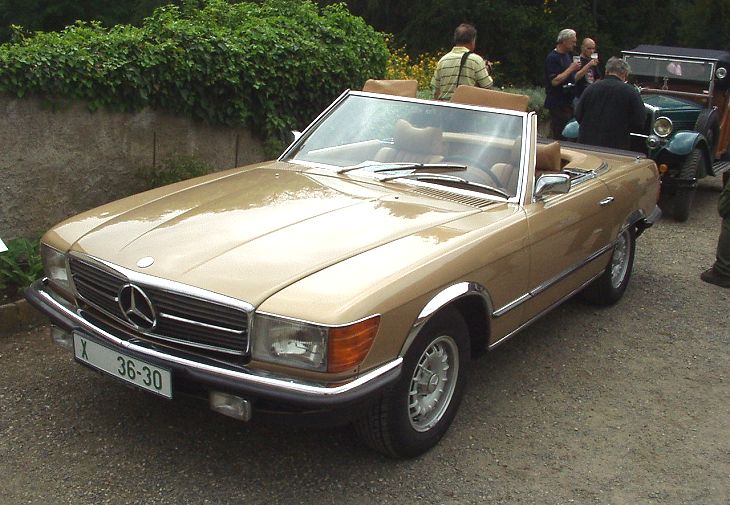
The Mercedes-Benz 350 SL Automatic was the most common and character-defining version of the early R107 series and perfectly expressed Mercedes-Benz’s move toward a refined V8 grand touring roadster in the 1970s. With its smooth automatic transmission paired to a torquey V8, the 350 SL Automatic prioritised effortless performance, comfort and long-distance usability over sporting sharpness.
Power came from a 3.5-litre V8 petrol engine producing around 200 horsepower in European specification. The engine was smooth, quiet and flexible, delivering strong low- and mid-range torque that suited relaxed cruising. Mated to a three-speed automatic transmission, power delivery was progressive rather than aggressive, allowing the car to glide effortlessly through traffic and maintain high motorway speeds with minimal effort. This drivetrain combination defined the 350 SL’s character as a luxury tourer rather than a sports car.
The R107 chassis was significantly more substantial than that of the preceding Pagoda models and was engineered with a strong emphasis on safety. It featured a rigid passenger cell, front and rear crumple zones and improved side-impact protection. Suspension consisted of double wishbones at the front and a semi-trailing arm independent rear suspension, providing improved stability and predictable handling compared with earlier SL generations. Disc brakes were fitted on all four wheels, offering reliable and confident stopping power appropriate to the car’s size and performance.
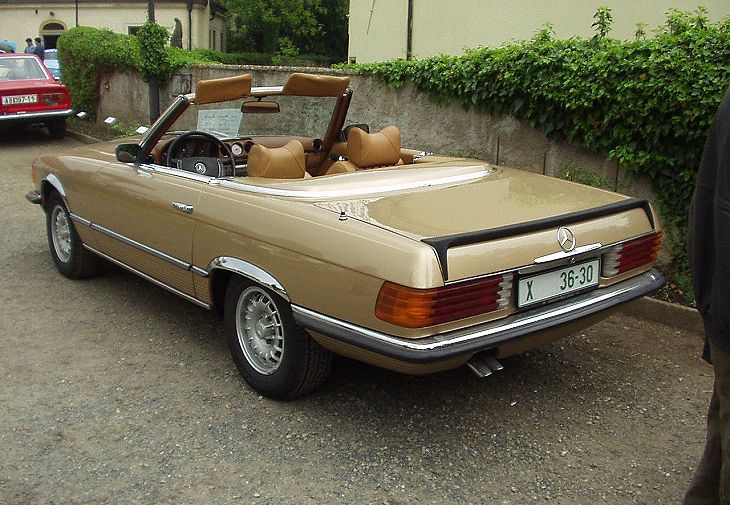
Styling of the Mercedes-Benz 350 SL Automatic was muscular and modern, with a wider stance and more assertive proportions than the W113 series. The design conveyed solidity and durability, with restrained chrome detailing and clean surfaces. A removable hardtop was standard equipment, giving the car a coupé-like appearance when fitted, while the folding fabric soft top allowed open-air driving when desired. The overall look was purposeful rather than delicate, reflecting the car’s V8 power and luxury positioning.
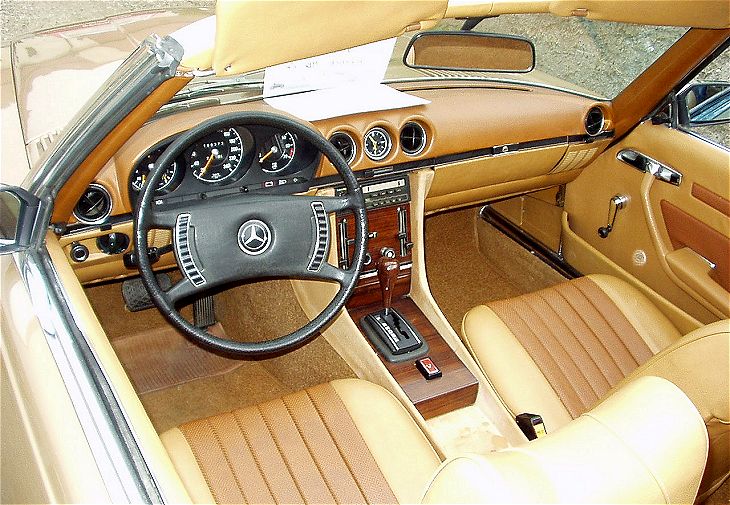
Inside, the cabin was designed for comfort, safety and everyday usability. The dashboard featured impact-absorbing materials, controls were logically arranged, and visibility was excellent. Seats were wider and more supportive than those of earlier SLs, making the 350 SL particularly comfortable on long journeys. Interior materials emphasised durability and quality, reinforcing the car’s role as a premium touring vehicle rather than a lightweight sports roadster.
On the road, the Mercedes-Benz 350 SL Automatic delivered a calm, composed and reassuring driving experience. The V8 engine was nearly silent at cruising speeds, the suspension absorbed poor road surfaces effectively, and the automatic transmission allowed smooth, uninterrupted progress. Steering was light and deliberately tuned for ease rather than feedback, encouraging relaxed driving rather than aggressive cornering.
The automatic version was especially popular with buyers who valued refinement and convenience, particularly in export markets such as North America. It suited the lifestyles of owners who wanted a prestigious open car capable of daily use, extended journeys and effortless operation.
Today, the Mercedes-Benz 350 SL Automatic is regarded as a defining early R107 model. Valued for its smooth V8 character, robust engineering and classic 1970s styling, it represents the moment when the SL fully embraced its role as a luxury grand tourer. As a classic, it offers a highly usable blend of comfort, presence and mechanical integrity, making it one of the most approachable and enjoyable vintage Mercedes-Benz roadsters.