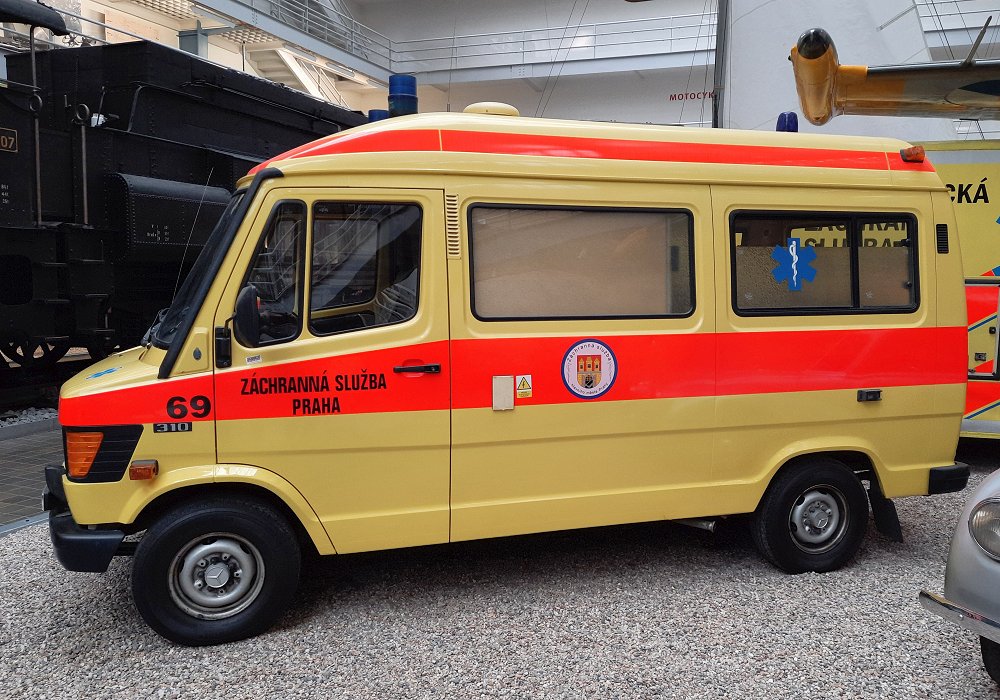
Description
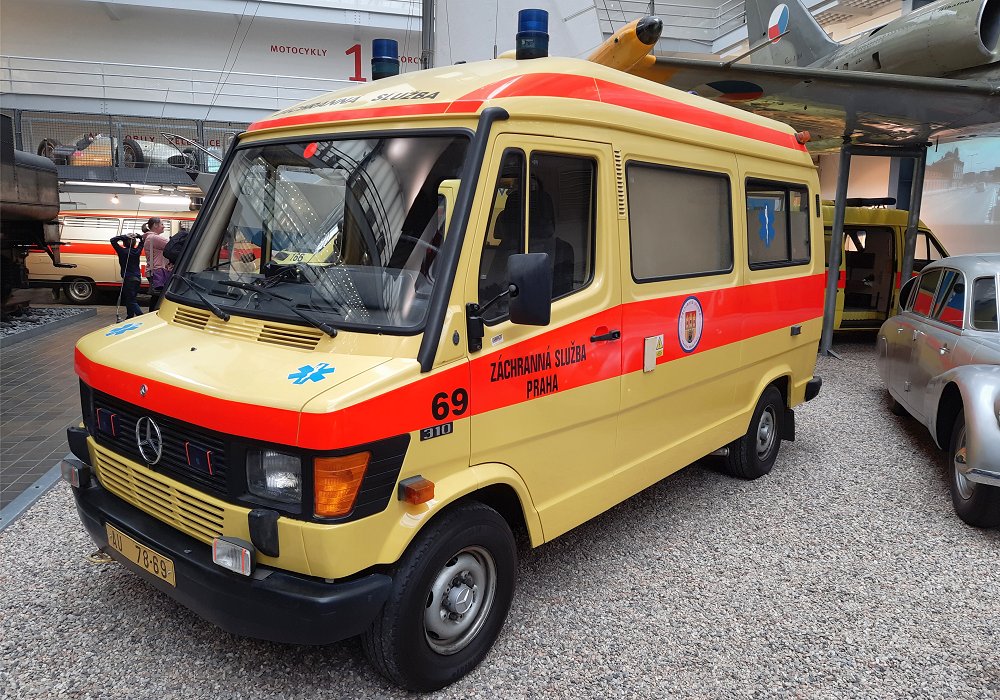
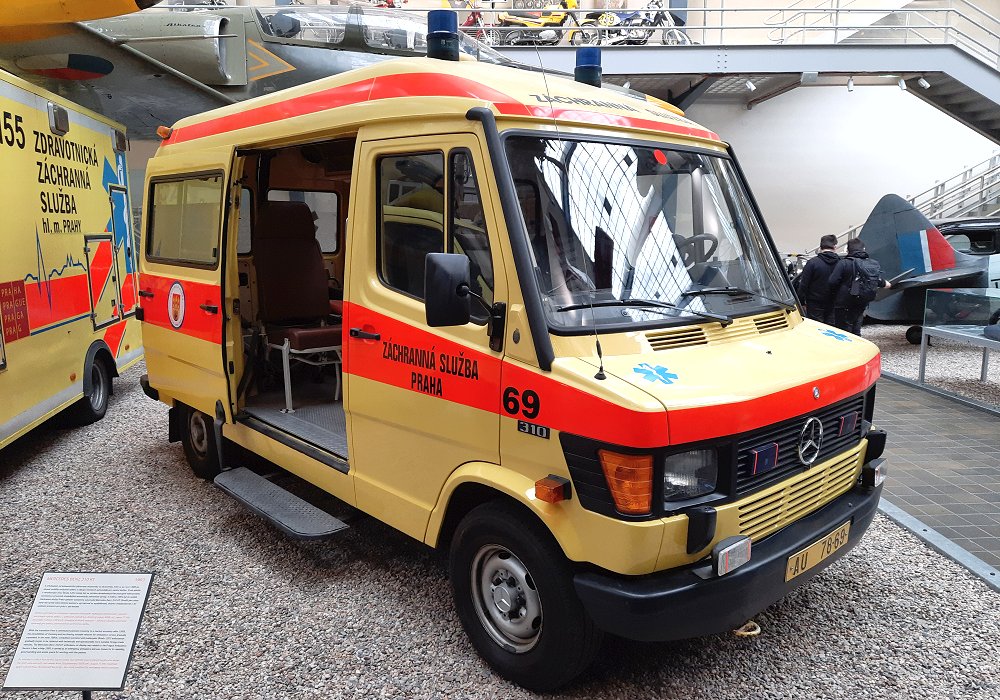
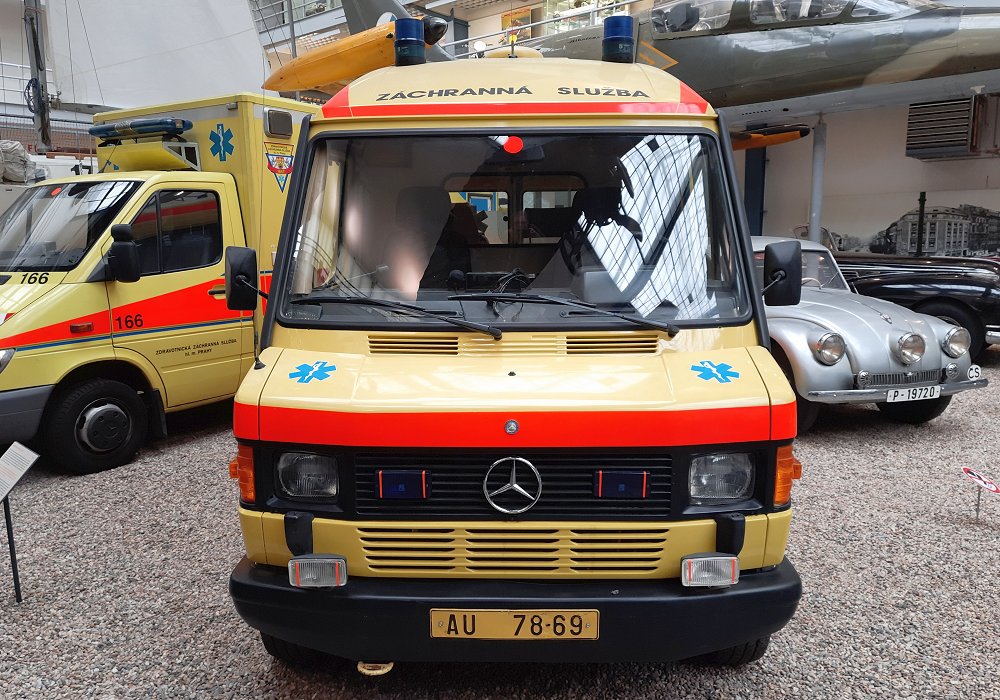
The Mercedes-Benz 310 KT Ambulance was a specialist emergency-service conversion based on Mercedes-Benz’s light commercial vehicle range and reflected the company’s long-standing involvement in medical and rescue transport. Developed during the post-war period, the 310 KT Ambulance combined a robust chassis, dependable mechanicals and a purpose-built medical body, making it well suited to demanding emergency work in both urban and rural environments.
The vehicle was based on the Mercedes-Benz 310 series, which was designed as a light truck and commercial platform. The “KT” designation referred to a specific chassis and body configuration adapted for specialist use, including ambulances. This foundation provided the strength and durability required to carry medical equipment, personnel and patients while maintaining reliability under continuous service conditions.
Power came from a petrol engine typical of Mercedes-Benz commercial vehicles of the era, tuned for reliability and steady operation rather than outright performance. The engine delivered predictable power suitable for emergency response and sustained driving, even when fully loaded. A manual gearbox was standard, offering straightforward operation and mechanical simplicity, important for vehicles expected to remain in service for long periods with minimal downtime.
The chassis was engineered for stability and load-bearing capability. Suspension was designed to cope with the additional weight of medical equipment and bodywork while maintaining safe handling characteristics. Ride quality was secondary to control and durability, but the vehicle provided a stable platform essential for transporting patients safely. Braking systems were robust and designed to perform reliably under frequent stop-start conditions typical of ambulance service.
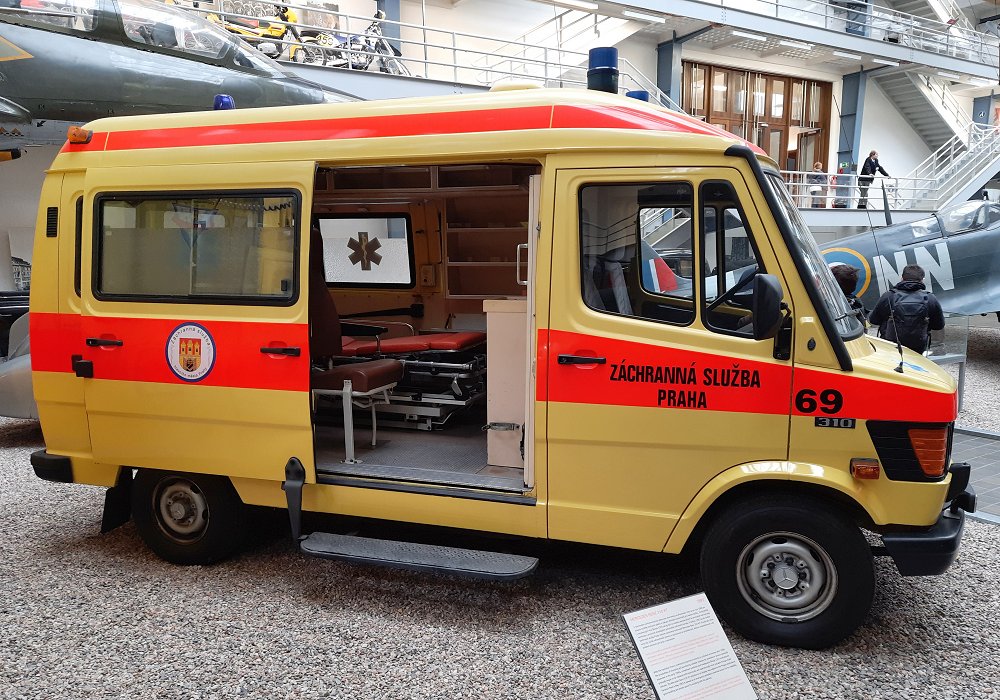
The ambulance body was purpose-built to accommodate medical needs. The rear compartment was configured to carry a stretcher, medical equipment and seating for paramedics or attendants. Access was typically provided via large rear doors and side doors, allowing rapid loading and unloading of patients. Interior layouts prioritised functionality, hygiene and ease of cleaning, with durable surfaces and secure mounting points for equipment.
Inside the driver’s cab, the layout was simple and utilitarian. Controls were clearly arranged, visibility was good, and the upright driving position provided confidence in traffic and during emergency response. While comfort features were minimal, the emphasis was on reliability, ease of use and clear communication between driver and medical staff.
In service, the Mercedes-Benz 310 KT Ambulance earned a reputation for toughness and dependability. It was used by hospitals, emergency services and civil defence organisations, often operating in challenging conditions and covering high mileages. Its solid engineering made it particularly suitable for regions where road quality was poor or where vehicles needed to remain operational with limited maintenance resources.
Today, the Mercedes-Benz 310 KT Ambulance is a rare and historically interesting example of early post-war emergency vehicles. Surviving examples are uncommon, especially those retaining original medical fittings. As a classic, it represents an era when ambulance design focused on mechanical reliability, practicality and durability above all else. The 310 KT Ambulance stands as a reminder of Mercedes-Benz’s long tradition of engineering vehicles not only for transport, but for critical public service roles where dependability could make a life-saving difference.