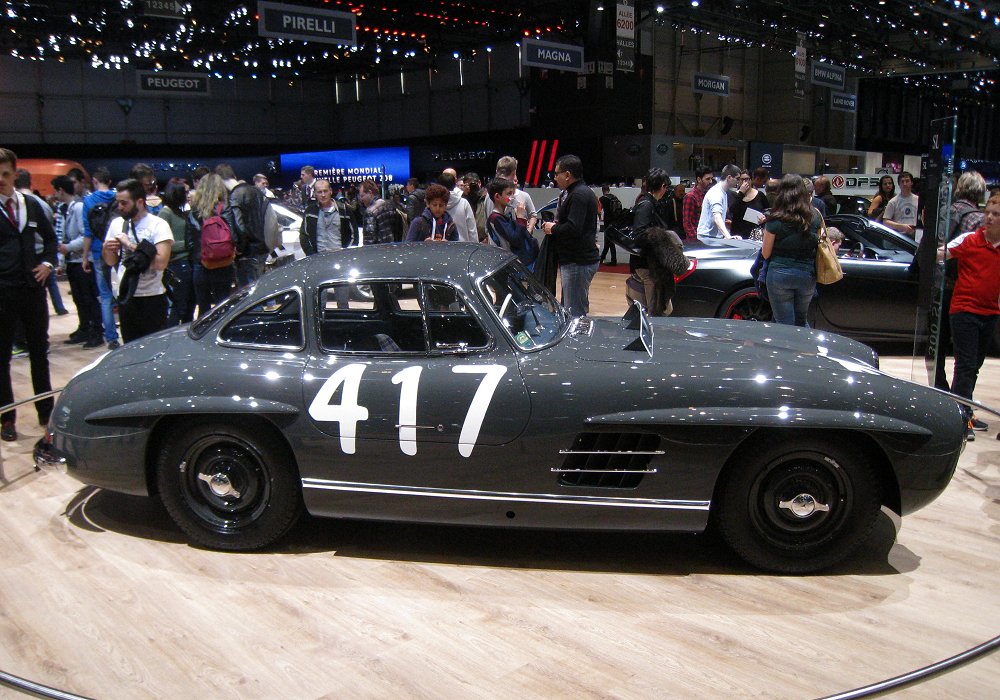
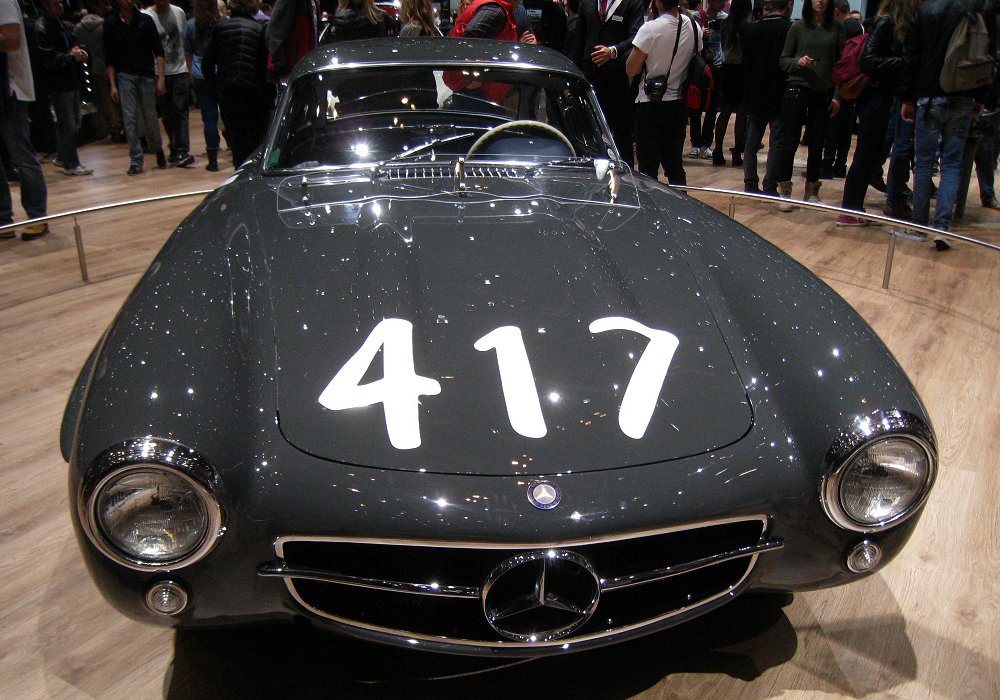
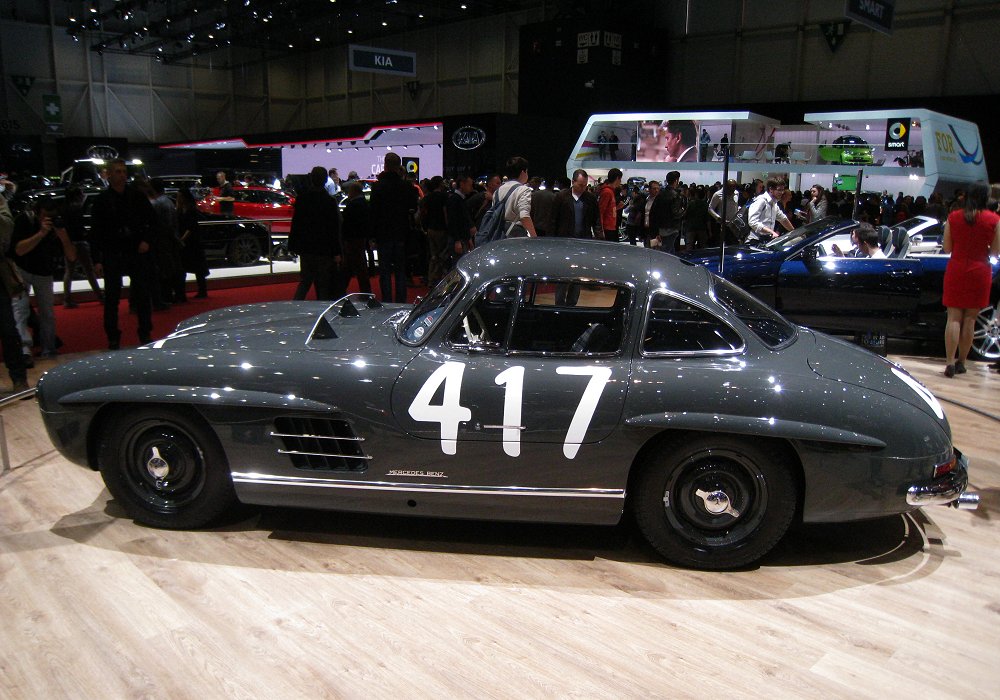
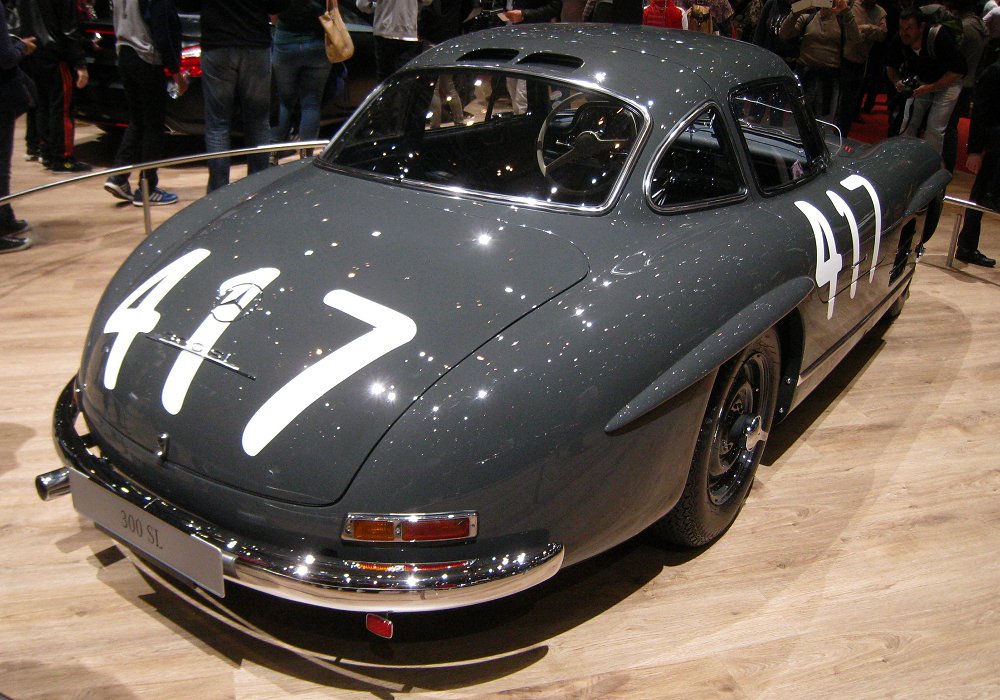
Description
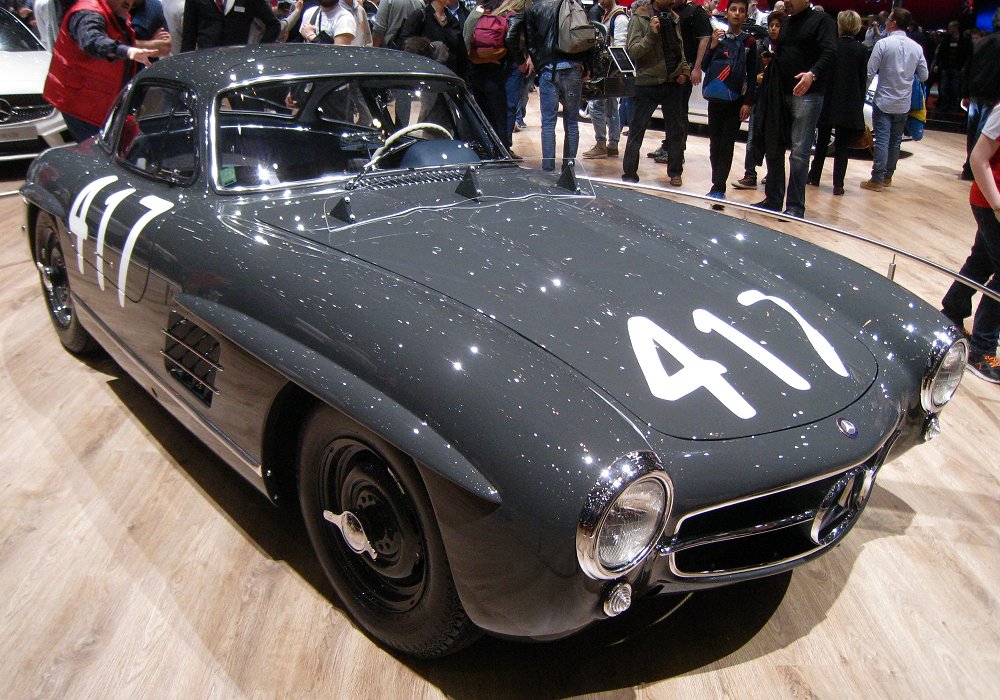
The Mercedes-Benz 300 SL Mille Miglia refers to the competition-prepared versions of the 300 SL that were developed for long-distance endurance racing, most famously the Mille Miglia road race in Italy. These cars represented the direct motorsport roots of the 300 SL name and formed the technical and philosophical foundation for the later road-going 300 SL Coupé.
In competition form, the 300 SL was powered by a 3.0-litre inline six-cylinder engine derived from Mercedes-Benz’s racing programme. Early Mille Miglia cars used high-output carburetted versions of the engine rather than the later fuel-injected road unit, tuned for durability and sustained high speeds over extreme distances. Power output varied by specification but was sufficient to give the car a decisive speed advantage over most rivals. The emphasis was not on explosive acceleration, but on maintaining very high average speeds over hundreds of kilometres of public roads.
The chassis was based on an advanced lightweight tubular spaceframe, designed to maximise rigidity while minimising mass. This structure allowed the car to remain strong and stable over rough surfaces, uneven roads and prolonged high-speed running. The spaceframe also dictated the car’s distinctive body proportions, with high side members that later influenced the iconic door design of the production 300 SL Coupé. In Mille Miglia form, the bodywork was lightweight and purpose-built, prioritising aerodynamic efficiency and cooling rather than aesthetics.
Suspension consisted of double wishbones at the front and a swing-axle rear arrangement, tuned specifically for endurance racing. The setup favoured high-speed stability and reliability rather than agility on tight corners, which was appropriate for the fast, flowing nature of the Mille Miglia route. Braking systems were uprated drum brakes, carefully engineered to withstand prolonged use on demanding mountain descents and high-speed sections.
Styling of the 300 SL Mille Miglia cars was purely functional. The long, low body featured smooth aerodynamic surfaces, enclosed wheels and minimal ornamentation. Cooling vents, access panels and lighting arrangements were dictated by race requirements rather than design language. The overall appearance was unmistakably purposeful, reflecting the car’s role as a long-distance racing machine rather than a road car.
Inside, the cockpit was stripped and utilitarian. Comfort was irrelevant, with lightweight seats, basic instrumentation and minimal trim. Everything was arranged to support reliability, visibility and ease of maintenance during the race. Driver ergonomics focused on endurance, allowing competitors to remain focused and effective over many hours of continuous driving.
The 300 SL’s most famous Mille Miglia appearance came in 1952, when Mercedes-Benz entered the race as part of its full return to international motorsport. The cars performed with remarkable speed and consistency, demonstrating exceptional engineering strength and reliability. Their success in the Mille Miglia and other endurance events such as Le Mans established the 300 SL as a symbol of Mercedes-Benz’s racing resurgence after the war.
These competition successes directly influenced the decision to build a road-going 300 SL. The lessons learned in aerodynamics, chassis design and high-speed durability were transferred into the production 300 SL Coupé, making it one of the closest road-to-race cars of its era. The Mille Miglia cars were not merely racing variants, but the true origin of the 300 SL legend.
Today, the Mercedes-Benz 300 SL Mille Miglia cars are regarded as some of the most important racing machines of the 20th century. Valued for their historical significance, engineering innovation and competition pedigree, they represent the moment when Mercedes-Benz reasserted itself at the highest level of motorsport. As the spiritual ancestors of the road-going 300 SL, they remain central to the mythology of the SL name and to Mercedes-Benz’s enduring racing heritage.