Description
The Mercedes-Benz 300 SL Coupé Sport was one of the most significant sports cars of the post-war era and remains one of the most celebrated automobiles ever produced. Introduced in the mid-1950s, it represented Mercedes-Benz’s return to international motorsport-inspired engineering and showcased advanced technology, striking design and genuine high performance in a road-going package.
Power came from a 3.0-litre inline six-cylinder engine equipped with mechanical direct fuel injection, a first for a production passenger car. Producing approximately 215 horsepower, the engine delivered strong, sustained performance and allowed the 300 SL to achieve speeds that rivalled the fastest sports cars of its time. Acceleration was brisk and top speed exceptional, particularly for a road-legal vehicle of the era. Power was transmitted through a four-speed manual gearbox, geared for high-speed touring as well as competition-inspired driving.
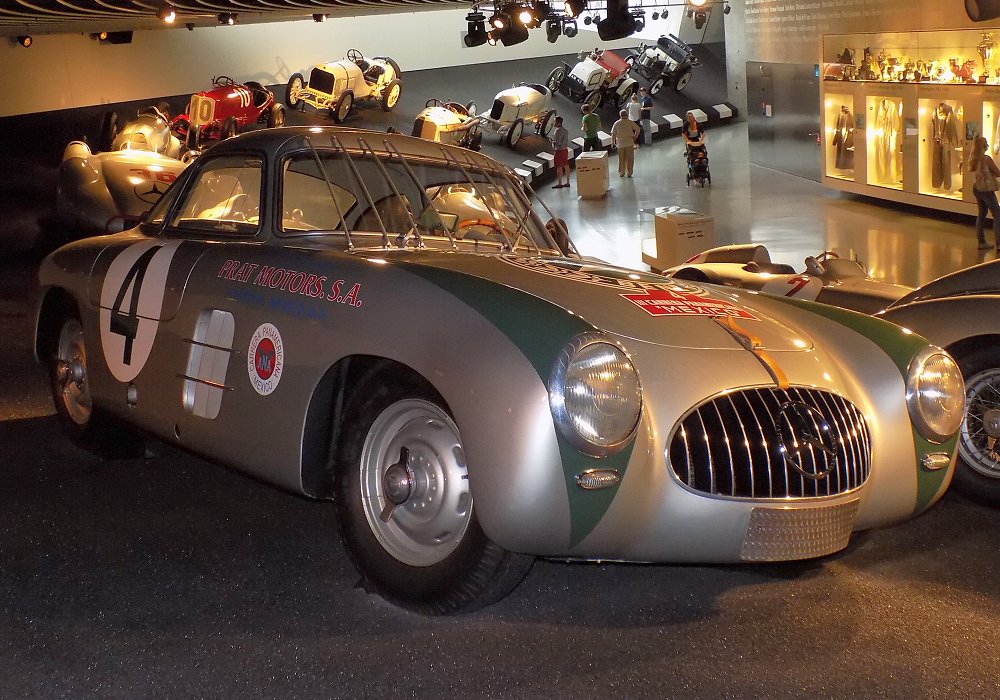
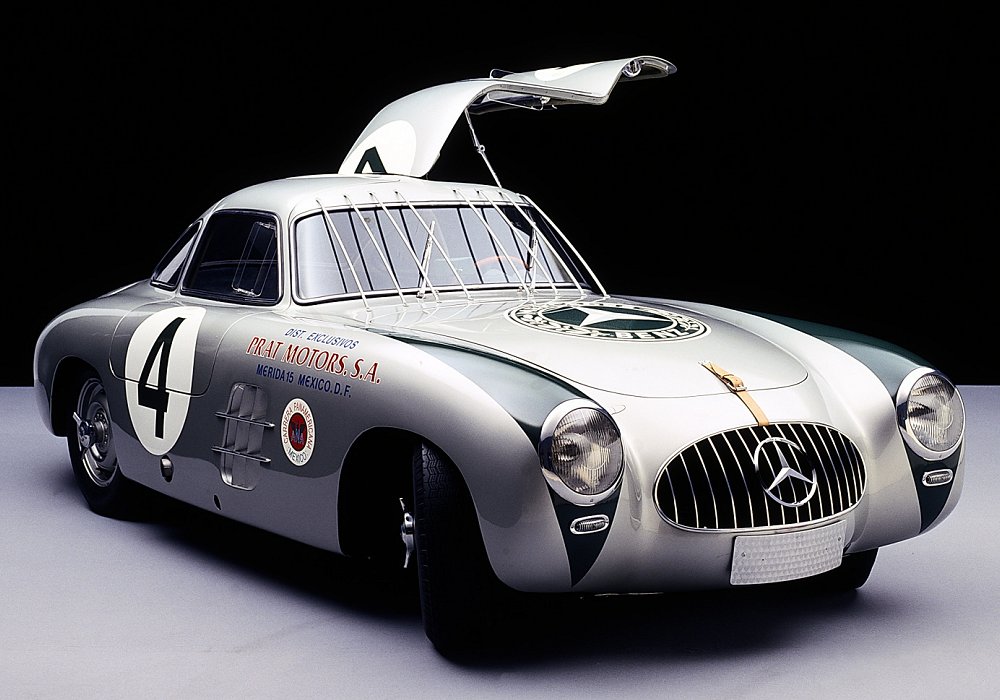
The defining feature of the 300 SL Coupé Sport was its lightweight tubular spaceframe chassis. Designed to provide maximum rigidity with minimal weight, the frame sat high along the sides of the car, making conventional doors impractical. This led to the creation of the now-iconic upward-opening doors, which became one of the most recognisable design elements in automotive history. The spaceframe construction gave the car excellent structural stiffness and contributed significantly to its performance and handling capabilities.
Suspension consisted of double wishbones at the front and a swing-axle rear arrangement, tuned to provide stability at high speeds. While demanding at the limit, the setup reflected the car’s racing origins and required skill and respect from the driver. Drum brakes were fitted all round, adequate for the period but requiring firm and considered use given the car’s performance potential.
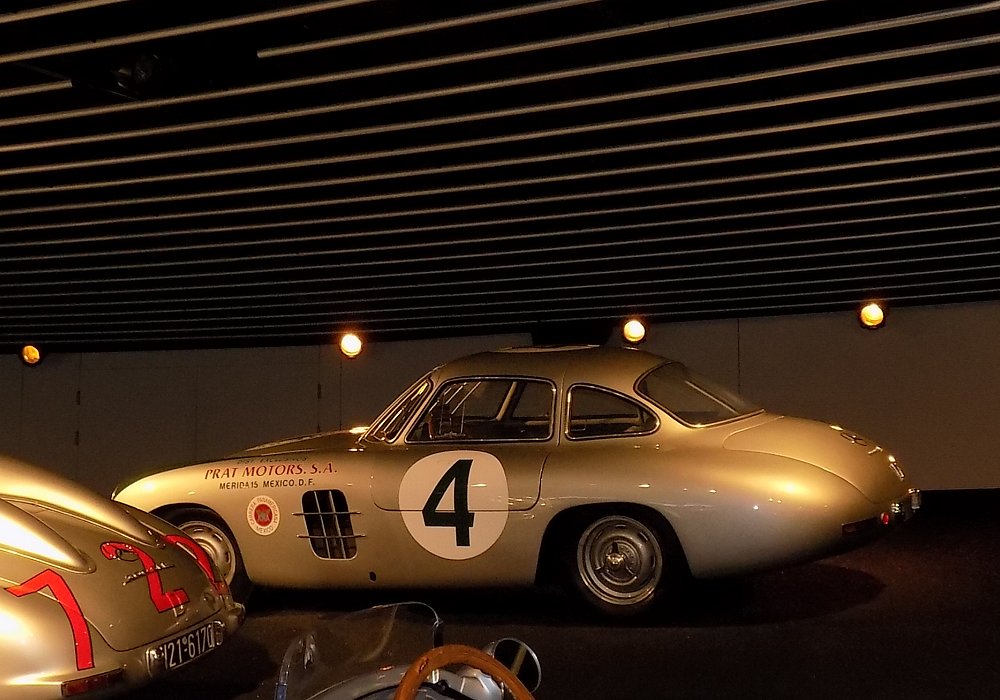
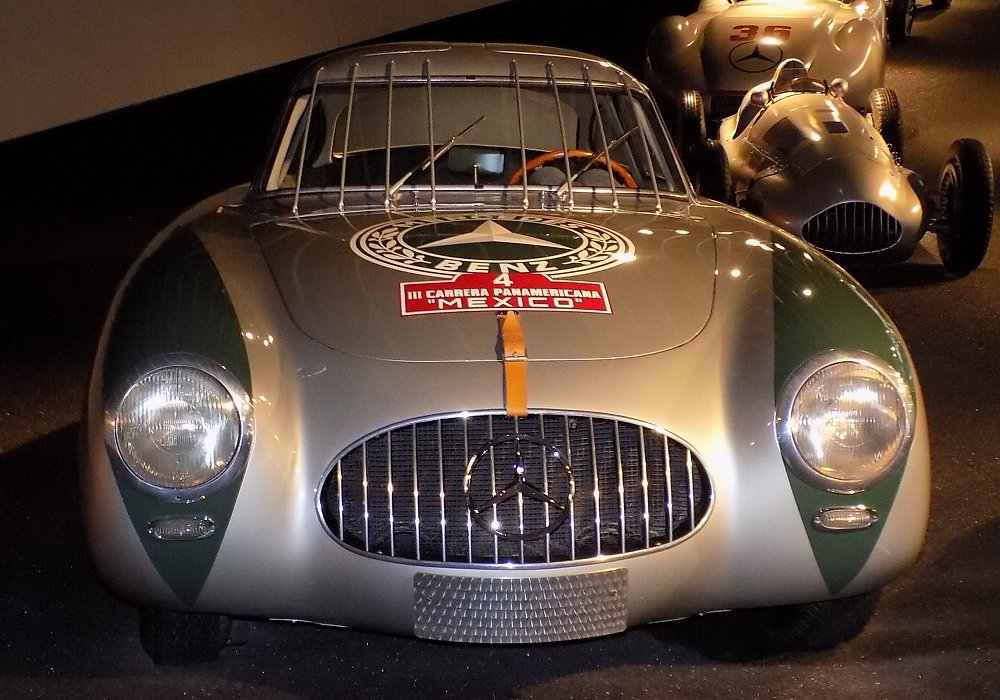
Styling of the Mercedes-Benz 300 SL Coupé Sport was dramatic and purposeful. The long bonnet, compact cabin and gently tapering tail gave the car an unmistakable silhouette. The distinctive doors not only solved a structural challenge but also became a powerful visual signature. The design balanced elegance with function, clearly reflecting the car’s competition roots while remaining refined enough for road use.
Inside, the cabin combined sporting intent with high-quality craftsmanship. Seating was low and upright, placing the driver close to the controls, while the steering wheel was tilted for easier access due to the high sills. Instrumentation was clear and focused on essential driving information, and materials were chosen for durability and quality rather than luxury excess. Although compact, the interior conveyed a sense of precision and engineering integrity.
On the road, the Mercedes-Benz 300 SL Coupé Sport delivered a demanding but rewarding driving experience. High-speed stability was exceptional, and the engine’s power delivery encouraged fast, flowing driving. The car was not forgiving when pushed hard, particularly at the rear, but in skilled hands it offered performance and presence unmatched by most contemporaries. It excelled on long, fast routes where its aerodynamic efficiency and power could be fully exploited.
The 300 SL Coupé Sport was closely linked to Mercedes-Benz’s motorsport success, drawing heavily from the company’s racing programme. Its introduction helped re-establish Mercedes-Benz as a global performance brand and demonstrated that advanced racing technology could be adapted for road use without compromise.
Today, the Mercedes-Benz 300 SL Coupé Sport is regarded as one of the most important and desirable classic cars ever built. Valued for its groundbreaking engineering, direct fuel injection, iconic design and historical significance, it stands as a symbol of innovation and ambition. As both a technical milestone and a cultural icon, the 300 SL Coupé Sport remains a defining achievement in automotive history.