Description
The Mercedes-Benz 300 SL Coupé was one of the most influential and technically advanced sports cars of the 1950s and remains one of the most iconic automobiles ever produced. Developed directly from Mercedes-Benz’s post-war racing programme, the 300 SL Coupé brought competition-bred engineering to the road and re-established the brand as a global leader in performance, innovation and design.
Power came from a 3.0-litre inline six-cylinder engine fitted with mechanical direct fuel injection, making it the first production passenger car to use this technology. Producing approximately 215 horsepower, the engine delivered exceptional performance for its time, allowing the 300 SL to reach speeds well beyond most contemporary sports cars. Acceleration was strong and sustained, and high-speed cruising was a defining strength of the car. A four-speed manual gearbox transmitted power to the rear wheels, geared to exploit the engine’s high-speed capability rather than short, aggressive acceleration.
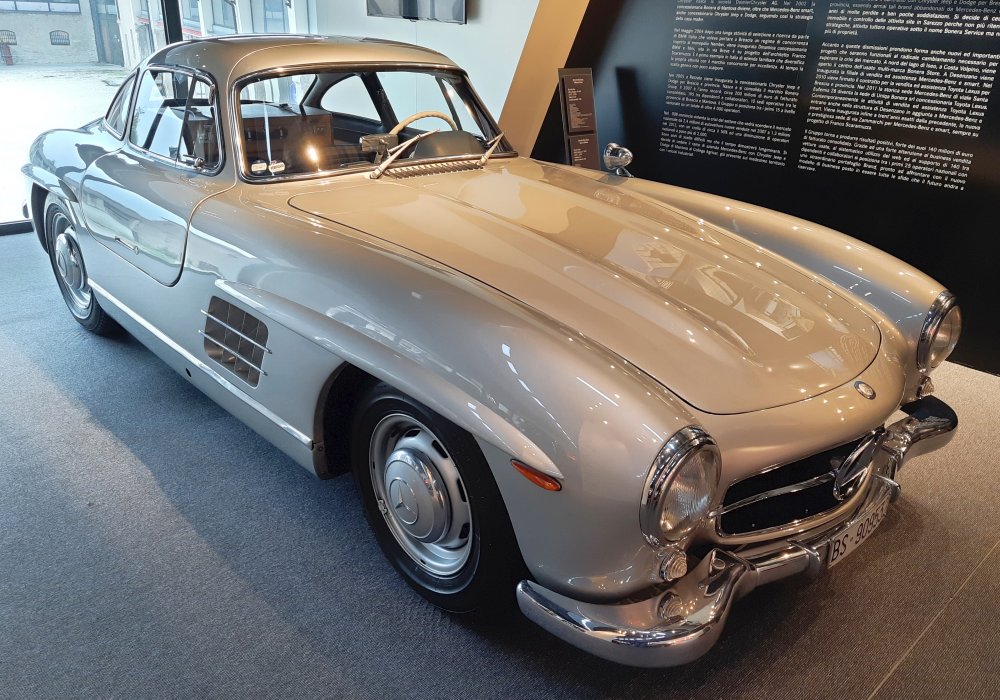
Central to the 300 SL Coupé’s design was its lightweight tubular spaceframe chassis. Engineered to provide maximum rigidity with minimal weight, the frame featured high side members that made conventional doors impossible. This structural necessity led to the creation of the upward-opening doors that became the car’s most recognisable feature. The spaceframe gave the 300 SL excellent structural stiffness and played a crucial role in its performance and handling characteristics.
Suspension design reflected the car’s racing origins. Double wishbones were used at the front, while a swing-axle rear suspension was fitted at the rear. This setup provided high-speed stability and responsiveness, though it demanded skill and respect when driven near the limit. Drum brakes were fitted at all four wheels, typical of the era, and were effective when properly maintained but required careful use given the car’s performance.
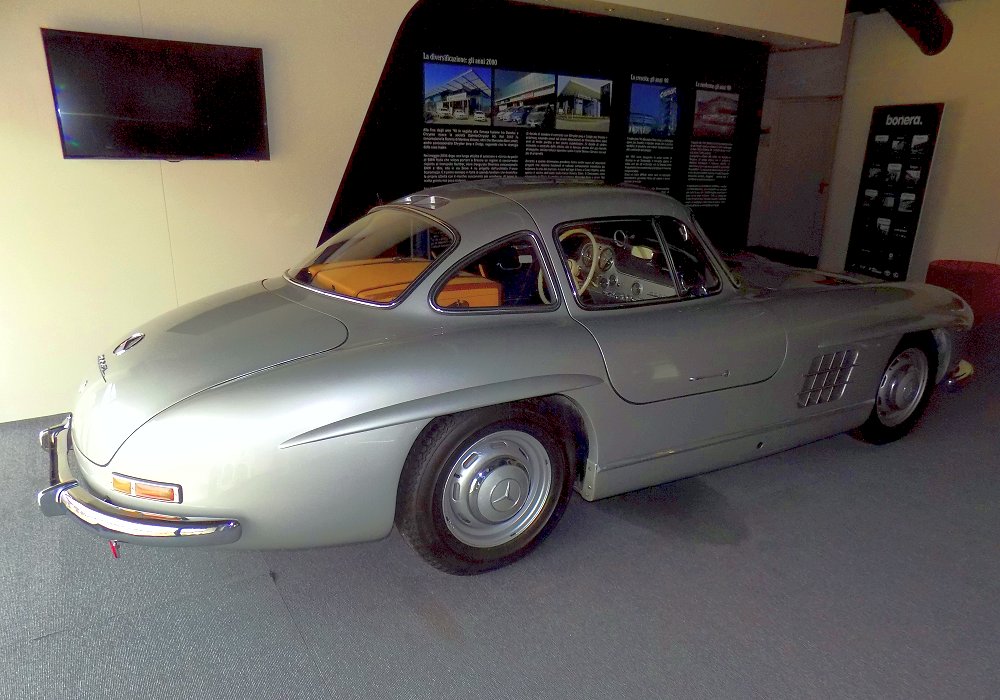
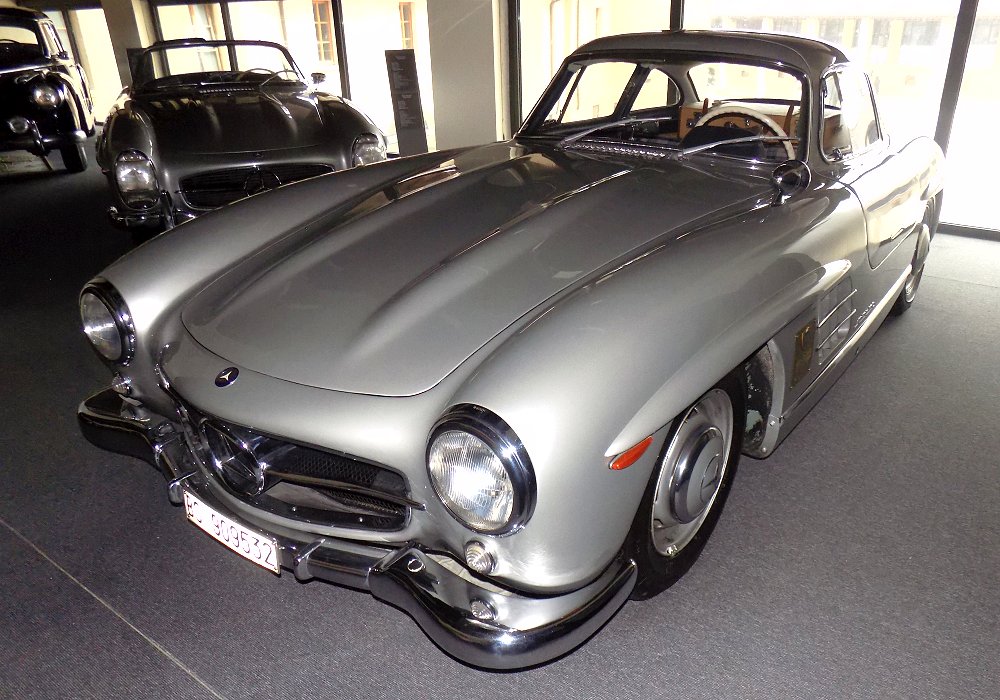
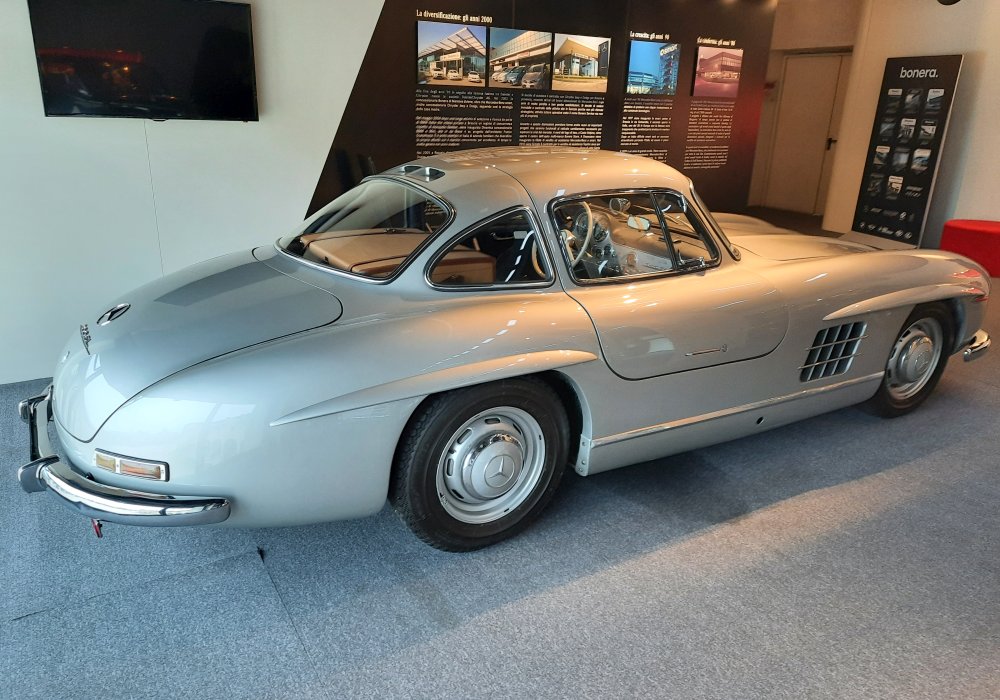
Styling of the Mercedes-Benz 300 SL Coupé was both dramatic and functional. The long bonnet, compact passenger cell and tapering tail created a sleek and purposeful silhouette. The distinctive doors added visual drama while solving a structural challenge, making the car instantly recognisable. The design balanced elegance and aerodynamics, clearly reflecting its competition roots while remaining refined enough for road use.
Inside, the cabin was compact and focused, combining sporting intent with high-quality craftsmanship. Seating was upright and relatively firm, positioning the driver close to the controls. The steering wheel was designed to tilt for easier entry and exit due to the high sills created by the spaceframe. Instrumentation was clear and functional, emphasising driving information rather than luxury. Materials were chosen for durability and precision, reinforcing the car’s engineering-led philosophy.
On the road, the Mercedes-Benz 300 SL Coupé delivered a demanding but highly rewarding driving experience. The engine’s power and the car’s aerodynamic efficiency made it exceptionally fast on long, open roads. Handling was precise and stable at speed, though the rear suspension required careful management in tight corners. The car excelled as a high-speed grand tourer rather than a forgiving sports car, rewarding skilled drivers with performance few rivals could match.
The 300 SL Coupé was closely linked to Mercedes-Benz’s motorsport success, drawing inspiration from the company’s endurance racing victories in the early 1950s. Its production demonstrated that advanced racing technology could be successfully adapted for road use, setting new standards for performance and innovation.
Today, the Mercedes-Benz 300 SL Coupé is regarded as one of the greatest classic cars ever built. Valued for its groundbreaking fuel-injection engine, lightweight spaceframe construction and unmistakable design, it stands as a defining achievement in automotive history. As both a technological milestone and a cultural icon, the 300 SL Coupé continues to represent the very best of Mercedes-Benz engineering and ambition.