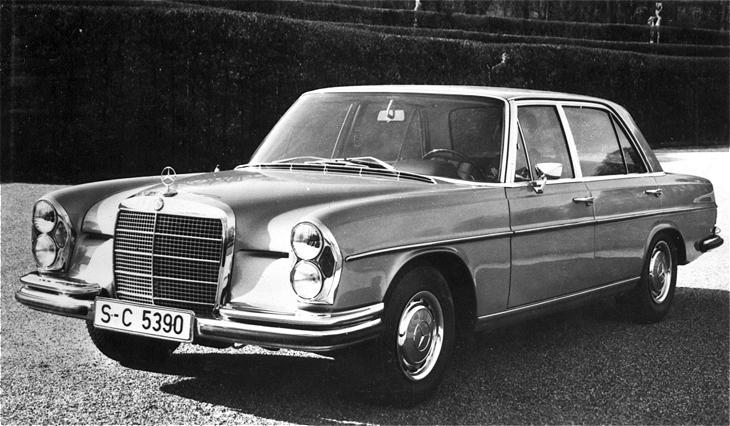
Description
The Mercedes-Benz 300 SEL 6.3 was one of the most remarkable and influential luxury performance saloons of the late 1960s and remains a landmark in Mercedes-Benz history. Introduced in 1968, it combined limousine levels of comfort and space with performance that rivalled contemporary sports cars, effectively creating the template for the modern high-performance luxury saloon.
Power came from a 6.3-litre V8 petrol engine derived from the flagship Mercedes-Benz 600 limousine. Producing approximately 250 horsepower and immense torque, this engine transformed the character of the long-wheelbase W109 saloon. Acceleration was exceptional for a car of its size, with strong, effortless thrust available at almost any speed. The engine was paired exclusively with a four-speed automatic transmission, delivering smooth but authoritative progress and reinforcing the car’s dual personality of refinement and performance.
The 300 SEL 6.3 was built on the extended-wheelbase version of the W109 platform, providing generous rear-seat space and a dignified presence. A key technical feature was the standard air suspension system, which delivered exceptional ride comfort while maintaining consistent ride height regardless of load or speed. Unlike many high-performance cars of the era, the 300 SEL 6.3 could combine rapid acceleration with a supple, controlled ride, making it uniquely versatile.
Chassis engineering was advanced for its time. The unitary body incorporated a strong passenger safety cell with defined crumple zones, reflecting Mercedes-Benz’s leadership in passive safety. Suspension consisted of double wishbones with coil springs at the front and a swing-axle rear suspension, both integrated with the air suspension system. Disc brakes were fitted at all four wheels, providing strong and reliable stopping power to match the car’s performance.
Styling of the Mercedes-Benz 300 SEL 6.3 was deliberately understated. Externally, it differed little from other long-wheelbase W109 saloons, with clean lines, restrained chrome detailing and minimal badging. This discreet appearance concealed the car’s extraordinary performance, contributing to its reputation as a true sleeper among luxury saloons.
Inside, the cabin reflected Mercedes-Benz’s highest standards of the period. Seating was wide, deeply cushioned and designed for long-distance comfort, with exceptional rear legroom thanks to the extended wheelbase. Interior materials were of very high quality, often including leather upholstery, polished wood trim and thick carpeting. The dashboard layout was clear and functional, emphasising engineering precision rather than ornamentation.
On the road, the Mercedes-Benz 300 SEL 6.3 delivered a driving experience unlike anything else of its era. The V8 engine provided effortless, near-silent cruising, yet could propel the car to very high speeds with remarkable urgency. The air suspension absorbed road imperfections with ease, while the long wheelbase and stable chassis gave the car exceptional composure at speed. Steering was light but precise, encouraging confident, relaxed driving despite the car’s performance potential.
The 300 SEL 6.3 appealed to a unique clientele, including executives, enthusiasts and professional drivers who wanted the fastest four-door saloon available without sacrificing comfort or prestige. It was also successful in competition, most notably in touring car racing, where its power and durability proved highly effective despite its size.
Today, the Mercedes-Benz 300 SEL 6.3 is regarded as one of the greatest Mercedes-Benz models ever produced. Valued for its combination of V8 performance, advanced suspension technology and understated luxury, it stands as the spiritual ancestor of later high-performance saloons. As a car that redefined what a luxury sedan could be, the 300 SEL 6.3 remains an icon of engineering ambition and restrained excess.