Description
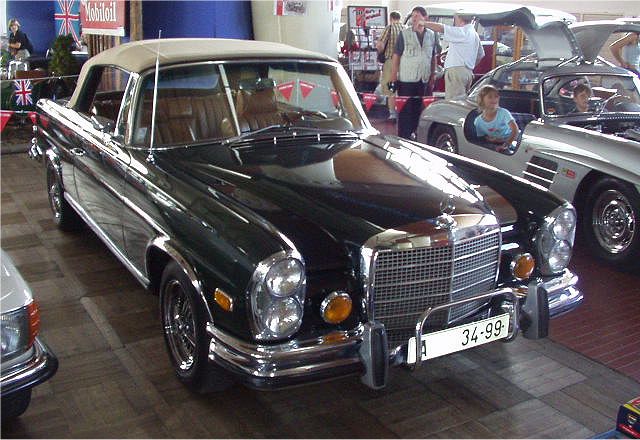
The Mercedes-Benz 280 SE Cabriolet was one of the most elegant and exclusive open four-seat cars produced by Mercedes-Benz in the late 1960s and early 1970s. Part of the hand-built W111 cabriolet series, it represented the final evolution of Mercedes-Benz’s classic luxury convertibles before mass-produced open models replaced traditional coachbuilt designs. It combined understated styling, modern mechanical refinement and exceptional build quality, positioning it firmly as a grand touring cabriolet rather than a sporting convertible.
Power came from a 2.8-litre inline six-cylinder petrol engine equipped with mechanical fuel injection, producing approximately 160 horsepower. This engine offered a noticeable performance improvement over the earlier 250 SE, delivering smoother power delivery, stronger mid-range torque and more relaxed high-speed cruising. Acceleration was confident but never aggressive, with the emphasis placed firmly on refinement and effortless progress. A four-speed manual gearbox was standard, although many buyers selected the automatic transmission, which suited the car’s luxury-focused character and made long-distance touring particularly relaxed.
The cabriolet body required extensive structural reinforcement to compensate for the absence of a fixed roof. As a result, the 280 SE Cabriolet felt exceptionally solid for an open car of its era, with minimal scuttle shake and a strong sense of structural integrity. The chassis followed Mercedes-Benz’s established safety philosophy, incorporating a rigid passenger cell and carefully engineered crumple zones. Suspension consisted of double wishbones with coil springs at the front and a swing-axle rear suspension with coil springs, tuned to prioritise comfort and stability rather than sporting sharpness. Disc brakes at the front provided dependable stopping power appropriate to the car’s performance and weight.
Styling of the Mercedes-Benz 280 SE Cabriolet was restrained and timeless. With the roof raised, the car retained the formal, balanced proportions of the W111 range. With the roof lowered, it presented a long, low and dignified silhouette that emphasised elegance rather than drama. Chrome detailing was subtle and carefully applied, reinforcing the car’s premium status without excess. The fabric roof was well engineered, offering good weather protection and a clean profile when raised.
Inside, the cabin reflected Mercedes-Benz’s commitment to craftsmanship and long-term durability. Seating was wide, well cushioned and designed for long-distance comfort, and all four seats were genuinely usable, a rarity among convertibles of the period. Interior materials were of high quality and often included leather upholstery and polished wood trim. The dashboard layout was clear and functional, with well-positioned instruments and controls that emphasised clarity over decoration.
On the road, the Mercedes-Benz 280 SE Cabriolet delivered a calm, composed and highly refined driving experience. The fuel-injected six-cylinder engine ran smoothly and quietly, while the suspension absorbed poor road surfaces with ease. Steering was light and stable at speed, encouraging relaxed touring rather than enthusiastic driving. Open-top motoring was comfortable and unhurried, making the car particularly well suited to long journeys.
The 280 SE Cabriolet appealed to affluent private buyers who wanted elegance, modern engineering and open-air driving without sacrificing comfort, safety or prestige. It was significantly more expensive than the saloon versions and produced in limited numbers, contributing to its exclusivity.
Today, the Mercedes-Benz 280 SE Cabriolet is regarded as one of the finest classic luxury convertibles ever produced by the marque. Valued for its smooth fuel-injected engine, hand-built construction and timeless design, it represents the final chapter of Mercedes-Benz’s traditional four-seat luxury cabriolets and remains a highly respected and increasingly sought-after classic.