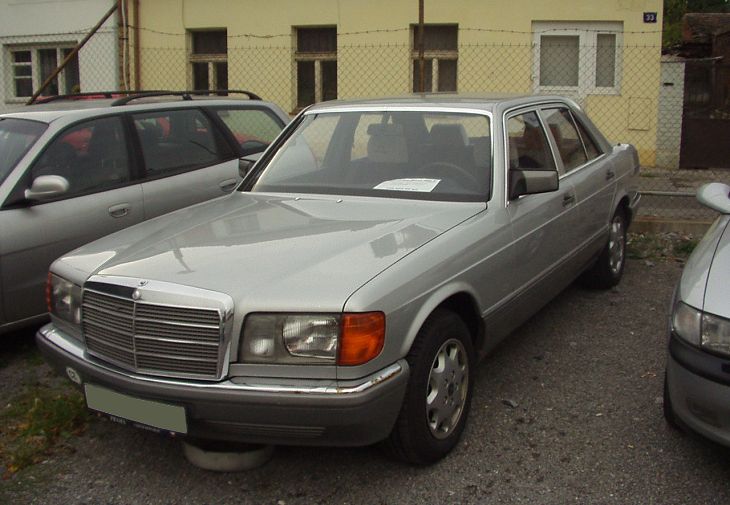
Description
The Mercedes-Benz 260 SE was an entry-level six-cylinder saloon within the W126 S-Class range and represented Mercedes-Benz’s effort to offer full S-Class engineering, safety and comfort with a more economical and restrained powertrain. Introduced in the early 1980s, it appealed to buyers who wanted the prestige and solidity of the flagship model line without the fuel consumption or complexity of a V8.
Power came from a 2.6-litre inline six-cylinder petrol engine with fuel injection, producing approximately 166 horsepower in European specification. This engine was smooth, quiet and well balanced, delivering refined performance rather than outright speed. Acceleration was adequate for the car’s size, and the engine excelled at relaxed motorway cruising where low noise and mechanical smoothness were more important than rapid response. A four-speed automatic transmission was commonly specified and suited the car’s calm, dignified character, though a manual gearbox was available in some markets.
The W126 platform marked a major advance in Mercedes-Benz design and engineering. It featured a lighter yet stronger body shell with a rigid passenger safety cell, carefully engineered crumple zones and improved side-impact protection. Suspension consisted of double wishbones with coil springs at the front and a semi-trailing arm rear suspension, offering predictable handling, good stability and excellent ride comfort. Disc brakes were fitted at all four wheels, providing dependable stopping power consistent with the S-Class’s safety-focused philosophy.
Styling of the Mercedes-Benz 260 SE was modern, clean and deliberately understated. The W126 design prioritised aerodynamic efficiency and safety, with smooth surfaces, a strong horizontal emphasis and restrained chrome detailing. Visually, the 260 SE was almost indistinguishable from more powerful S-Class variants, reinforcing the idea that it was a full flagship saloon rather than a reduced-spec model.
Inside, the cabin reflected Mercedes-Benz’s focus on ergonomics, durability and long-distance comfort. Seats were wide and supportive, designed to reduce fatigue on extended journeys, while interior materials were chosen for longevity rather than visual extravagance. The dashboard layout was logical and driver-focused, with clear instrumentation, excellent visibility and solid, well-damped controls. Equipment levels were generous for the period and often included automatic climate control, power steering and electric windows.
On the road, the Mercedes-Benz 260 SE delivered a calm, composed and confidence-inspiring driving experience. The six-cylinder engine ran smoothly and quietly at cruising speeds, and the suspension absorbed road imperfections with ease. Steering was light and stable, encouraging relaxed, unhurried driving rather than any sporting intent. The car was particularly well suited to long-distance travel, where comfort, refinement and safety took priority.
The 260 SE appealed to professionals, executives and conservative private buyers who wanted the comfort and prestige of the S-Class with lower running costs than the V8 models. It was especially attractive in markets where fuel prices, insurance or taxation favoured smaller engines, yet expectations of luxury remained high.
Today, the Mercedes-Benz 260 SE is regarded as a sensible and understated member of the W126 family. Valued for its smooth six-cylinder engine, robust construction and timeless design, it represents Mercedes-Benz’s ability to scale luxury without compromising core engineering values. As a classic S-Class, it remains respected for its refinement, durability and quiet authority.