Description
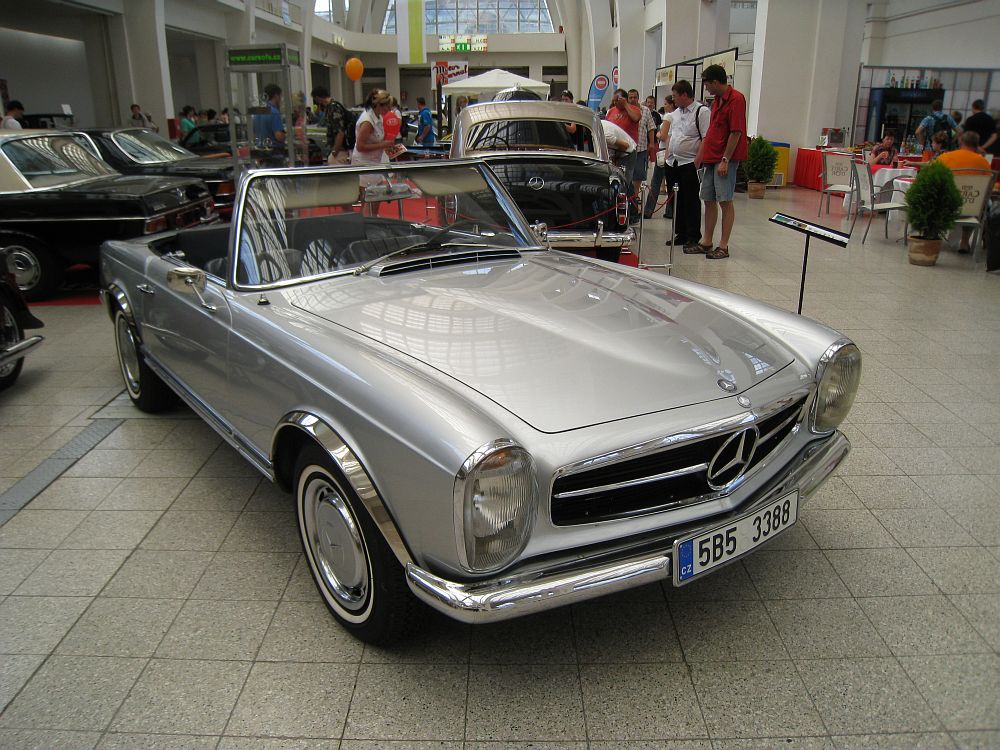
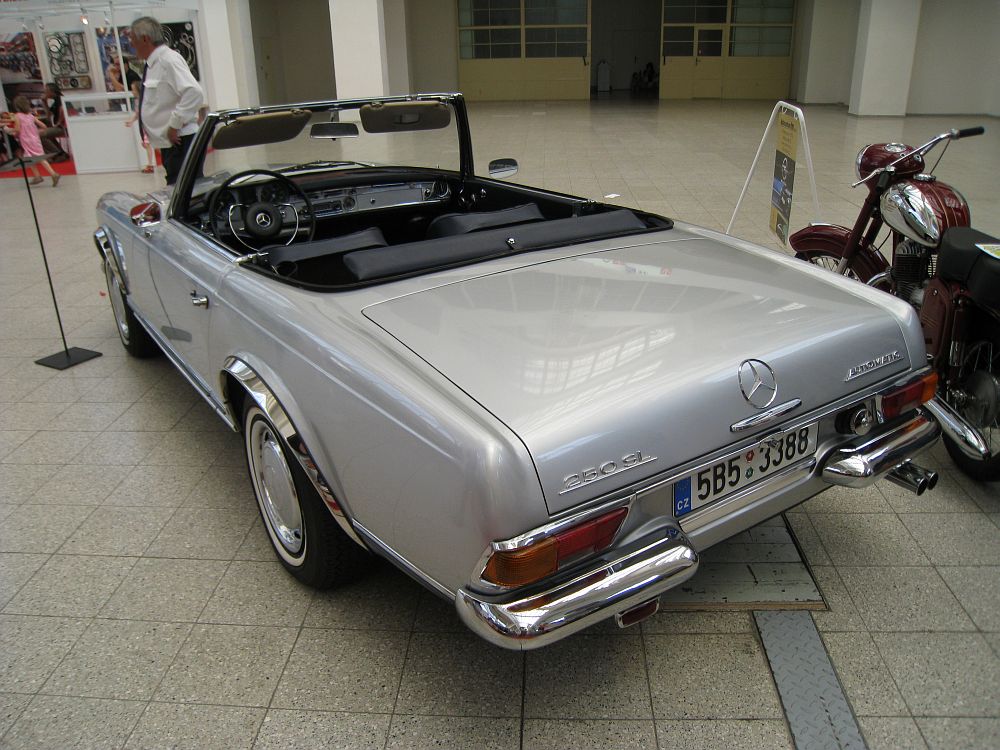
The Mercedes-Benz 250 SL Automatic was the comfort-oriented version of the transitional W113 “Pagoda” series and perfectly embodied Mercedes-Benz’s philosophy of refined, effortless grand touring during the mid-1960s. Positioned between the earlier 230 SL and the later 280 SL, the 250 SL combined subtle mechanical improvements with the relaxed driving character that the automatic transmission enhanced even further.
Power came from a 2.5-litre inline six-cylinder petrol engine with mechanical fuel injection, producing approximately 150 horsepower. Although peak output matched that of the 230 SL, the increased displacement delivered stronger torque and smoother mid-range response. When paired with the four-speed automatic transmission, the engine provided calm, progressive acceleration and quiet cruising rather than sporting urgency. This drivetrain combination suited the car’s touring role, making it particularly easy and relaxing to drive in traffic and on long journeys.
The chassis was derived from the W111 saloon platform and reflected Mercedes-Benz’s increasing focus on safety and structural integrity. A rigid body shell with integrated crumple zones provided reassurance without compromising comfort. Suspension consisted of double wishbones at the front and a low-pivot swing-axle rear suspension, tuned for predictable handling and ride comfort. A notable technical upgrade for the 250 SL was the use of disc brakes on all four wheels, improving braking confidence and consistency compared with earlier W113 models.
Styling followed the clean, timeless design that defined the Pagoda series. The gently concave removable hardtop, from which the model gained its nickname, combined elegance with structural strength and excellent visibility. With the automatic transmission, the car’s refined appearance was matched by its relaxed driving character. Buyers could specify the car with a soft top, removable hardtop or both, allowing it to function as an open roadster or a closed grand tourer depending on season and preference.
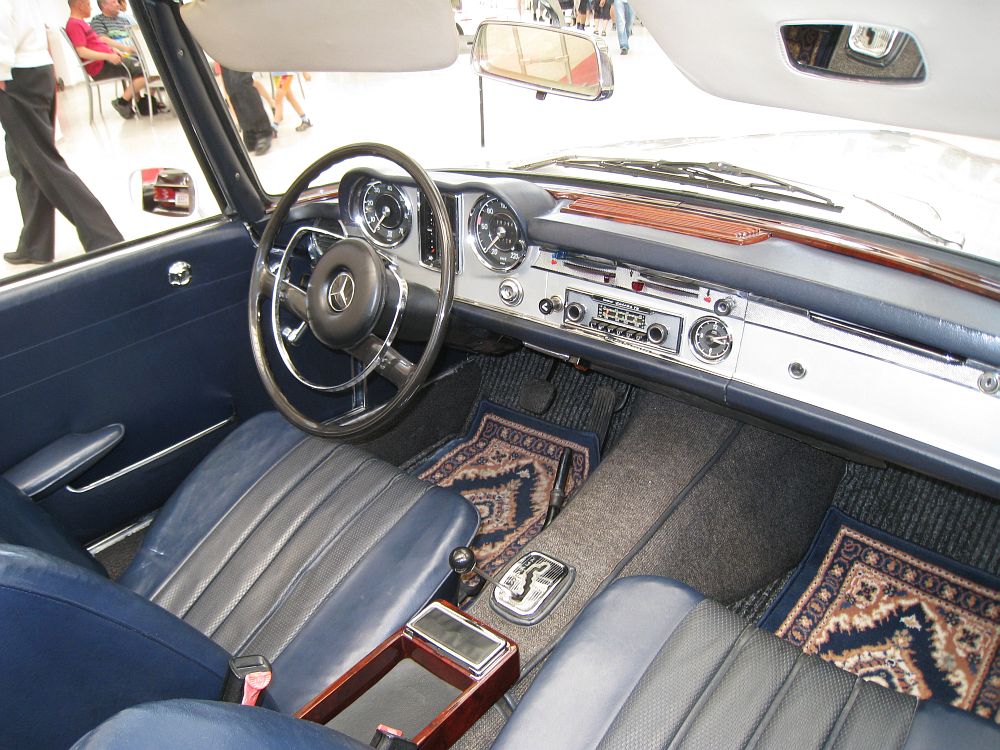
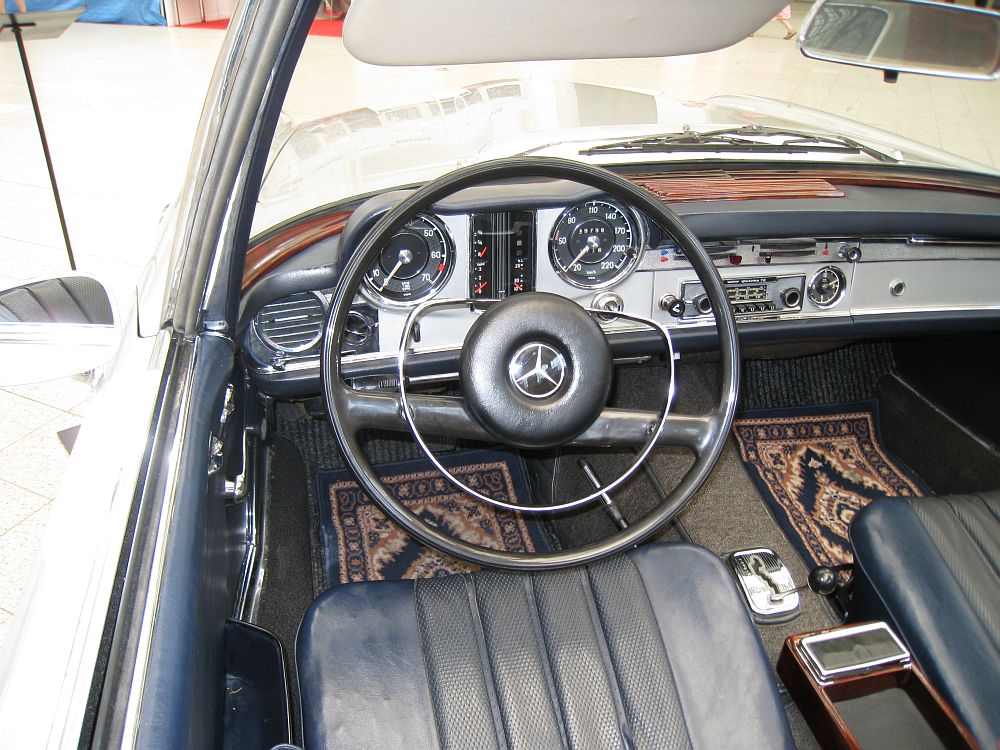
Inside, the cabin reflected Mercedes-Benz’s emphasis on safety, ergonomics and durability. The padded dashboard, recessed switches and clear instrumentation were designed to reduce injury risk while remaining easy to use. Seats were supportive and comfortable for extended driving, and interior materials were selected for longevity and quality rather than decorative excess. With the automatic gearbox, the driving environment felt particularly calm and composed, reinforcing the car’s luxury touring identity.
On the road, the Mercedes-Benz 250 SL Automatic delivered a smooth, confidence-inspiring experience. Steering was light and precise, the suspension absorbed poor road surfaces effectively, and the drivetrain worked seamlessly to provide relaxed progress. While outright performance was slightly softer than manual versions, the automatic enhanced the car’s suitability as a refined cruiser rather than a sporting machine.
The automatic variant was especially popular in export markets, notably North America, where ease of use and comfort were highly valued. It appealed to buyers who wanted the elegance and prestige of an SL without the demands of more overtly sporting driving.
Today, the Mercedes-Benz 250 SL Automatic is regarded as an understated and refined member of the W113 family. Valued for its smooth drivetrain, four-wheel disc brakes and timeless Pagoda styling, it represents a key evolutionary step in the SL lineage. As a classic, it offers a compelling blend of elegance, usability and engineering integrity, perfectly capturing Mercedes-Benz’s vision of the luxury roadster in the 1960s.