Description
The Mercedes-Benz 250 GD was one of the most important diesel variants of the early G-Class and played a major role in establishing the model’s reputation for endurance, economy and reliability in demanding environments. Introduced as part of the W460 series, the 250 GD was aimed squarely at professional users who valued durability, low running costs and dependable off-road performance over speed or refinement.
Power came from a 2.5-litre inline five-cylinder naturally aspirated diesel engine. Output was modest, typically around 84 horsepower, but the engine was valued for its strong low-speed torque, long service life and ability to operate reliably under sustained load. Power delivery was slow but steady, perfectly suited to off-road driving, towing and utility work. A four-speed manual gearbox was standard, paired with a dual-range transfer case that provided low-range gearing for steep climbs, rough terrain and precise low-speed control.
The mechanical layout followed classic G-Class principles. A ladder-frame chassis provided exceptional strength, while solid axles at both the front and rear ensured durability and excellent wheel articulation. Locking differentials were available, significantly improving traction in mud, sand, snow and rocky terrain. Suspension was tuned for robustness and load-carrying ability rather than comfort, reinforcing the vehicle’s working character.
On the road, the Mercedes-Benz 250 GD felt slow and deliberate, with limited top speed and relaxed acceleration. However, it was stable, predictable and mechanically reassuring. Off road, the vehicle came into its own, where the diesel engine’s torque, low-range gearing and strong chassis allowed it to traverse terrain that would stop most conventional vehicles. Its simplicity and mechanical honesty made it especially popular in remote regions where reliability and ease of maintenance were critical.
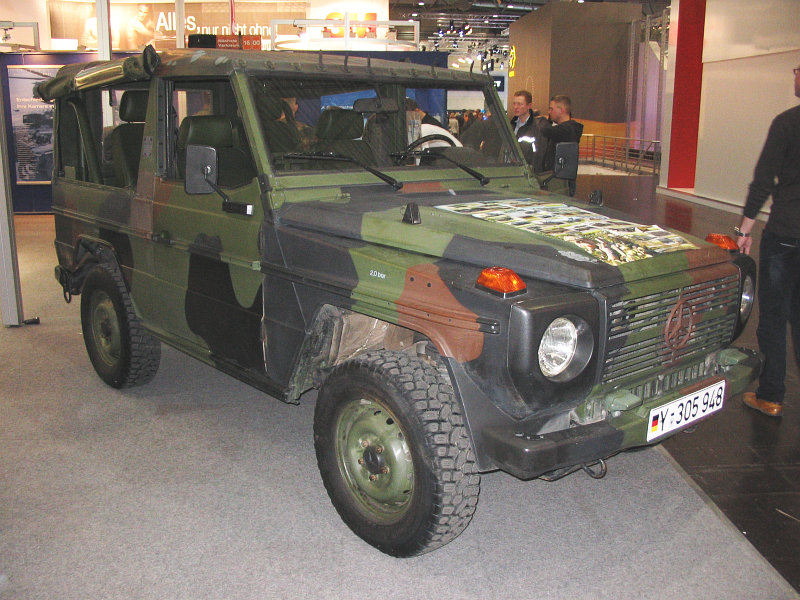
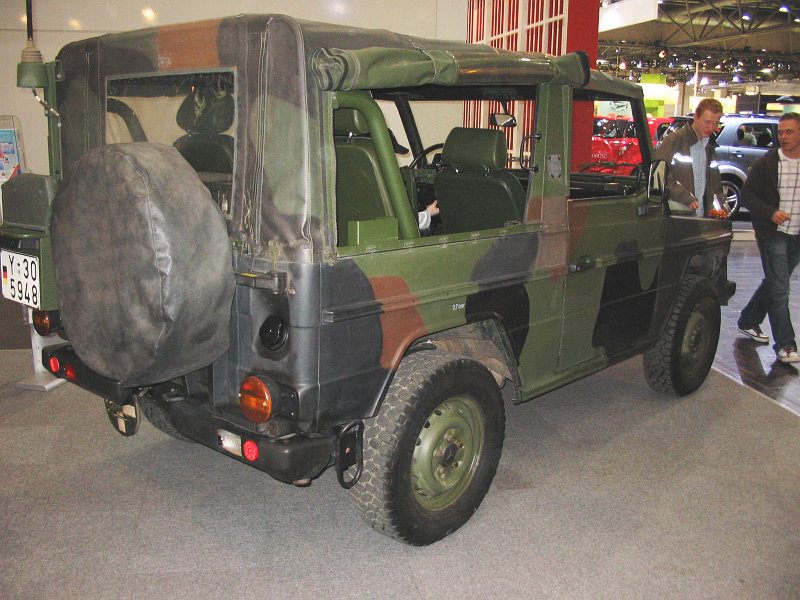
Styling of the 250 GD was purely functional. The boxy bodywork, flat panels and upright glass were designed for ease of manufacture, visibility and repair rather than aesthetics. This uncompromising design gave the G-Class its instantly recognisable silhouette. Body styles included short- and long-wheelbase versions, hardtops, soft tops and utility configurations, allowing the 250 GD to be adapted to a wide range of roles.
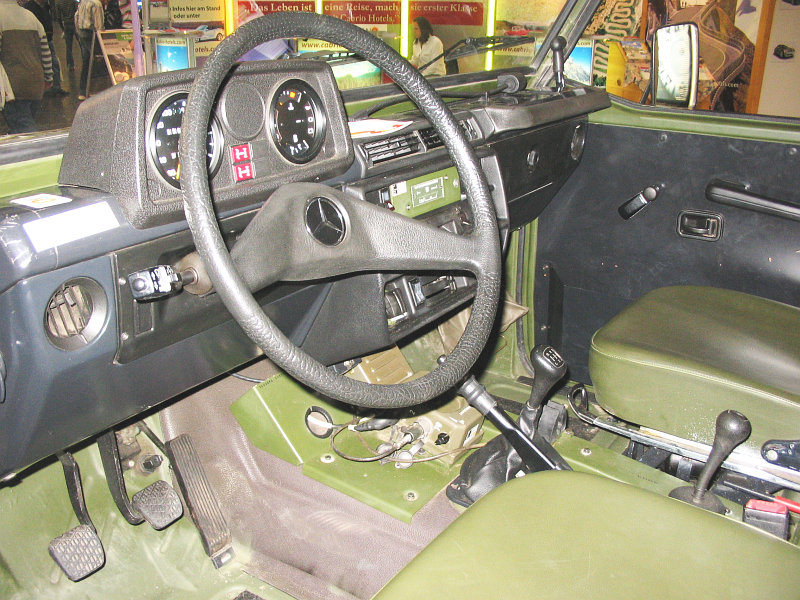
Inside, the cabin was sparse and utilitarian. Materials were chosen for durability, controls were simple and logically arranged, and the driving position was upright with excellent visibility. Comfort features were minimal, especially in early examples, reflecting the vehicle’s intended use as a tool rather than a leisure vehicle.
The 250 GD was widely used by military forces, emergency services, agricultural operators and industrial users across Europe, Africa and beyond. Its diesel engine made it particularly attractive for long-distance use and operation in areas where fuel availability and economy were important considerations. Many examples covered extremely high mileages with minimal mechanical issues, reinforcing the G-Class’s reputation for toughness.
Today, the Mercedes-Benz 250 GD is regarded as one of the most authentic and desirable early diesel G-Class models. Valued for its simplicity, longevity and genuine off-road capability, it represents the G-Class in its original, utilitarian form. As a classic, the 250 GD stands as a reminder of an era when the G-Class was engineered purely as a working vehicle, defined by function, durability and real-world performance rather than luxury or image.