Description
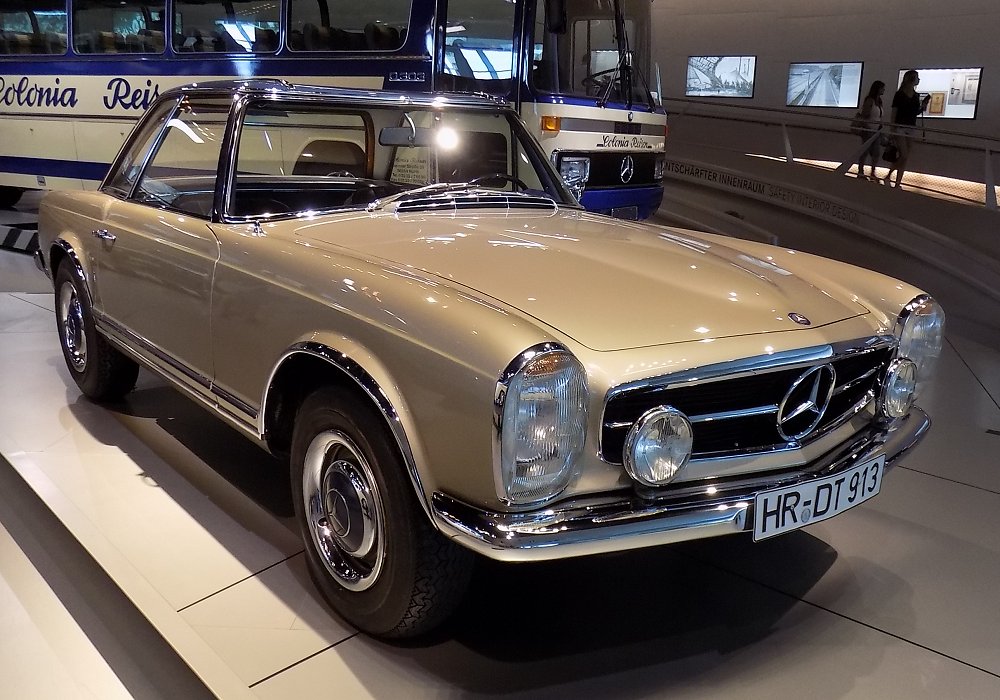
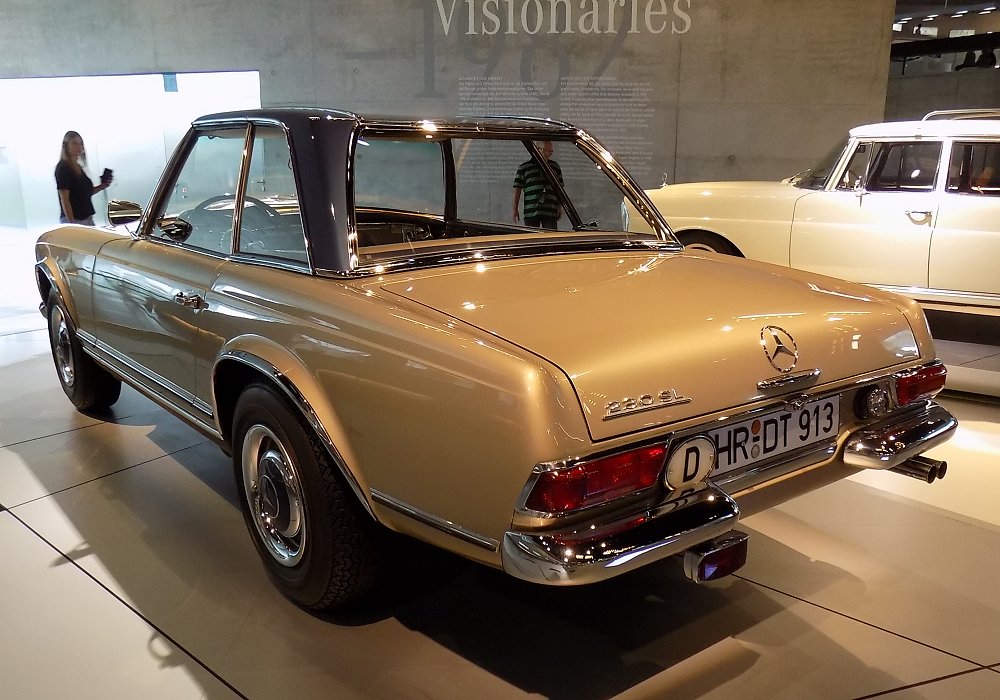
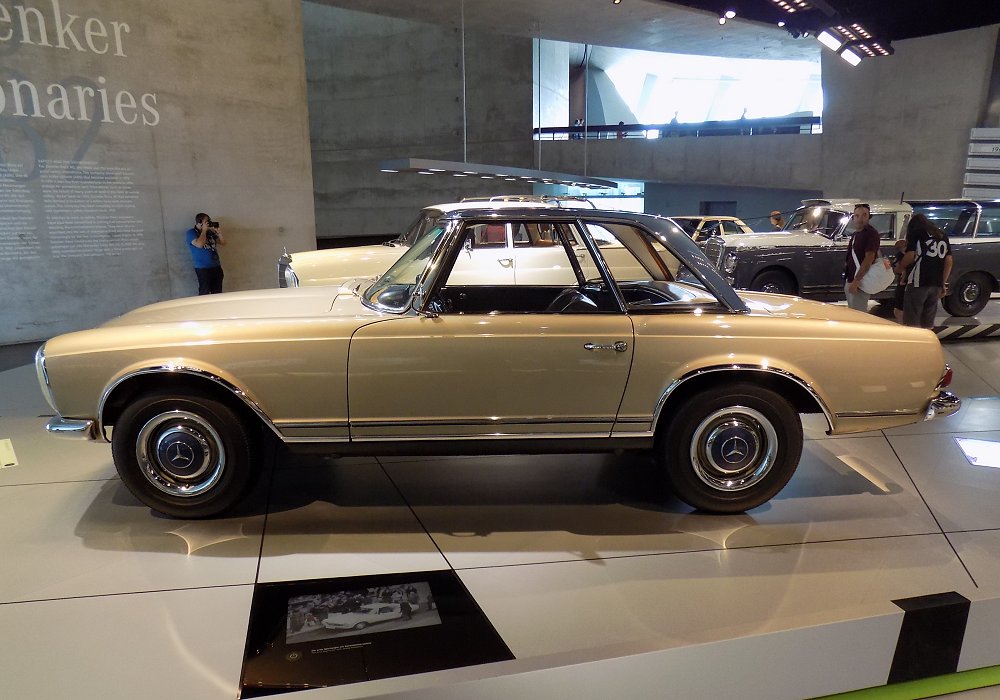
The Mercedes-Benz 230 SL marked the beginning of the W113 SL series and represented a decisive shift in Mercedes-Benz’s sports car philosophy during the 1960s. Introduced as the successor to both the 190 SL and the 300 SL Roadster, the 230 SL was designed to combine sporting character with comfort, safety and everyday usability, creating a refined open tourer rather than a pure sports car.
Power came from a 2.3-litre inline six-cylinder petrol engine with mechanical fuel injection, producing approximately 150 horsepower. This engine was smooth, flexible and reliable, offering confident performance without the demanding nature of earlier SL models. Acceleration was brisk for the period, and the car was well suited to sustained high-speed cruising. Buyers could choose between a four-speed manual gearbox, a four-speed automatic transmission or, on later cars, a ZF five-speed manual, allowing the 230 SL to cater to a wide range of driving preferences.
The chassis was based on a shortened version of the W111 saloon platform and featured a rigid body structure with carefully engineered crumple zones. This reflected Mercedes-Benz’s growing emphasis on passive safety, making the 230 SL one of the safest sports cars of its era. Suspension consisted of double wishbones at the front and a low-pivot swing-axle rear suspension, delivering predictable handling and a comfortable ride when driven within its touring-focused limits. Disc brakes were fitted at the front, with rear drums, providing dependable stopping power.
Styling of the Mercedes-Benz 230 SL was distinctive and elegant. The car is best known for its gently concave removable hardtop, which earned it the nickname “Pagoda” due to its resemblance to traditional Asian roof architecture. The clean body lines, upright grille and balanced proportions gave the 230 SL a modern and timeless appearance that set it apart from both its predecessors and contemporaries. The car was offered with a soft top, removable hardtop or both, enhancing its versatility.
Inside, the cabin reflected Mercedes-Benz’s focus on ergonomics, safety and quality. The dashboard featured padded surfaces and recessed controls designed to reduce injury in the event of an accident, a forward-thinking approach at the time. Instrumentation was clear and logically arranged, while seating was comfortable and supportive, making the car suitable for long-distance touring. Interior materials were chosen for durability and refinement rather than outright luxury excess.
On the road, the Mercedes-Benz 230 SL delivered a composed and confidence-inspiring driving experience. Steering was precise and relatively light, the suspension absorbed poor road surfaces effectively, and the engine provided smooth, progressive power. While not a sports car in the traditional sense, the 230 SL excelled as a refined grand tourer, offering a balance of performance, comfort and usability that appealed to a broad audience.
The 230 SL attracted buyers who wanted an open Mercedes-Benz that could be driven daily, not just on special occasions. It proved popular with professionals and enthusiasts alike, particularly in export markets, and helped redefine the SL line as a sophisticated lifestyle car rather than a competition-derived sports machine.
Today, the Mercedes-Benz 230 SL is regarded as a landmark model in the SL lineage. Valued for its elegant design, strong engineering and usability, it represents the successful transition from the raw sports cars of the 1950s to the refined luxury roadsters that would define the SL name for decades to come.