Description
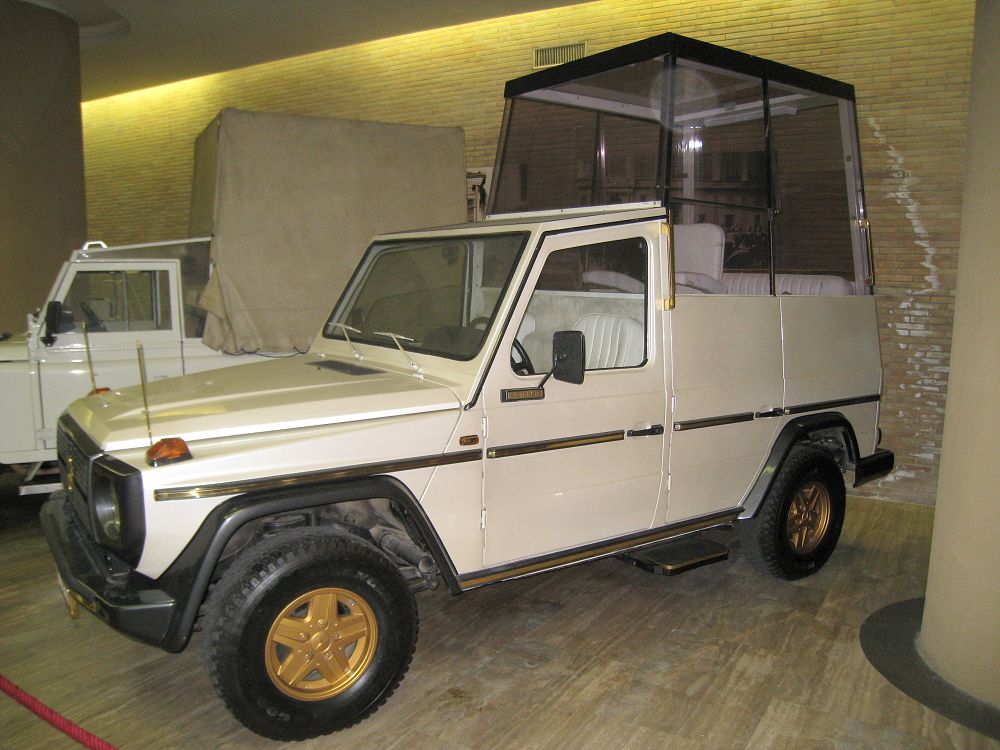
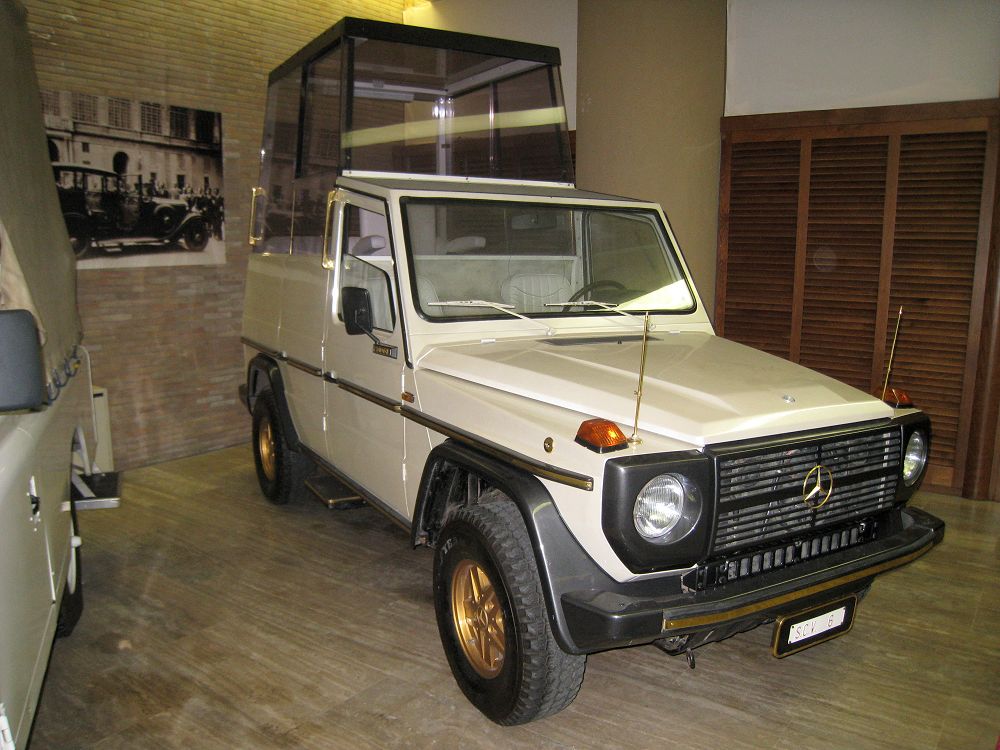
The Mercedes-Benz 230 GE Papamobil was a later evolution of the papal vehicle concept based on the G-Class and reflected both changing security requirements and the gradual technical development of the model. Built on the W460-series 230 GE, this version combined the rugged, dependable G-Class platform with fuel-injected engine technology and a purpose-built ceremonial body designed specifically for papal appearances.
Power came from a 2.3-litre inline four-cylinder petrol engine fitted with Bosch fuel injection, producing around 125 horsepower. Compared with the earlier carburetted 230 G, the 230 GE offered smoother throttle response, improved drivability and better reliability in varied operating conditions. The engine was tuned for steady, predictable low-speed operation rather than outright performance, an essential characteristic for slow-moving processions and precise manoeuvring in crowded public spaces. A manual transmission and dual-range transfer case allowed fine control at walking pace while retaining the ability to operate on uneven or poor-quality surfaces.
The chassis retained the traditional G-Class ladder-frame construction with solid axles front and rear. This gave the 230 GE Papamobil exceptional structural strength and stability, particularly important given the extensive modifications to the rear body. Although extreme off-road use was not part of its role, the inherent toughness of the G-Class ensured reliable operation under heavy loads and during long ceremonial duties without mechanical stress.
The defining feature of the 230 GE Papamobil was its bespoke rear conversion. The rear bodywork was extensively re-engineered to create an elevated platform from which the Pope could be clearly seen by crowds. Depending on the specific configuration, this platform featured a central standing or seated position, surrounded by railings or transparent panels. Compared with earlier, more open papamobiles, the 230 GE version often incorporated more substantial structural elements, reflecting an increasing emphasis on stability and security while still prioritising visibility.
Access to the ceremonial platform was carefully designed, with steps and handholds integrated into the bodywork to allow safe and dignified entry and exit. The vehicle’s slow, controlled movement during events placed particular importance on balance and smooth operation, both of which were well supported by the G-Class drivetrain and suspension.
Externally, the 230 GE Papamobil typically featured a white finish associated with Vatican vehicles, with minimal decorative elements. The upright, angular design of the G-Class proved especially suitable for ceremonial conversion, allowing the custom structure to integrate cleanly without compromising the vehicle’s proportions. The overall appearance remained respectful, functional and instantly recognisable.
Inside the front cabin, the vehicle retained the utilitarian character of the standard 230 GE. Controls were simple and robust, visibility was excellent, and the driving position was upright and commanding. The interior was designed for reliability and ease of use rather than luxury, ensuring the vehicle could perform flawlessly during high-profile events.
In service, the Mercedes-Benz 230 GE Papamobil became an important transitional model in the history of papal vehicles. It bridged the gap between the open, symbolic papamobiles of earlier decades and the more heavily protected designs that followed. Its use reinforced Mercedes-Benz’s long-standing association with papal transport and its reputation for engineering vehicles capable of combining symbolism, reliability and purpose-built design.
Today, the Mercedes-Benz 230 GE Papamobil is regarded as a rare and historically significant variant of the G-Class. Valued for its unique role and distinctive configuration, it represents a moment when evolving security needs met traditional ceremonial requirements. As a historical vehicle, it stands as a powerful symbol of how Mercedes-Benz adapted its most rugged platform to one of the world’s most visible and symbolic transport roles.