Description
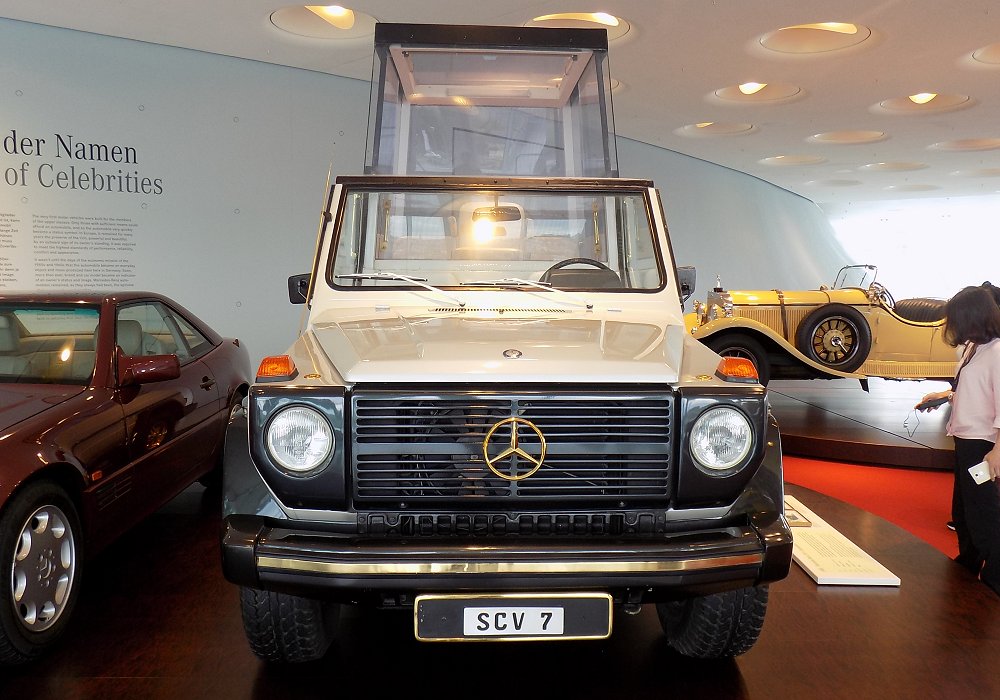
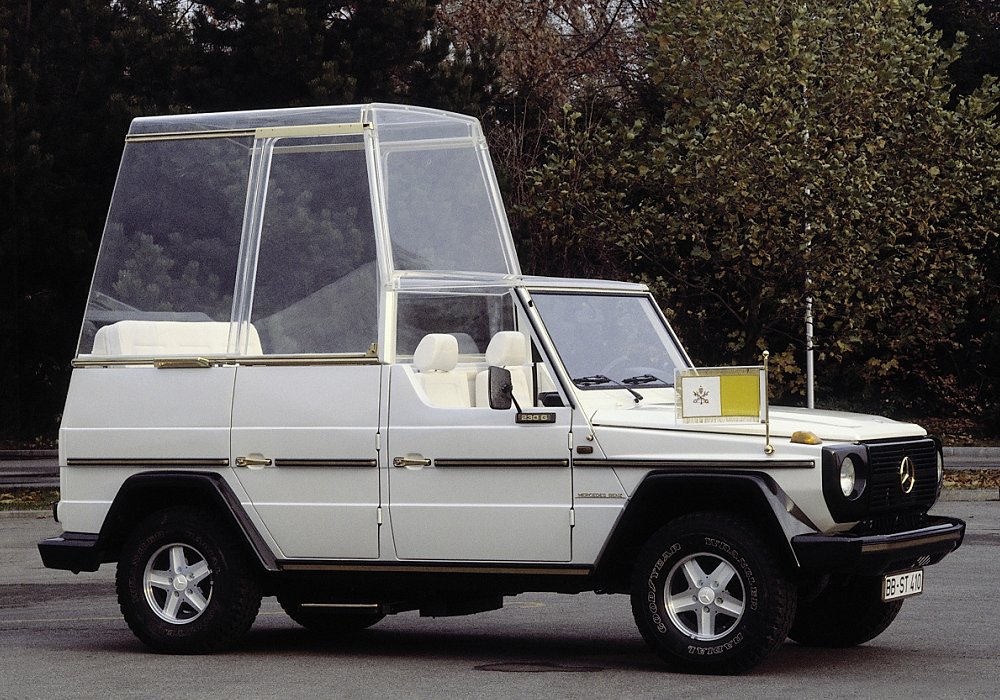
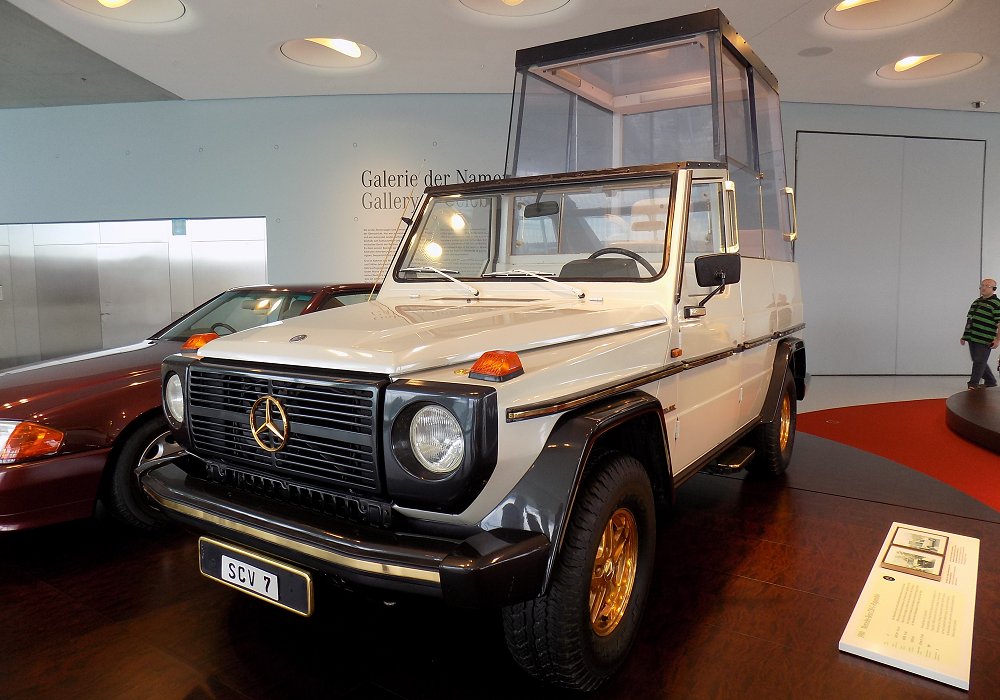
The Mercedes-Benz 230 G Papamobil was a highly specialised ceremonial conversion based on the early G-Class and represented one of the most distinctive applications of Mercedes-Benz off-road engineering. Developed for papal appearances, the vehicle combined the rugged mechanical foundation of the 230 G with bespoke bodywork and security-focused adaptations, creating a vehicle designed for visibility, dignity and reliability rather than conventional transport.
At its core, the Papamobil was based on the W460-series Mercedes-Benz 230 G. Power came from a 2.3-litre four-cylinder petrol engine producing around 90 horsepower. While modest in output, the engine was chosen for its robustness, smooth low-speed operation and proven reliability. Paired with a manual transmission and a dual-range transfer case, the drivetrain allowed precise low-speed control, which was essential for processional duties in crowded urban environments as well as operation on uneven surfaces.
The ladder-frame chassis and solid axles front and rear gave the 230 G Papamobil exceptional strength and stability. Although extreme off-road capability was not its primary mission, the G-Class platform ensured dependable operation under all conditions, including poor road surfaces, steep gradients and heavy loads from custom body structures. This mechanical reliability was a key reason Mercedes-Benz was repeatedly selected for papal vehicles.
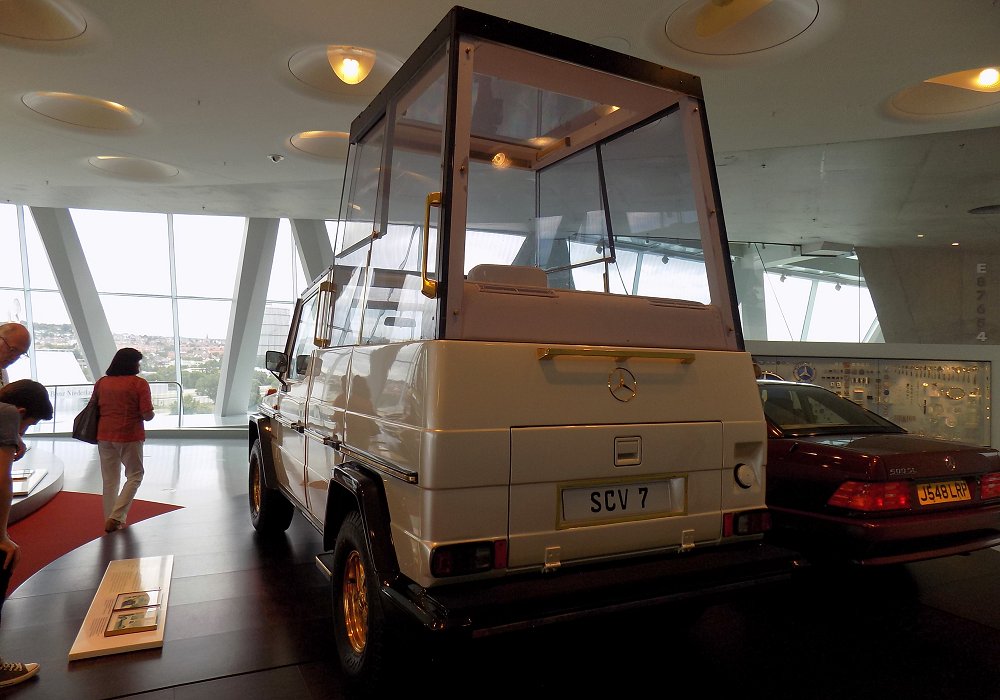
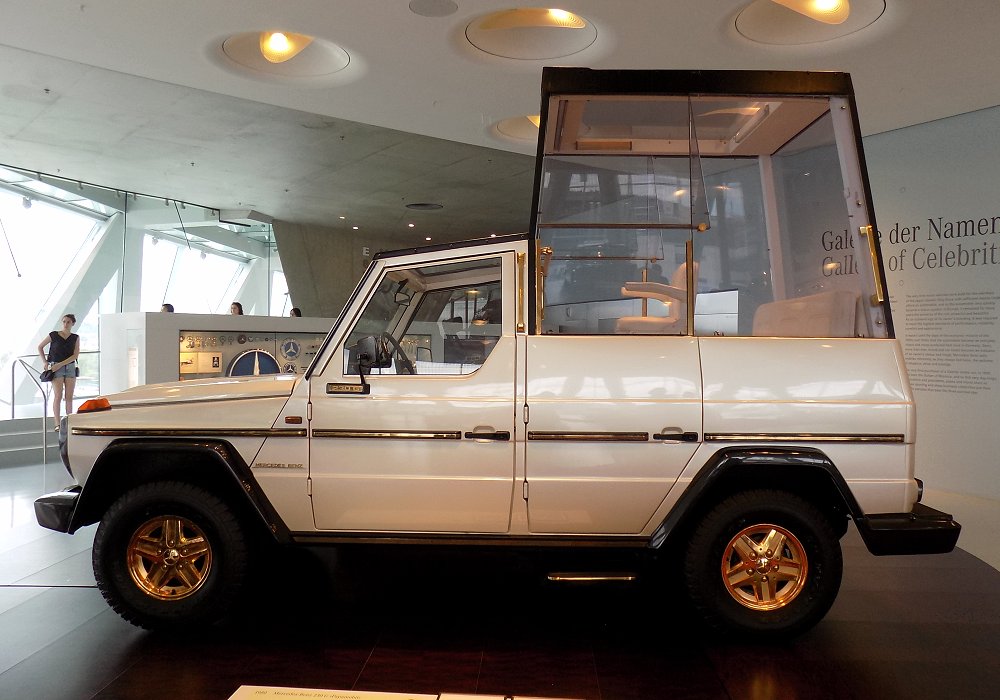
The defining feature of the 230 G Papamobil was its bespoke rear bodywork. The rear section was extensively modified to incorporate an elevated, open or semi-enclosed platform designed to give maximum visibility to the Pope during public appearances. This platform often included a central standing or seating position, surrounded by railings or transparent panels depending on the specific configuration and period. Access was carefully designed to allow safe entry and exit, while maintaining the ceremonial appearance expected of a papal vehicle.
Security considerations played a major role in the design. While early versions prioritised openness and visibility, later adaptations incorporated reinforced structures, handholds and carefully planned layouts to ensure stability and safety during slow-moving processions. Unlike later armoured papal vehicles, the 230 G Papamobil retained a relatively open design, reflecting the security philosophy of its time.
Styling remained deliberately understated and respectful. The exterior typically featured a white finish, symbolising the Vatican, with minimal ornamentation. The boxy, upright proportions of the G-Class proved well suited to conversion, allowing the ceremonial structure to integrate cleanly with the base vehicle. The result was a vehicle that was instantly recognisable yet dignified rather than ostentatious.
Inside the front cabin, the 230 G Papamobil retained much of the utilitarian character of the standard G-Class. Controls were simple and robust, visibility was excellent, and the driving position was upright and commanding. The focus remained on reliability and ease of operation, ensuring that the vehicle could perform flawlessly during high-profile public events.
In service, the Mercedes-Benz 230 G Papamobil became an iconic symbol of papal appearances, reinforcing Mercedes-Benz’s association with reliability, engineering integrity and ceremonial transport. Its use helped cement the G-Class’s reputation not only as a military and utility vehicle, but also as a platform adaptable to highly specialised roles.
Today, the Mercedes-Benz 230 G Papamobil is regarded as a rare and historically significant vehicle. Valued for its unique purpose and unmistakable presence, it represents a fascinating intersection between off-road engineering, ceremonial design and modern history. As a classic, it stands apart from conventional G-Class models, embodying a moment when simplicity, visibility and symbolism defined one of the world’s most recognisable vehicles.