Description
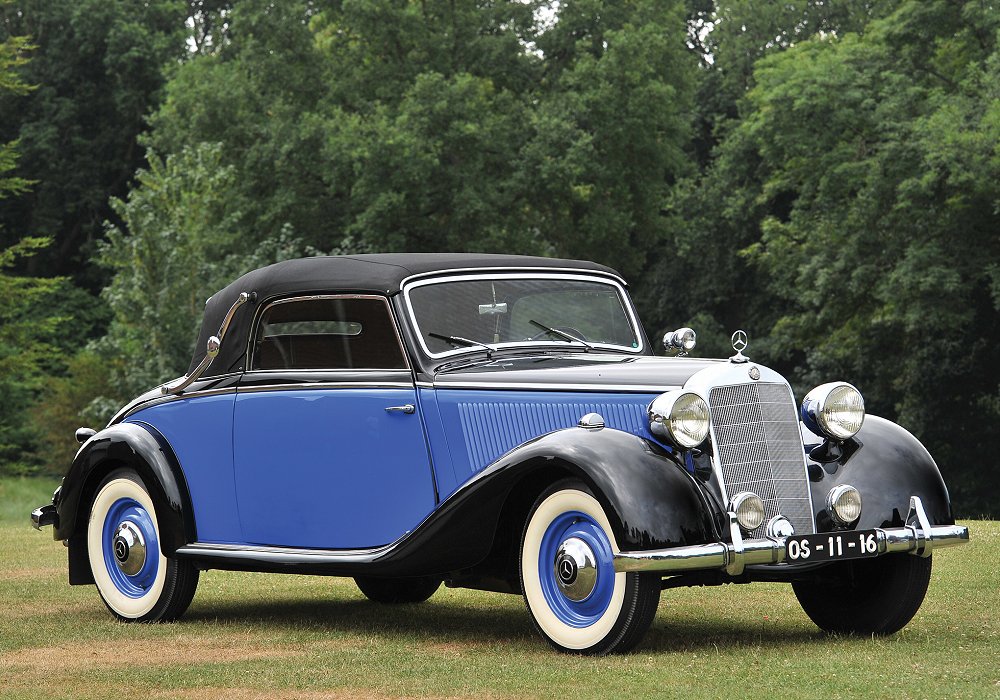
The Mercedes-Benz 230 Cabriolet A was the most elegant and exclusive open two-seat variant of the W143 series, introduced in 1937 as part of Mercedes-Benz’s refined mid-size six-cylinder range. It represented the pinnacle of personal luxury within the 230 lineup, aimed at buyers who wanted a compact yet prestigious touring car with the finest coachbuilt styling. With its flowing lines, beautifully crafted details and smooth six-cylinder power, the Cabriolet A became one of the most admired designs produced by the Sindelfingen workshops before the Second World War.
Power came from the 2.3-litre inline-six that defined the W143 series. Developing around 55 horsepower, the engine provided a strong, flexible torque curve and exceptionally smooth running. It enabled relaxed cruising and confident performance even on long-distance journeys, offering a level of refinement that surpassed the smaller four-cylinder Mercedes models. The four-speed manual gearbox, with synchromesh on the upper gears, contributed to the car’s civilised driving character, making it easy to operate and well suited to both town and touring use.
The Cabriolet A was built on the shorter of the two W143 wheelbases, giving it compact, nimble proportions that suited its sporting, personal-use character. The chassis used a sturdy ladder-frame construction and independent front suspension with a transverse leaf spring, while the rear axle used the familiar Mercedes swing-axle layout with coil springs. This combination provided a supple, comfortable ride and stable handling at typical road speeds. The shorter wheelbase gave the Cabriolet A a slightly quicker, more responsive feel than the long-wheelbase models, enhancing its appeal as a driver-focused touring car. Mechanical drum brakes on all four wheels delivered steady, predictable stopping power.
The bodywork, crafted entirely by Mercedes-Benz’s Sindelfingen coachbuilders, was the key to the Cabriolet A’s appeal. It represented one of the purest expressions of pre-war Mercedes styling: a long, elegant bonnet; sweeping, delicately formed wings; low doors; and a compact rear deck designed to hold the folded roof. The two-seat configuration allowed the car to maintain perfect proportions, with the cabin set slightly back from the front axle to create a flowing, harmonious silhouette. With the top raised, the Cabriolet A retained a dignified, luxurious appearance; with the top lowered, it became a beautifully balanced open roadster with uninterrupted lines.
Inside, the Cabriolet A offered an intimate yet luxurious cockpit. The two seats were generously padded and upholstered in high-quality leather or fine cloth, depending on customer preference. The dashboard featured a tasteful combination of wood trim and painted metal, with beautifully made instruments arranged clearly and symmetrically. Switchgear, handles and fittings demonstrated the craftsmanship for which Sindelfingen was renowned. The cabin felt refined, comfortable and purposefully designed for relaxed, stylish travel.
On the road, the Mercedes-Benz 230 Cabriolet A delivered a driving experience defined by smoothness and understated confidence. The six-cylinder engine provided quiet, effortless power, and the suspension absorbed poor surfaces with ease. The lightness of the two-seat body gave the car a slightly more sprightly and responsive feel than the larger cabriolets. With the roof down, the Cabriolet A excelled as a touring companion, offering an enjoyable combination of breeze, sound, light and mechanical refinement. It was not a sports car in the modern sense, but a luxurious personal tourer with exceptional poise.
The 230 Cabriolet A was one of the lowest-production variants of the W143 series, built for a clientele that valued exclusivity, beauty and craftsmanship over outright practicality. It sat at the top of the normal-wheelbase 230 range, offering a level of elegance and prestige unmatched by the family saloons and even by the practical four-seat Cabriolet B.
Today, the Mercedes-Benz 230 Cabriolet A is regarded as one of the most desirable and collectible models of the late 1930s Mercedes catalogue. Its graceful proportions, smooth six-cylinder performance and superb Sindelfingen construction make it a benchmark example of pre-war German automotive design. Surviving examples are treasured for their rarity and for the timeless beauty that continues to define Mercedes-Benz’s finest open touring cars.