Description
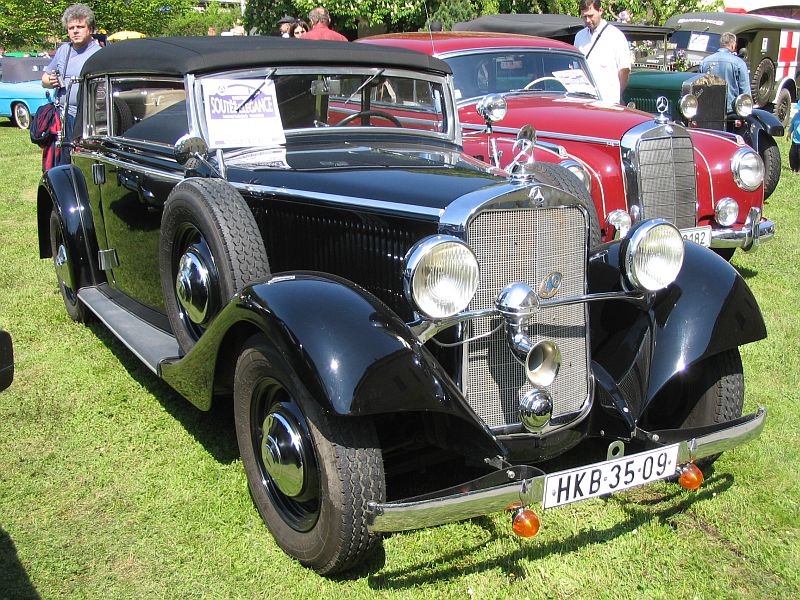
The Mercedes-Benz 200 Lang Cabriolet B was the most spacious and elegant open-top variant built on the extended-wheelbase version of the W21 series. Introduced in 1933, it combined the smooth six-cylinder refinement of the Mercedes 200 with the generous rear cabin afforded by the long-wheelbase chassis, creating a luxurious four-seat touring cabriolet aimed at buyers who wanted comfort, style and practicality in equal measure. While the standard-wheelbase Cabriolet B already offered four-seat usability, the Lang version elevated this formula with a larger cabin, improved legroom and a more imposing presence on the road.
Under the bonnet, the 200 Lang Cabriolet B shared the familiar 1.9-litre inline-six used throughout the W21 range. Producing around 40 to 45 horsepower, the engine delivered smooth, quiet and flexible performance. Its long-stroke design allowed for strong low-rpm torque, making the car easy to drive in both urban and touring conditions. The engine’s refinement was one of the model’s defining qualities, as it ran with a calmness and mechanical polish unusual for a mid-range car of the early 1930s. A four-speed manual gearbox provided clean shifts and dependable service life, contributing to the car’s reputation for reliability and ease of use.
The long-wheelbase chassis was the central distinguishing element. Extended by roughly 350 mm compared with the standard model, the frame provided ample space for a true four-passenger open body while maintaining structural rigidity. Like the rest of the W21 family, the chassis used a strong ladder-frame design with semi-elliptic leaf springs front and rear. The extra wheelbase added a more settled, measured ride, smoothing out bumps and enhancing passenger comfort. Steering required some firmness at low speeds but became smooth and predictable once underway. Mechanical drum brakes on all four wheels offered solid, consistent braking performance suitable for the car’s size and touring character.
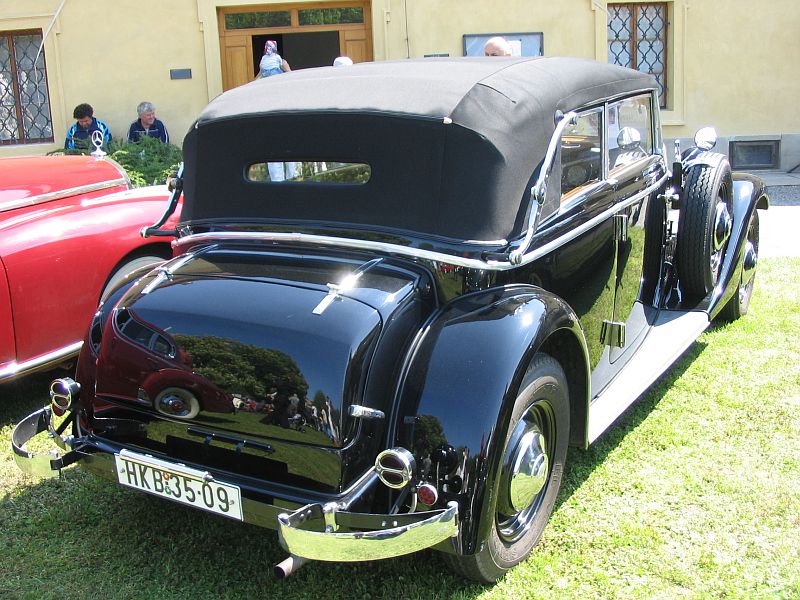
The Sindelfingen-built Cabriolet B bodywork benefitted greatly from the extended chassis. Four full-size doors gave easy access to both front and rear seating, while the longer proportions produced a dignified and balanced silhouette. The car featured a tall upright grille, sweeping front fenders, flowing body sides and a gently sloping rear that housed the folding roof. With the top raised, the Cabriolet B had the stately presence of a formal touring car. With the roof folded neatly toward the rear, it took on the open, welcoming character of a grand four-seat tourer. The design allowed the car to feel equally at home on city boulevards or long scenic drives.
Inside, the 200 Lang Cabriolet B offered a significantly roomier environment than the standard-wheelbase version. The extended wheelbase created generous rear legroom, making long journeys far more comfortable for passengers. Seating was upholstered in durable cloth for commercial or taxi-oriented examples, while private-owner cars often featured higher-grade leather. The dashboard followed the familiar W21 pattern with clear gauges, polished wood or painted metal trim and neatly engineered switchgear. The combination of space, craftsmanship and open-air versatility made the interior feel welcoming and genuinely luxurious for a mid-size car of the period.
On the road, the 200 Lang Cabriolet B provided a relaxed, refined driving experience. The six-cylinder engine delivered smooth, quiet acceleration, and the extended wheelbase improved ride comfort over uneven surfaces. The car was not intended for fast or sporting driving, but rather for comfortable, unhurried touring. With the roof down, the large cabin filled with light, making the car ideal for summer travel. Its predictable handling, durable mechanical components and comfortable suspension made it especially suitable for long-distance use.
The Cabriolet B on the Lang chassis occupied a special place within the W21 range. It was more spacious and luxurious than the standard-wheelbase open models, yet more accessible and practical than Mercedes’ larger six- and eight-cylinder luxury cabriolets. This made it attractive to owners who wanted elegance and roominess without the costs associated with the top-tier models. Production numbers were limited, especially compared with the saloons, and the long-wheelbase Cabriolet B remained a relatively rare sight even in its own time.
Today, the Mercedes-Benz 200 Lang Cabriolet B is considered one of the most desirable and distinctive variants of the W21 family. Its combination of extended-wheelbase comfort, four-seat open-top touring and classic Sindelfingen craftsmanship makes it a standout among pre-war Mercedes cabriolets. Surviving examples highlight the model’s charm, refinement and understated grandeur, capturing the spirit of early-1930s motoring at its most graceful.