Description
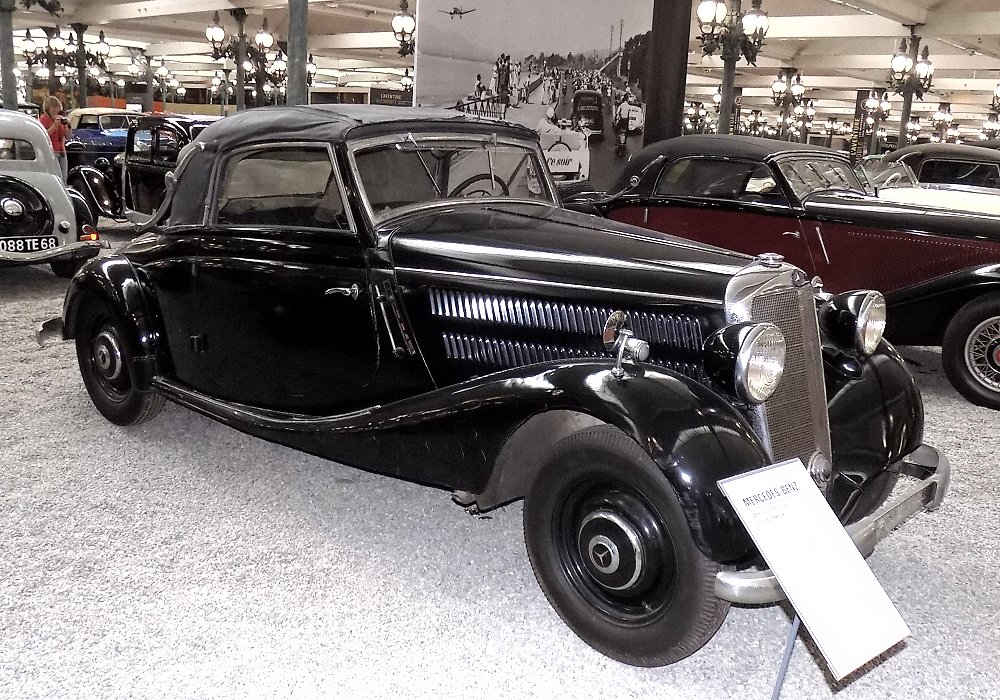
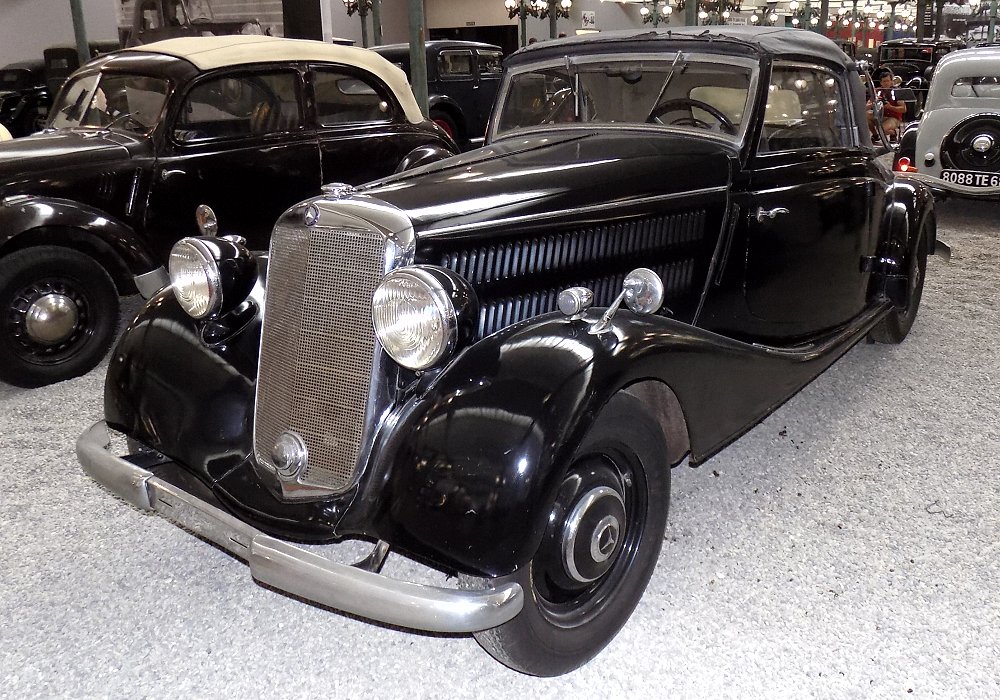
The Mercedes-Benz 170 V Cabriolet A was the most elegant and exclusive open two-seat version of the 170 V range, combining the solid engineering and reliability of Mercedes’ most important pre-war model with a beautifully crafted body aimed at private buyers seeking refinement, style and an unmistakably prestigious appearance. Introduced in 1936 alongside the main 170 V saloons, the Cabriolet A represented the upper end of the model family, offering a luxurious, intimate motoring experience in a compact and technically advanced package.
It was powered by the same 1.7-litre inline-four engine used across the 170 V range, producing between 38 and 45 horsepower depending on year and carburettor specification. While not a high-performance engine, it was smooth, quiet and extremely durable. It delivered steady torque at low and medium speeds, allowing relaxed cruising and dependable everyday usability. The four-speed manual gearbox was well matched to the engine, offering clean, positive shifts and long service life. The car’s light weight compared with the saloon versions gave it a slightly livelier feel, making the Cabriolet A pleasant to drive both in town and on open roads.
Underneath the body, the Cabriolet A benefitted from the same advanced chassis that made the 170 V famous. Its X-shaped oval-tube frame provided strength, rigidity and vibration reduction well beyond what was typical for compact cars of the period. The independent front suspension with double wishbones and coil springs was one of the most modern systems available in the mid-1930s, giving the car impressive ride comfort and stable handling. At the rear, Mercedes used a swing-axle arrangement with coil springs, balancing comfort with decent traction. Large mechanical drum brakes on all four wheels provided reliable stopping power, contributing to the car’s reputation as a safe and predictable small touring machine.
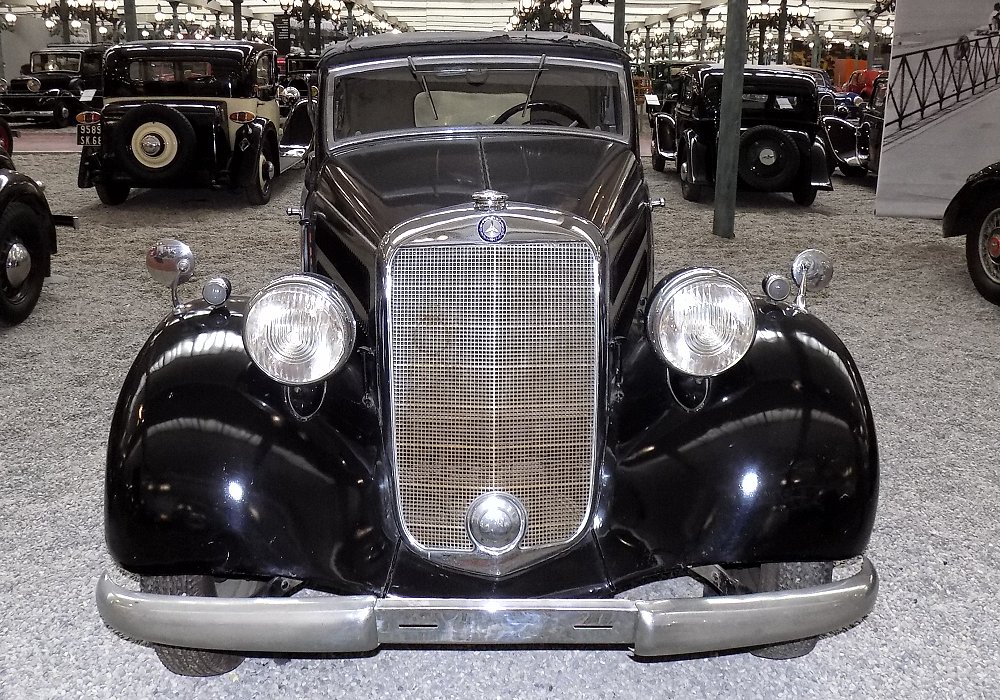
The Cabriolet A body was one of the most stylish coachbuilt designs available on the 170 V chassis. Unlike the Cabrio-Limousine or Cabriolet B, which were four-seat vehicles, the Cabriolet A was a pure two-seater with a shorter, more graceful body and a pronounced emphasis on luxury. The sweeping front wings, low doors, long bonnet and compact tail created a balanced, refined silhouette. With the fabric roof lowered, the car presented an elegant open profile that emphasised its flowing lines and crafted details. With the roof raised, it remained handsome and dignified, maintaining the traditional Mercedes appearance of the period.
The folding top was made from high-quality materials and sat neatly on the rear deck when open. The bodywork, built primarily by Mercedes’ Sindelfingen coachworks, was finished to a very high standard, with precise panel fit and carefully shaped curves. Chrome accents were used sparingly but effectively, highlighting the grille, window frames and body lines without excess.
Inside, the Cabriolet A offered a richly finished and intimate environment. The two seats were well padded and upholstered in fine leather, providing comfort suited to long journeys despite the car’s compact size. The dashboard usually featured polished wood trim or painted metal depending on customer taste, with clear, elegant instruments showing speed, temperature, oil pressure and fuel level. The cabin was simple in layout but executed with a level of craftsmanship that set Mercedes apart from many other manufacturers in the small-car segment.
Driving the 170 V Cabriolet A was a refined and enjoyable experience. The independent suspension smoothed out rough roads, the steering became pleasantly light once the car was in motion and the engine provided a calm, steady flow of power. The open-top configuration made the car ideal for scenic touring, and its compact size made it easy to place on narrow roads. The chassis balance and ride quality gave it a surprisingly modern feel for its era, and the car’s overall mechanical refinement was one of the reasons the 170 V series became so widely admired.
Before the war, the Cabriolet A appealed mainly to private owners who wanted elegance, craftsmanship and the prestige of the Mercedes-Benz name in a car that was still affordable and practical to maintain. After the war, production of the Cabriolet A resumed briefly, though in very small numbers, making post-war examples especially rare. The model never reached the sales volumes of the saloons or commercial variants, but it remained the most exclusive and desirable personal version of the 170 V.
Today, the Mercedes-Benz 170 V Cabriolet A is considered one of the most collectible variants of the entire 170 family. Its combination of rarity, refined engineering, beautifully crafted bodywork and intimate two-seat character make it highly sought after by enthusiasts of pre-war Mercedes-Benz. Well-preserved examples showcase the elegance and engineering philosophy that sustained the company through one of the most pivotal periods in its history.